
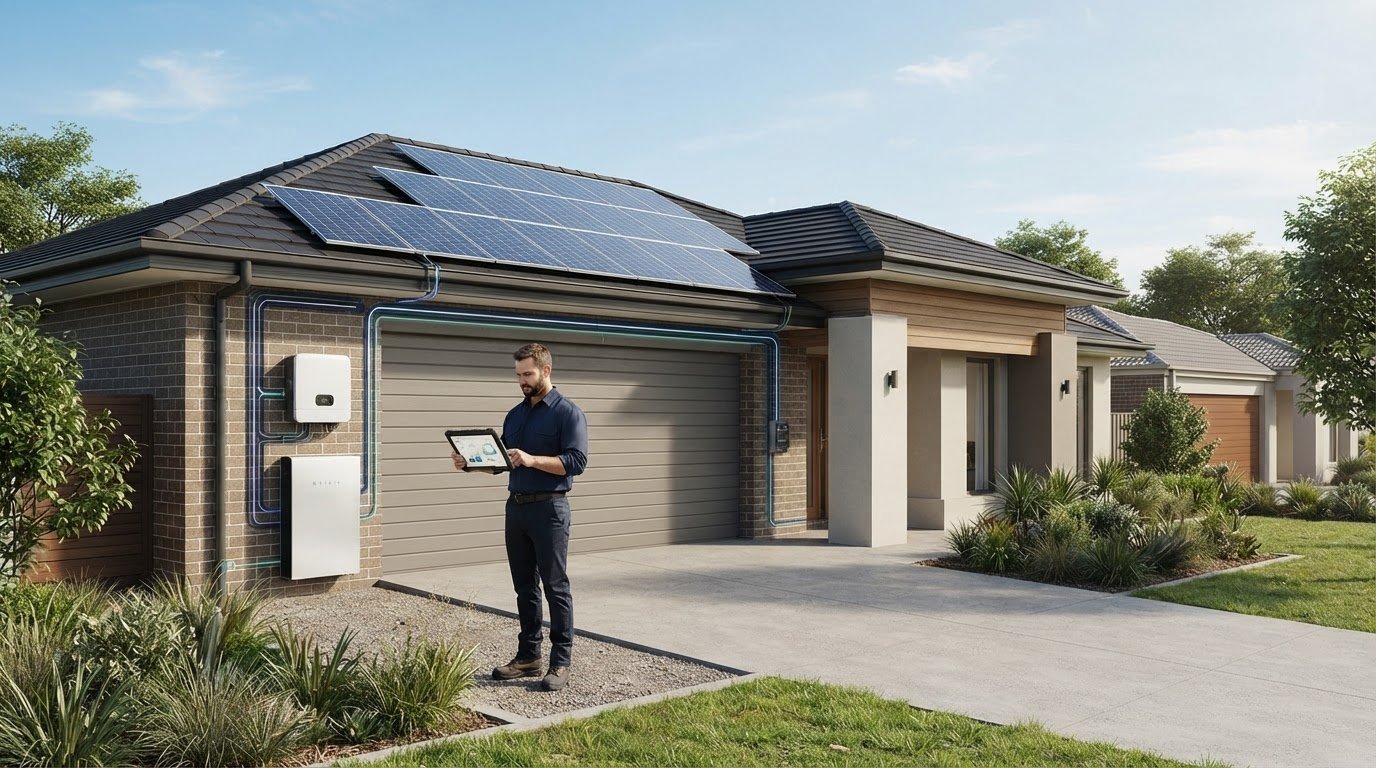
If you’re researching “upgrade solar system for battery storage”, start by checking whether your current inverter and panels can work with a battery. You may not need to replace the whole system, and choosing a battery before checking compatibility can lead to unsuitable recommendations.
Whether your existing equipment can stay depends on its model and configuration, how much surplus solar you generate and when your household uses electricity. AC-coupled and DC-coupled systems are different ways to connect storage, but neither is automatically the right fit. A review of your current setup can clarify what may be retained and what might need changing.
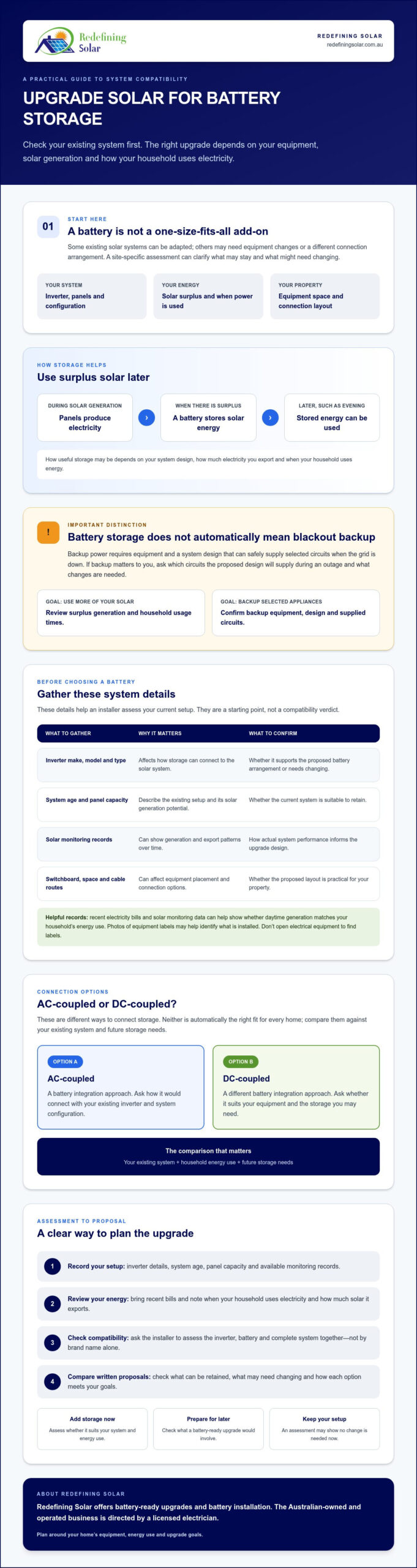
This guide explains what information to gather, how the main battery integration options differ and what to ask an installer before deciding. It also covers how to compare battery capacity with your household’s energy use and solar generation. With these details, you can assess proposals more confidently and plan an upgrade around your home’s needs.
Key Takeaways
- Before you upgrade solar system for battery storage, gather your inverter details, system age, panel capacity and any available monitoring records.
- Ask an installer to check your equipment’s compatibility. Don’t assume it based on the brand name alone.
- Compare AC-coupled and DC-coupled options against your existing system and future storage needs. Neither approach suits every home.
- Bring recent electricity bills and solar monitoring data to an assessment, then compare the recommendations in written proposals.
- Redefining Solar offers battery-ready upgrades and battery installation. The Australian-owned and operated business is directed by a licensed electrician.
Should you upgrade your existing solar system for battery storage?
Before adding a battery, check whether your inverter can support one, whether any working equipment needs replacing and whether storage matches your household’s needs. An existing solar system can sometimes be adapted, but the right approach depends on the equipment and how your home uses electricity.
A battery stores surplus solar generation for later use, such as in the evening when panels aren’t producing power. Its usefulness depends on your system design, how much electricity you export and when you use energy. A general introduction to home energy storage systems explains the basic concept, but a site-specific assessment is needed to determine whether an upgrade suits your home.
Consider your inverter and panels, household electricity use, available space for equipment and what you want the upgrade to achieve. Reducing reliance on grid electricity and keeping selected appliances running during a blackout are different goals. A battery can store solar energy for later use, but it won’t automatically provide backup power. Backup requires equipment and a system design that can safely supply selected circuits when the grid is down.
What does a battery-ready solar upgrade involve?
A battery-ready upgrade adapts an operating solar PV system to integrate with storage. The work depends on your existing inverter and system configuration. Some setups may be compatible with an added battery, while others may need equipment changes or a different connection arrangement.
“Battery-ready” doesn’t necessarily mean your home will have blackout backup. If backup is a priority, ask the installer which circuits the proposed design will supply during an outage and what equipment or changes are needed.
Which households should assess battery storage?
An assessment can help if you’re planning for future storage, use more electricity in the evening or want backup for selected loads. Review when your household uses power and how much solar energy your system exports. Recent electricity bills and solar monitoring records, if available, can help show whether daytime generation matches your energy use.
There’s no need to assume a battery is the right next step. Solar generation, usage patterns, equipment space and your upgrade goals all matter. An assessment can clarify whether to add storage now, prepare the system for a later addition or keep your existing setup as it is.
Check solar inverter and system compatibility before choosing a battery
Before choosing a battery, collect the details of your current solar system. Check the inverter’s make, model and type, note the system’s approximate age and panel capacity, and save any available solar monitoring records. Photos of equipment labels can also help an installer identify what’s already in place. Don’t open electrical equipment to find labels.
These details are a starting point, not a compatibility verdict. Equipment from the same brand isn’t automatically designed to work together. An installer needs to check the inverter model, system configuration and proposed battery as a complete setup. The Clean Energy Council battery guide offers further background on the technical choices involved.
| System detail | Why it matters | What the installer should confirm |
|---|---|---|
| Inverter make, model and type | It affects how storage can connect to the solar system. | Whether it supports the proposed battery arrangement or needs changing. |
| System age and panel capacity | These help describe the existing setup and its solar generation potential. | Whether the current system is suitable to retain as part of the upgrade. |
| Monitoring records | They can show generation and export patterns over time. | How the system’s actual performance informs the upgrade design. |
| Switchboard, space and cable routes | These can affect where equipment can go and how it can be connected. | Whether the proposed layout is practical for the property. |
Can an existing inverter work with battery storage?
Possibly, but compatibility depends on the inverter type and model, the battery and the complete system configuration. A hybrid inverter is one possible arrangement, combining solar and battery functions in a compatible setup. Some existing systems may be able to retain their inverter; others may need an inverter or another component changed. For more detail, look for the planned guide, Is Your Inverter Ready? Hybrid Solar Inverter Guide, when it’s published.
What site details affect a battery upgrade?
The installer should consider the switchboard’s condition, suitable equipment space, cable routes and access for installation. They should also check applicable connection requirements with the relevant network operator. Standards, product eligibility and installation requirements need to be verified for your project, rather than assumed from general advice.
These checks clarify what can stay and what may need to change before you commit to a design. If you’re gathering information for an existing solar system assessment, include these details so upgrade advice can take your current equipment into account.
Compare AC-coupled and DC-coupled solar battery upgrade options
AC-coupled and DC-coupled describe two broad ways to connect a battery to a solar system. They differ in how electricity moves between your panels, inverter, battery and home. Either may be considered as you upgrade solar system for battery storage, but the right choice depends on your existing equipment and the design of the complete system.
With AC coupling, the solar inverter converts panel electricity into AC power for household use, while a separate battery inverter manages the battery connection. With DC coupling, compatible equipment connects the panels and battery through a shared system pathway, commonly using a hybrid inverter. Conversion steps can affect how a system operates, but neither option is automatically more efficient or suitable for every home.
When might an AC-coupled setup suit an existing system?
AC coupling may be considered when you want to retain parts of an operating solar setup and add battery equipment alongside it. That doesn’t guarantee your current inverter can stay or that the retrofit will be simpler. The installer needs to check compatibility, how the equipment controls charging and discharging, and how energy flows through the system. Conversion losses also depend on the specific equipment and how it operates.
When might a DC-coupled setup be considered?
DC coupling connects solar generation and battery storage through compatible system equipment. A hybrid inverter can manage both functions, but your existing inverter’s type and configuration will influence whether this approach is practical. Replacing or changing equipment may be part of the design, so ask the installer to compare the complete system rather than recommending a component in isolation.
Compare proposals by asking how each option would work with your panels, inverter and household usage. Ask the installer to explain:
- Which existing components can remain, and which may need to change.
- How solar energy will charge the battery and supply your home.
- What usable storage the design provides for your expected use.
- Whether backup power is included, and which circuits it would support.
Usable storage, charging behaviour and blackout backup depend on the complete system design, not simply whether it’s AC-coupled or DC-coupled. If backup matters, ask for the intended circuits and operating limits to be set out clearly. A project-specific assessment can show how each arrangement fits your current system and future needs, helping you compare options without assuming one coupling type suits everyone.
Prepare for a solar battery upgrade assessment and quote
Preparing for an assessment can make it more useful and help you compare proposals on equal terms. Gather information about your existing system, then clarify what you want a battery to do. Keep recent electricity bills and available solar monitoring records handy. They can help show when you use power and how much solar energy your home exports.
Arrange an assessment of your current setup and discuss your goals, such as using more solar power in the evening or backing up selected circuits. If you plan to upgrade solar system for battery storage, ask for recommendations based on your household’s use and the equipment already installed. A step-by-step guide to the upgrade process can also help you prepare once it’s published, but the installer should carry out and explain the project work.
What should you ask before accepting an upgrade proposal?
Ask the installer to explain the design in plain language, including what will stay, what will change and whether existing equipment needs further testing. Clarify the proposed battery capacity and intended use, then ask exactly what backup can and can’t power during an outage. Check how the system will be monitored, what warranties apply to the specified equipment, and who completes the work, commissioning and post-installation support.
How should you compare upgrade proposals?
Look beyond the headline recommendation. Compare the system scope and compatibility assumptions, what work is included, and any exclusions or items that may need separate attention. If proposals recommend different equipment or layouts, ask each installer to explain why their approach suits your system and goals.
Projected bill outcomes should state their assumptions, such as expected energy use and solar generation. Treat them as estimates, not guaranteed savings. If a proposal refers to a current battery incentive, verify the rules and your eligibility through an authoritative government source or the relevant programme administrator before relying on it. Requirements can change, so check the details for your project when making a decision.
- Before the assessment: Gather system records, recent bills and monitoring data, if available.
- During the discussion: Explain your priorities and ask about compatibility, backup, monitoring and support.
- Before choosing: Compare written proposals, assumptions, included work and exclusions.
A clear assessment is a sensible first step towards a suitable design. To discuss a battery-ready upgrade assessment for your existing solar system, contact Redefining Solar.
Plan your battery-ready solar upgrade with Redefining Solar
Once you’ve reviewed your system details and household priorities, discuss the options with a solar professional. Redefining Solar is an Australian-owned and operated business directed by a licensed electrician. Its services include battery-ready solar upgrades, battery installation, solar systems and inverter solutions.
An initial discussion can help clarify what equipment you have, what you want a battery to do and what assessment steps may be suitable. You don’t need to decide on a battery or upgrade design before your existing system has been reviewed. First understand your starting point and future needs, then consider the proposed equipment and work.
What information helps start an upgrade conversation?
Share any inverter and panel details you can access safely, such as information in existing paperwork or monitoring apps. Don’t open electrical equipment to find labels. Recent electricity bills and solar monitoring data can help describe your usual consumption and solar generation. Mention whether you’re considering backup power and, if so, which household circuits matter most.
These details give Redefining Solar a starting point to discuss upgrade needs alongside its solar, battery and inverter services. If you don’t have every record, explain what’s missing. An assessment can help identify what further checks are needed before a system design is proposed.
What happens after you request an assessment?
The next step is to review the existing solar system and clarify your household’s goals. Proposed equipment and work depend on site conditions and confirmed compatibility, so recommendations should reflect your actual setup rather than assumptions based on a brand name or general battery advice.
As you discuss how to upgrade solar system for battery storage, ask for the recommended approach to be explained clearly, including which existing components may remain and how the design addresses your priorities. If backup is important, make sure the proposal sets out what it is intended to power. You can then weigh the options with a clearer understanding of what the upgrade involves.
If you’re ready to talk through your current system and arrange an assessment, Discuss your solar battery upgrade with Redefining Solar.
Take the next step with a clear upgrade plan
You don’t need to replace a working solar system or choose a battery before checking what your existing setup can support. An assessment can identify compatible equipment, explain whether changes are needed and match the upgrade to your household’s energy use. Comparing AC-coupled and DC-coupled options as complete system designs also helps you weigh the trade-offs.
If you’re considering how to upgrade solar system for battery storage, start with your inverter and panel details, recent bills and any solar monitoring information you have. Be clear about whether your priority is using more solar power at home, backup for selected circuits or preparing for storage later.
Redefining Solar is an Australian-owned and operated solar business directed by a licensed electrician. Its services include battery-ready upgrades, battery installation and solar system servicing. To talk through your existing setup and request an upgrade assessment, Talk through your solar battery upgrade with Redefining Solar. A considered first step can make the path ahead clearer.
Frequently Asked Questions
Can I add battery storage to my existing solar system?
Often, yes, but an installer needs to check the equipment and site first. The inverter type, system configuration and battery compatibility all affect the upgrade options. Your household’s electricity use and solar generation also matter. An assessment can show whether your system can be adapted, what changes may be needed or whether a battery isn’t a suitable fit right now.
How do I know whether my solar inverter is compatible with a battery?
An installer can confirm compatibility by checking your inverter’s make, model and type, along with the system configuration and proposed battery. A brand name alone isn’t enough to establish that equipment will work together. Gather inverter details from system paperwork, monitoring records or accessible labels, but don’t open electrical equipment to find them. The installer should explain whether your current inverter can remain or if another arrangement is needed.
What is the difference between AC-coupled and DC-coupled battery storage?
AC-coupled systems use a separate battery inverter to connect storage with an existing solar system. DC-coupled systems connect solar generation and the battery through compatible equipment, often a hybrid inverter. Each approach has different compatibility and design considerations, so neither is automatically best for every home. Ask how the proposed system will manage charging, household use and any backup requirements, based on your existing equipment and energy patterns.
Do I need to replace my solar inverter to add a battery?
Not always. If your existing inverter and system configuration are compatible with the proposed battery setup, the inverter may be able to remain. Other systems may need an inverter or another component changed to support storage. An installer should inspect the equipment and explain what can stay, what needs replacing and why. This assessment is the sensible first step before choosing equipment or deciding to upgrade solar system for battery storage.
Will a solar battery keep my whole home running during a blackout?
Not necessarily. A battery provides blackout backup only if the system is specifically designed and equipped to operate that way. Backup may be limited to selected circuits rather than the whole home, depending on the design and equipment. Ask the installer which appliances or circuits are intended to keep running and what limitations apply. A system designed mainly to store solar energy for later use doesn’t automatically provide backup power.
How much does it cost to upgrade a solar system for battery storage?
There isn’t one suitable price for every upgrade. The scope depends on the battery and inverter arrangement, which existing equipment can be retained, site conditions and any additional work included in the proposal. Ask for a written quote that sets out the recommended equipment, installation scope, exclusions and assumptions. Comparing proposals on the same basis can help you understand what’s included without relying on a headline figure alone.
What happens if my existing solar system is not battery-ready?
If your system isn’t battery-ready, it may still be possible to add storage, but changes to the inverter or other components could be needed. The installer can assess your existing equipment, site conditions and future storage goals, then explain suitable options. Depending on the system, this may involve adapting the current setup or changing its configuration. If a battery isn’t suitable for your needs now, the assessment can help clarify the next step. If you’re also weighing up a new installation, the residential solar system installation buying guide can help you understand what to look for when comparing proposals and system designs.

[…] design. If you already have panels and are thinking about adding storage, understanding how to upgrade your solar system for battery storage can help you assess whether your existing equipment is compatible before committing to a […]