Could your hot water stay dependable when the sun disappears behind cloud? It can, because a solar thermal water heating system relies on more than its rooftop collectors. Collectors capture heat, a storage tank holds the warmed water, and a booster helps maintain supply when sunlight is limited or demand is high.
If you’re unsure how these parts work together, or whether solar thermal is the same as rooftop solar panels, you’re not alone. Solar thermal heats water directly; solar photovoltaic (PV) panels generate electricity. Understanding that difference, and how a backup booster supports the system, makes it easier to assess what could suit your home or business.
This article explains the heating cycle, the main system components and the factors that influence performance in Australian conditions. You’ll also learn what to consider when comparing solar thermal with other hot water options. Redefining Solar supplies, installs and services solar thermal systems, bringing system design and ongoing care together to support dependable operation.
Key Takeaways
- A solar thermal water heating system captures sunlight to heat water, while rooftop photovoltaic panels generate electricity.
- Collectors, circulation, storage and a booster each play a role in keeping hot water available.
- Cloud cover, shading, seasonal conditions and household hot water use affect how much heat the system can provide.
- Assess your hot water needs, roof access, shading and existing equipment to judge whether solar thermal could suit your property.
- Thoughtful design, installation and servicing help match the system to your property’s needs.
What is a solar thermal water heating system, and how does it heat water?
A solar thermal water heating system uses rooftop collectors to capture the sun’s heat and warm water for later use. Unlike solar photovoltaic (PV) panels, which turn sunlight into electricity, solar thermal collectors transfer heat to water or a separate heat-transfer fluid. The heated water is stored in a tank and delivered to taps when needed.
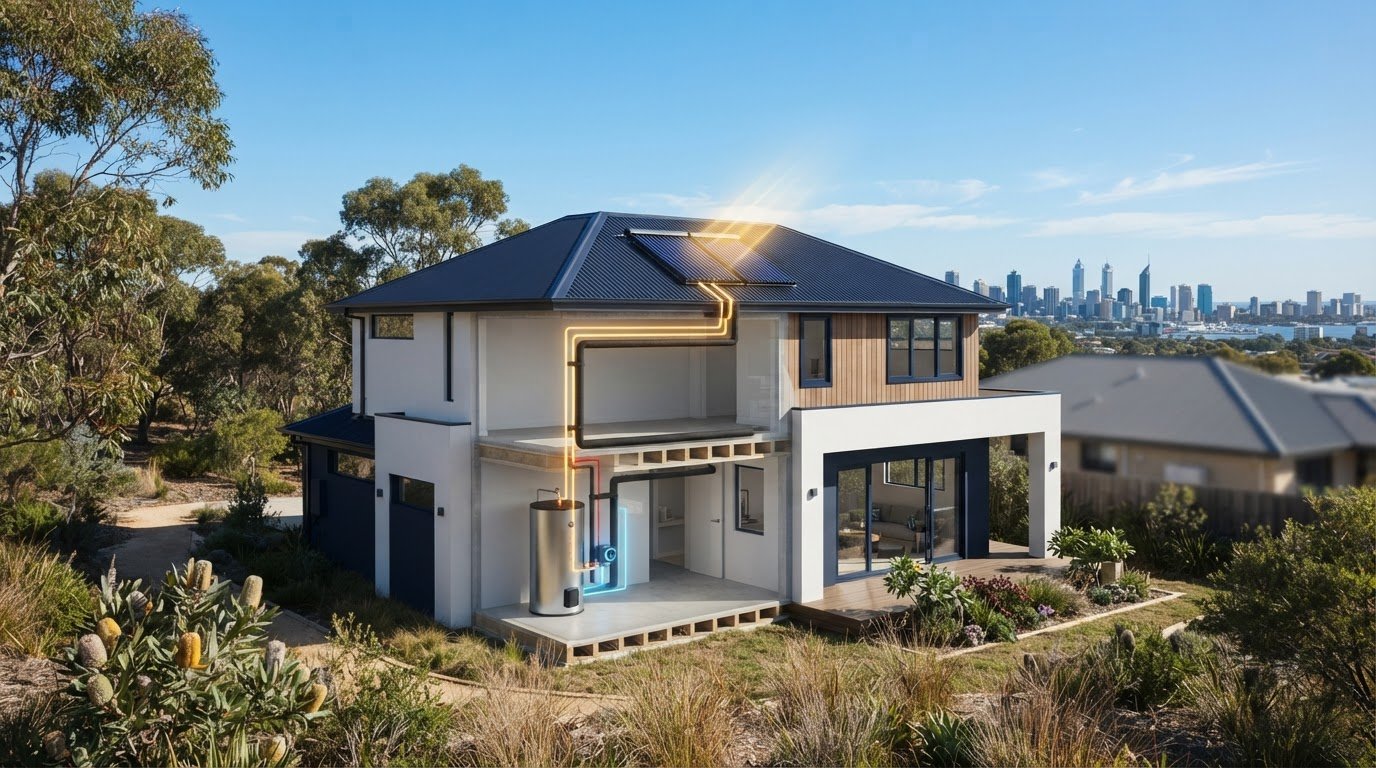
The basic cycle is straightforward: sunlight warms the collector, heat moves into the water, and the storage tank holds it until someone turns on a hot tap. A booster, usually electric or gas, supplies extra heat when solar input hasn’t warmed the water enough. This backup helps maintain hot water when conditions or demand mean the collectors cannot do all the work.
Systems have different layouts. Some place the tank on the roof beside the collectors; others connect roof-mounted collectors to a tank elsewhere on the property. The Solar water heating overview describes common collector and system arrangements. The configuration for a property depends on its design and requirements.
What does a solar thermal water heating system include?
The collector absorbs sunlight and converts it into heat. Flat-plate and evacuated-tube collectors are common options, with suitability depending on the system design and site conditions. The storage tank keeps heated water ready for use, while insulation helps limit heat loss between heating and use.
A booster provides additional heating when the stored water needs it. Together, the parts form a complete system: collectors gather heat, circulation moves it, the tank stores it and the booster helps maintain supply. They need to be matched as a system rather than considered separately.
How do roof-mounted collectors heat stored water?
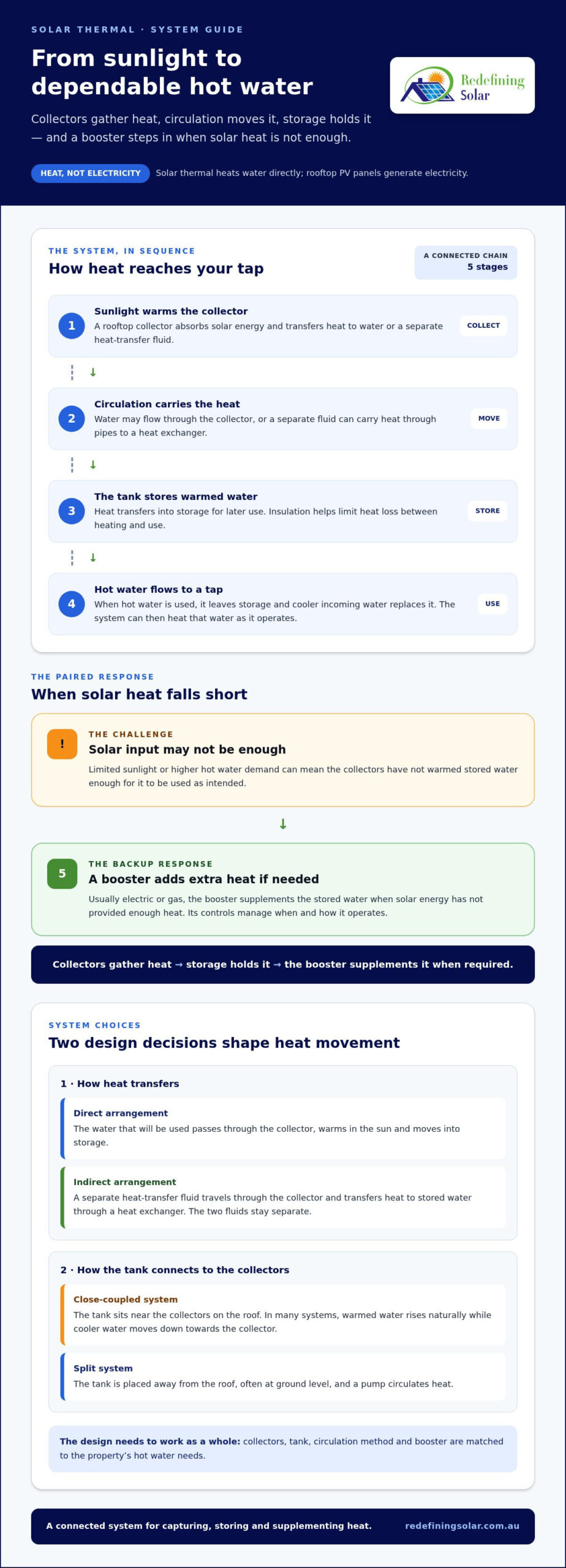
In a direct arrangement, water passes through the collector and is warmed by the sun before moving into storage. In an indirect arrangement, a separate heat-transfer fluid travels through the collector and transfers heat to stored water through a heat exchanger. The fluid and stored water remain separate.
A close-coupled system has its tank mounted near the collectors on the roof. In many such systems, warmed water rises naturally and cooler water moves down towards the collector. A split system places the tank away from the roof, often at ground level, and uses a pump to circulate heat. These layouts affect equipment placement and how heat moves, so they are not interchangeable in every property.
Redefining Solar designs, supplies, installs and services solar thermal systems for residential and commercial properties. The configuration brings together the collectors, tank, circulation method and booster to meet the property’s hot water needs.
How do solar collectors, storage tanks and boosters work together?
Think of the system as a chain: collectors gather heat, circulation carries it to storage, and a booster adds heat if the solar contribution is not enough. Each part has a distinct job, while the design and controls determine how they work together. The usual sequence is:
- Sunlight warms the collector. The collector absorbs solar energy and transfers that heat to water or a separate heat-transfer fluid.
- Circulation moves the heat. Water may flow through the collector itself, or a fluid may carry heat through pipes to a heat exchanger. Depending on the configuration, circulation relies on natural movement or a pump.
- The tank stores heated water. Heat transfers into the water in the storage tank, ready for later use. How quickly the tank warms depends on available sunlight, system design and how much water is drawn off.
- Hot water flows to a tap. When you use hot water, it leaves storage and cooler incoming water replaces it. That water can then be heated as the system operates.
- The booster supplements heat if needed. If solar input has not brought the stored water to the required temperature, auxiliary heating can raise it further.
The collector gathers heat, the tank holds it for use, and the booster provides extra heating when solar energy falls short.
What happens to water as it moves through the system?
In a direct system, the water you’ll use circulates through the collector and warms before returning to storage. In an indirect system, a separate heat-transfer fluid passes through the collector, then transfers its heat to stored water through a heat exchanger. The fluid and household water stay separate.
Circulation connects the collector with the tank. In some configurations, warmed fluid or water rises naturally while cooler water moves towards the collector. Others use a pump, guided by system controls, to move heat where it’s needed. The arrangement affects how heat moves as sunlight changes, but the purpose is the same: transfer captured heat into storage.
What does the booster do when solar heat is limited?
A booster is the backup heat source. It supplements stored water when solar energy has not provided enough heat for the water to be used as intended. Depending on the system, the booster uses electricity or gas, and its controls manage when and how it operates.
Systems do not all use the same settings or respond identically. Tank temperature, collector output, controls and household demand affect operation. For example, a run of low sunlight combined with higher hot water use may leave less solar heat in storage, so the booster may need to contribute more. Solar input varies, and no single setup should be assumed to cover every household’s demand in every season without backup.
Good design brings these working parts together around the property’s needs. Redefining Solar supplies, designs, installs and services solar thermal systems, with ongoing servicing supporting the system over time. For practical guidance on how the components fit together, explore solar thermal system design.
Will a solar thermal water heating system work through cloudy weather?
Yes, it can still contribute heat, but cloudy weather usually means less solar energy reaches the collectors. A solar thermal water heating system relies on sunlight, so its contribution changes with the weather and conditions around your property. It is not a solar-only source that will always meet every hot water need. Stored heat and a booster help manage variation, while results depend on the system and how it is used.
What changes on cloudy days and during cooler periods?
Cloud reduces the sunlight available to the collectors, which can lower the heat they gather. Cooler conditions can also affect how much useful heat reaches storage. A bright day may provide a stronger solar contribution than a heavily overcast one, but cloud cover is not the only factor. A nearby tree, building or other obstruction can shade collectors even when the sky is clear.
Season matters, too. Available sunlight and the angle at which it reaches the collectors change through the year. If stored water has less solar heat and your household draws a lot of hot water, less solar contribution may remain for the next use. The booster can supply additional heat when required, depending on the system’s controls and configuration.
These are general principles, not a prediction for every home. Collector placement, shading, system design, storage and hot water habits all influence performance. A practical assessment considers these factors together rather than relying on a general claim about how a system will perform in a particular season.
What are the practical benefits and trade-offs?
When conditions allow the collectors to heat water, solar thermal can reduce the conventional energy needed for water heating. Its contribution may vary from day to day, so the benefit is not identical in every weather pattern or household. Results depend on both the heat the system gathers and the amount of hot water you use.
The trade-off is that the system relies on a suitable site and needs a backup heating source. Shading, limited roof access, seasonal sunlight and heavy demand can all affect the solar heat available. A household that uses most of its hot water when solar collection is limited may draw more from stored heat or the booster. That does not automatically rule out solar thermal, but it is useful context when assessing fit.
Solar thermal and other options, including electric water heating, work differently and suit different property conditions. Compare how each system meets your hot water needs, what equipment is already in place and how the property can support the setup. If you’re weighing up an electric alternative, a dedicated guide to switching hot water systems can help frame the decision.
Redefining Solar designs systems around property conditions and hot water requirements, then supplies, installs and services them. This project-specific approach helps set realistic expectations about solar contribution and backup heating, rather than promising the same outcome for every Australian home.
How can you tell whether solar thermal suits your Australian property?
Start by looking at your hot water use and property conditions together. A solar thermal water heating system needs suitable space for its collectors and storage, and its contribution depends on available sunlight and how much hot water you draw. These factors shape the system design, rather than pointing to one setup that suits every home.
Which household and site factors matter most?
Use this checklist to organise the details that influence suitability:
- Hot water demand: Consider how many people live in your home, how often hot water is used and when demand peaks. Showers, laundry and dishwashing can create different patterns across households.
- Daily routines: Note whether most hot water is used in the morning, evening or throughout the day. The timing and size of peak use affect how storage and system sizing need to be considered.
- Roof conditions: Available space, orientation and shade from trees or nearby structures affect where collectors can sit and how much sunlight reaches them.
- Existing equipment: Your current hot water unit and how it connects to the property are important when planning a new system or replacement.
Australian conditions vary. Seasonal sunlight and local weather influence the heat collectors can gather, while shading and roof access differ from one property to another. A site-specific assessment brings these factors together with household usage to establish a suitable configuration. Redefining Solar’s solar hot water installation guide covers practical installation considerations.
How does solar thermal compare with other hot-water options?
Each option uses energy differently, so the right comparison is about fit rather than a universal winner. Solar thermal captures sunlight as heat for water, with a booster available to supplement the solar contribution. A heat pump uses electricity to move heat from the surrounding air into water. Electric storage heats water using electricity, while gas systems use gas as their heat source. Existing equipment, site conditions and household routines can all affect which approach makes sense.
For example, a property with suitable collector space and a household whose demand can be met from stored hot water differs from a shaded site or one with limited roof access. The system design and backup arrangement matter, too. Compare options by looking beyond the energy source to how each setup can serve your actual hot water needs.
If you’re considering replacing an electric unit, the electric-to-solar thermal comparison can help you think through the decision. For a property-specific view, discuss your solar thermal system requirements with Redefining Solar, which designs, installs and services systems for Australian homes and businesses.
What should you expect from a solar thermal system designed for your needs?
A dependable solar thermal project starts with your hot water requirements and property conditions, not a one-size-fits-all setup. The design brings together expected demand, available collector space, shading, storage and system configuration. This helps align the proposed arrangement with how the property is used, whether it’s a home or a business.
Supply, installation and ongoing servicing are connected parts of a system’s life. The equipment needs to suit the project, its components need to work together, and maintenance supports continued operation. Clear design choices also make it easier to understand how solar heat and backup heating are intended to meet your hot water needs.
How does Redefining Solar support a solar thermal project?
Redefining Solar supplies and installs residential and commercial solar thermal systems. The Australian-owned business is directed by a licensed electrician and also provides maintenance and repairs for solar heating installations.
For your project, the design connects the intended hot water load with property conditions and system configuration. A household with concentrated morning demand, for example, has a different usage pattern from a business that draws hot water throughout the day. Roof access and shading also shape what can be installed and where. Considering these details together helps set realistic expectations for the system.
What are sensible next steps for an interested property owner?
Before discussing a project, gather a few straightforward details. You do not need to work out the technical design yourself. A clear picture of everyday use and existing equipment gives the design process a practical starting point:
- Note how many people use hot water and when demand is usually highest.
- Record the type of hot water equipment already in place, if you know it.
- Consider visible roof shading or limits on available collector space.
- Think about whether the project is for a home or a business, and how hot water use differs across the day.
These details connect the property’s conditions with the system’s intended hot water load. The final configuration should reflect the project, rather than assumptions about what works for every Australian property.
If you’re considering a solar thermal project, talk with Redefining Solar about solar thermal water heating. Share your hot water use and property details to explore a system designed for your needs.
Take the next step with a clear plan
Choosing a solar thermal water heating system is easier when the decision starts with your property, not a generic promise. Consider what you want your hot water setup to do over time, and how considered design, installation and ongoing care can support that goal. You do not need to have every technical detail worked out before exploring your options.
Redefining Solar is Australian-owned and operated, and directed by a licensed electrician. The team supplies and installs solar thermal systems, with maintenance and repairs to support them beyond installation.
Ready to explore whether solar thermal could suit your home or business? Discuss a solar thermal water heating system for your property with Redefining Solar. A practical conversation about your needs is a clear first step towards a considered system design.
Frequently Asked Questions
Does a solar thermal water heating system work on cloudy days?
Yes, it can still collect some heat, although reduced sunlight can lower its contribution. If the tank was warmed on a sunny day, that stored hot water may help cover use during a cloudy spell. The booster can add heat if the stored supply needs it. Note whether hot water runs short after several overcast days, as this can help identify whether household demand or system operation needs attention.
Does a solar thermal water heating system need a booster?
Yes, Australian solar thermal water heating systems use a booster to help provide hot water when solar input is insufficient. Depending on the setup, the booster uses electricity or gas, and controls manage its operation. Its contribution can vary with sunlight, stored water and household use. A booster is backup heating, not a sign that the collectors have stopped working; it supports supply when solar heat alone is not enough.
How long does a solar thermal water heating system last?
A solar thermal water heater is designed to last approximately 20 years or more with proper maintenance, though that is not a guaranteed lifespan for every system. Actual service life depends on the equipment, installation and ongoing care. Keep records of servicing and repairs, and pay attention to changes such as slower recovery or less available hot water. These signs can prompt an inspection before a minor issue becomes more disruptive.
Can solar thermal collectors be installed on any roof?
No, a suitable installation depends on the roof and property. Collector space, orientation, shading and access affect placement, while the system layout determines where the storage tank will sit. A roof that looks clear from the ground may still be shaded at useful times of day. A site assessment establishes whether the collectors and associated equipment can be positioned to suit the property and system design.
How often does a solar thermal water heating system need servicing?
There isn’t one service interval that applies to every system. Follow the maintenance guidance for your particular equipment, as requirements can differ by design and components. Arrange an inspection if you notice leaks, unusual noises, changes in booster operation or less hot water than usual. Redefining Solar provides maintenance and repairs for solar heating installations to help address issues and care for the system.
Is solar thermal water heating different from solar photovoltaic power?
Yes. Solar thermal collectors capture sunlight as heat to warm water, while photovoltaic panels convert sunlight into electricity. Both technologies can be used at a property, but they serve different purposes. For example, a PV system can power household appliances, while a solar thermal system heats water for taps and showers. Knowing which energy need you want to address is a useful first step when considering either option.
Are rebates available for solar thermal water heating in Australia?
Eligible systems may qualify for Small-scale Technology Certificates under the federal Small-scale Renewable Energy Scheme, with eligibility depending on factors such as the system and its location. Eligible products need to appear on the Clean Energy Regulator’s register of solar water heaters. State and territory incentives can differ and may have their own conditions. Check current scheme details and eligibility before relying on an incentive in your project budget.