The panels alone don’t determine how well a solar system performs. In the DIY solar panel kits vs professional installation comparison, system design, panel placement and correct electrical work all matter. In Australia, only Solar Accreditation Australia-accredited installers can connect a solar system to the grid.
DIY can appeal if you want more control over the project, but roof work and electrical connections carry practical risks. Installation choices can affect system performance, equipment warranties and, in some cases, roof or insurance cover.
This guide explains what affects real-world performance, where DIY installation can raise warranty concerns and what Australia’s grid connection rules mean for homeowners. It also outlines how professional installation can help you weigh safety, compliance and long-term reliability.
Key Takeaways
- Solar performance depends on system design, panel placement and correct electrical work, not just the panels in the kit.
- DIY work can put roof, equipment or insurance cover at risk, so understand how installation affects warranties before choosing an approach.
- In Australia, only Solar Accreditation Australia-accredited installers can connect a solar system to the grid.
- Licensed installation can help with system design, compliance and access to Small-scale Technology Certificates; supply-only panels suit a different level of involvement.
Can a DIY system perform as well as a professional one?
Yes, a DIY solar system can perform well if its design and installation suit the property. The DIY solar panel kits vs professional installation comparison comes down to who handles system design, panel placement and electrical work, all of which can affect how much energy your home uses.
Labour savings and rework costs
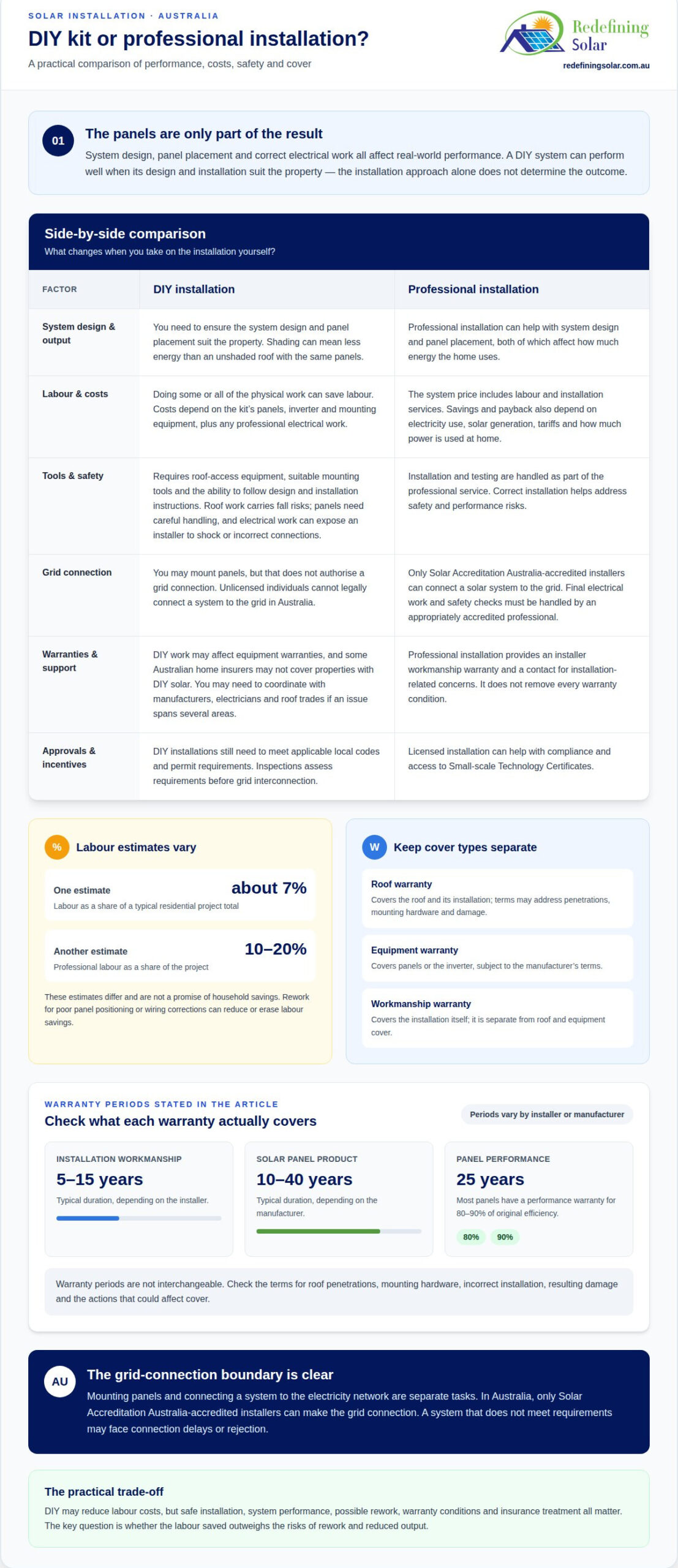
DIY labour savings come from homeowners doing some or all of the physical installation, but mistakes can mean rework. Estimates differ: labour accounts for about 7% of a typical residential project total in one estimate, while another puts professional labour at 10-20%. These figures aren’t a promise of what a household will save. If panels are poorly positioned or wiring needs correction, repairs can reduce or erase the savings.
Costs and long-term performance
DIY costs depend on the kit’s panels, inverter and mounting equipment, as well as any professional electrical work. A professionally installed system also includes labour and installation services. The DIY solar panel kits vs professional installation choice affects more than the initial outlay: savings and payback depend on household electricity use, solar generation, tariffs and how much power you use at home. For example, a shaded roof may produce less energy than an unshaded roof with the same panels.
Tools, skills and safe installation
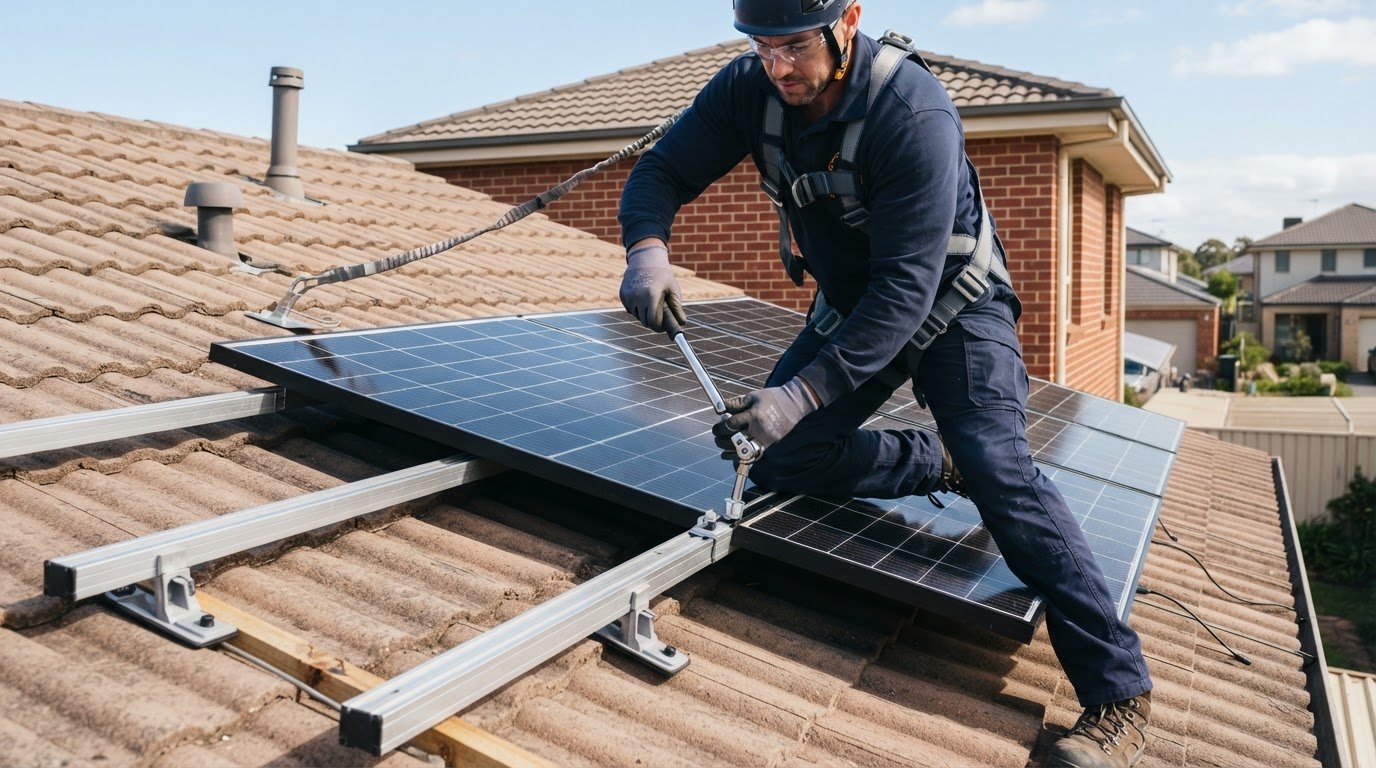
Safe kit installation requires roof-access equipment, suitable mounting tools and the ability to follow the system design and installation instructions. The work involves securing the mounting structure, positioning panels, then arranging electrical connections and testing. Rooftop work carries fall risks, panels need careful handling, and electrical work can expose an installer to shock or incorrect connections. Installation errors can affect both safety and system performance.
For homeowners, the practical question is whether the labour saved outweighs the risks of rework and reduced output. Correct design and installation, not the DIY label alone, shape how well a solar system performs over time.
Will DIY solar installation void my roof warranty?
Not automatically. Installing solar panels doesn’t, by itself, determine whether your roof warranty remains valid. The outcome can depend on the warranty terms and whether installation causes damage. Equipment warranties and insurance policies have separate conditions.
DIY and professional installations can differ in manufacturer support and insurance treatment. DIY work may void equipment warranties, and some Australian home insurance providers may not cover properties with DIY solar installations. Professional installation doesn’t remove every warranty condition, but it gives you an installer workmanship warranty and a clear contact for installation-related concerns.
Separate roof, equipment and workmanship cover
A roof warranty covers the roof and its installation; a panel or inverter warranty covers the equipment. Workmanship cover relates to the installation itself. These warranties aren’t interchangeable. Before work begins, identify which terms cover roof penetrations, mounting hardware, incorrect installation and resulting damage. A professional installer’s paperwork can also help show who completed the work if an issue arises later.
Solar installation workmanship warranties typically last 5 to 15 years, depending on the installer. Solar panel product warranties typically last 10-40 years, depending on the manufacturer. Most panels come with a 25-year performance warranty, which ensures they continue to perform at 80-90% of their original efficiency. Check the terms for what each warranty covers and the actions that could affect it.
Support after installation
With professional installation, the installer can provide a contact for workmanship or setup concerns. That after-sales support is separate from the manufacturer’s process for equipment faults, and the relevant warranty determines who handles each issue. For DIY work, you may need to coordinate separately with equipment manufacturers, electricians and roof trades if a problem spans those areas.
Incorrect mounting or roof penetrations can create damage that affects roof cover, while unlicensed work can create insurance concerns. Regulations and warranty terms are separate, so proper installation records matter when a claim is assessed. Understanding those conditions before choosing between DIY and professional work helps you weigh labour savings against possible gaps in support. For a professionally installed system, residential solar systems are one option to consider.
Legality of DIY grid-connected solar in Australia
DIY may include mounting panels, but connecting a solar system to Australia’s electricity grid is a separate task. The distinction matters for safety, approvals and eligibility for solar incentives.
Grid connection requirements
Grid connection links a solar system’s electrical equipment to the electricity network. In Australia, only Solar Accreditation Australia-accredited solar installers can connect systems to the grid. Unlicensed individuals can’t legally make that connection. A partial DIY approach may involve mounting panels, but final electrical work and safety checks must be handled by an appropriately accredited professional.
Grid inspections help assess compliance before connection, including the electrical setup and inverter arrangements. A system that doesn’t meet requirements may face connection delays or rejection, leaving its solar energy unavailable for export. Panel mounting and grid connection are separate tasks, so completing the first doesn’t authorise the second.
Permits and inspections
DIY installations still need to meet applicable local codes and permit requirements. Depending on the project and location, approvals can involve electrical and structural matters. Inspections assess whether the installation meets relevant requirements before grid interconnection. This paperwork is part of making a system eligible for connection, not an optional extra after installation.
Rules aren’t identical across Australia: electrical licence requirements vary by state, and permit processes can differ between jurisdictions. Rebate eligibility also depends on the applicable incentive rules. For example, Small-scale Technology Certificates require an accredited installer, so DIY installation can affect access to that upfront benefit. State and territory differences matter for electrical licensing, approvals and incentive eligibility, but don’t change the basic distinction between mounting panels and connecting them to the grid.
Off-grid kits don’t connect to the electricity network, so they don’t need grid approval. They still require safe system design and compliant electrical work, and the inverter must suit the system and its intended use. Grid connection rules still matter if a property later adds a grid-connected system, so choosing off-grid or grid-connected solar affects the approvals and professional work involved.
Benefits of licensed professional installation
Professional installation brings system design, roof assessment and electrical work together. An installer can assess roof orientation, shading and household energy use before planning the layout. For example, panels in shade may generate less energy than panels with better sun exposure. The DIY solar panel kits vs professional installation decision affects whether these assessments and installation tasks are coordinated as one project.
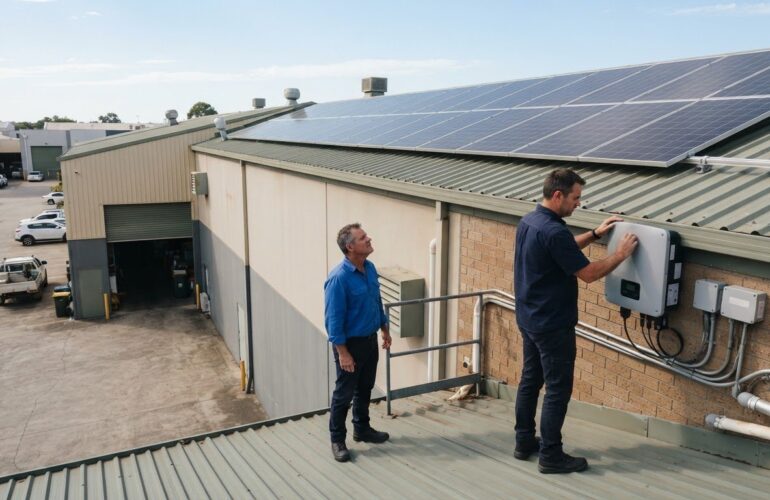
For a grid-connected system, installation and connection requirements need to be considered together. In Australia, only Solar Accreditation Australia-accredited installers can connect solar systems to the grid. The installer can coordinate the electrical setup and connection process, including relevant paperwork and compliance steps. This can help avoid a gap between mounting the equipment and having a system ready to operate with the network.
Small-scale Technology Certificates are another consideration. An accredited installer is required for a solar system to receive STCs, which may contribute to an upfront discount. Professional installation also gives you a contact for concerns about the completed work. This support is separate from manufacturer equipment warranties, but can make it clearer where to raise an installation issue.
A professional team can complete an installation in a few days, managing roof mounting, electrical work and system setup as connected tasks. Inspection and commissioning help establish that the system is ready for its intended use. The DIY solar panel kits vs professional installation choice is about more than avoiding roof work: it also affects how design, strict electrical requirements and installation fit together. For homeowners who value a coordinated process, that accountability can be a practical reason to choose professional installation.
If you’re planning a grid-connected system, discuss professional solar installation to bring system design, electrical work and connection requirements together.
Redefining Solar: Solar Panel Sales / Supply Only
Redefining Solar offers solar panel sales and supply-only options if you’re arranging parts of a project yourself and need panels rather than a complete installation. With supply-only sales, you organise the installation and the equipment is supplied separately.
If you’d rather have a complete system planned for your property, Redefining Solar also offers residential and commercial solar systems. Battery Ready & Upgrades may suit an existing system or a project planned with future battery storage in mind. The right approach depends on how much of the design and installation you want handled for you.
For help choosing between panel supply and a complete solar system, contact Redefining Solar to discuss your project.
Choose the solar path that fits your plans
Your next decision is how much of the project you want to manage yourself and where you want professional support. Choosing between DIY solar panel kits and professional installation means matching the work to your confidence, property and future plans, rather than choosing a label alone.
Redefining Solar offers Residential Solar Systems for homes and Commercial Solar Systems for businesses, as well as Battery Ready & Upgrades. These options can help you consider a complete system or an upgrade path that fits your priorities.
Before deciding, consider what you want handled, what you plan to organise yourself and how the system needs to serve your property over time. A clear discussion can help turn those preferences into a practical next step. Contact Redefining Solar for advice and talk through the approach that feels right for you.
Frequently Asked Questions
Conclusion: Which Path Should You Take?
Choose professional installation for a grid-connected system if you want the design, electrical work and connection process managed together. DIY may suit someone planning an off-grid setup who can handle the installation safely, though qualified electrical advice remains useful. A middle ground is to source panels separately while leaving grid-connected electrical work to an accredited installer. Match the approach to your skills and the system’s intended use.
Do DIY systems qualify for rebates and tax credits?
In Australia, eligible solar systems may qualify for Small-scale Technology Certificates (STCs), rather than a tax credit in the usual sense. An accredited installer is required for a system to receive STCs, so a fully DIY installation can affect eligibility. STCs are optional: you can assign them, sell them, or use them for an upfront discount. The benefit depends on the system and how the certificates are handled.
How much can I save with DIY solar?
Your savings depend on how much work you take on and what you spend on equipment, access gear, electrical work and any corrections. A kit price alone doesn’t show the full cost. For a useful comparison, consider the complete installed cost alongside likely generation and how much solar electricity your household can use. There’s no single savings figure or payback period for every Australian home.
Should you choose DIY or professional installation?
Choose based on the system type, your practical skills and the work you’re prepared to manage. For a grid-connected setup, professional installation provides the accredited connection needed to operate with the network. DIY may suit an off-grid kit, which doesn’t connect to the grid, but system design and electrical safety still matter. If you want panels supplied separately, supply-only sales are another option.
What’s the biggest hidden cost of DIY solar?
Rework is a key cost to allow for: correcting a mounting, wiring or system-design problem can require extra equipment and paid labour. Access equipment and replacement parts can also add to the initial kit cost. A less visible cost may arise if a poorly performing system generates less usable electricity than planned. Compare the full project scope, not just the panel and inverter prices.
Will a DIY solar installation affect my home insurance?
It can. Some Australian home insurance providers may not cover properties with DIY solar installations, and policy terms determine how damage or resulting claims are treated. Before starting, give your insurer the planned scope and installation details, then keep relevant paperwork and records of any professional electrical work. Clear documentation can help show what was installed and who completed each part if you need to make a claim.