
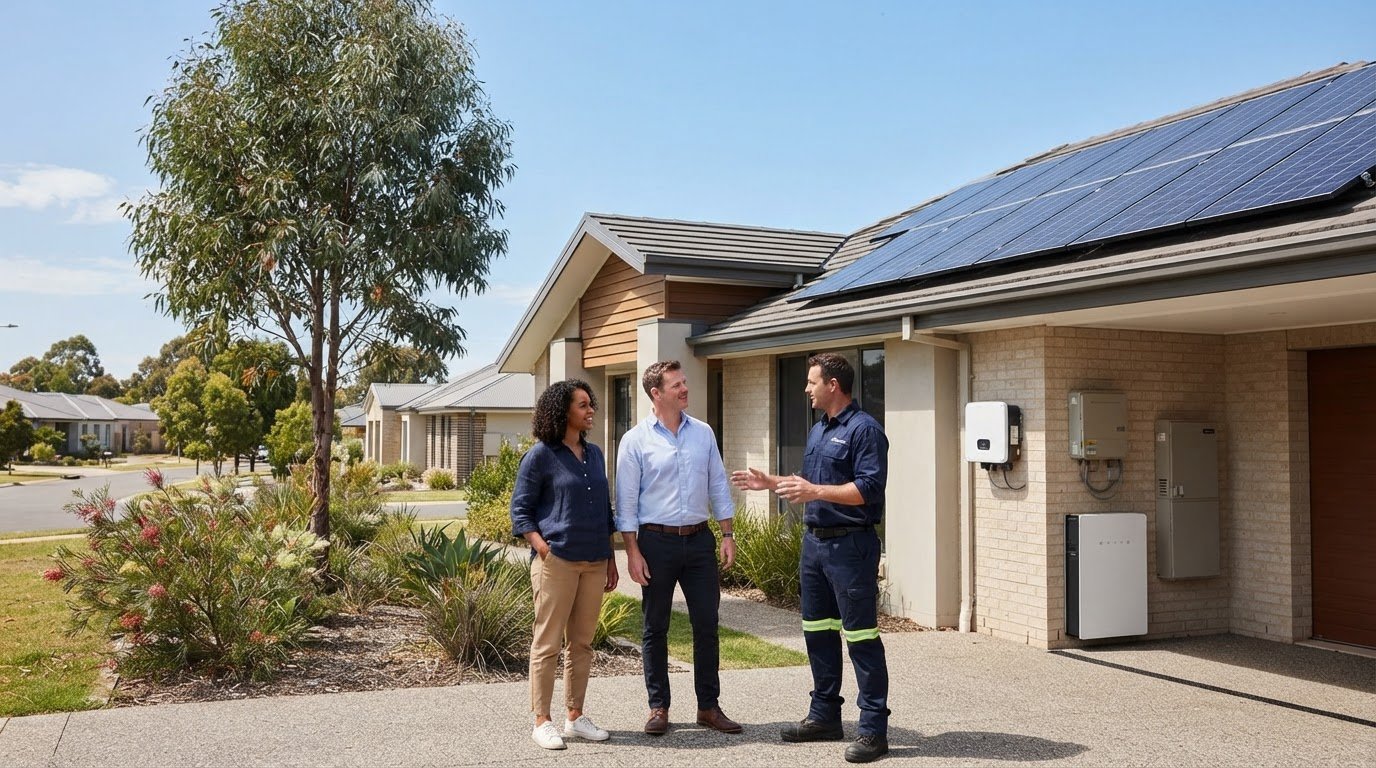
A larger solar system isn’t automatically the right one for your home. The best residential solar system installation starts with how your household uses electricity, what your roof can support and whether you may want a battery later.
Comparing proposals can be difficult when quotes list different panels, inverters and installation details. The system size alone won’t tell you what’s included or how well the design suits your needs. To compare options fairly, check the equipment, installation scope and support as well as the proposed capacity.
This guide explains how to assess your options, compare proposals against consistent criteria and choose a residential solar solution that fits your household. It covers system components, battery readiness, roof suitability, safety and workmanship, along with checks to make before signing. These practical steps can help you approach the decision with greater confidence.
Key Takeaways
- Use your electricity bills and household routines to understand when you use power and what system size may suit you.
- Check roof orientation, shading, available space and condition, as these can shape the solar design for your home.
- Compare proposals beyond panel brands: review inverter details, monitoring, electrical work, commissioning and handover.
- A well-planned residential solar system installation considers your household needs, roof and future battery plans, but can’t guarantee savings.
- Before signing, confirm the written scope, site assessment, connection steps and what support is available after installation.
What residential solar system installation involves for an Australian home
A residential solar system installation involves designing, supplying and connecting a rooftop photovoltaic system to your home’s electrical setup. The panels generate electricity from sunlight, and an inverter converts that output into electricity your household circuits can use. A site assessment helps determine how the roof, available space and household needs should shape the design.
Panels generate electricity during daylight, not after dark. Without a battery, a standard grid-connected system doesn’t store daytime solar energy for night-time backup. For a broader overview of solar uptake in Australia, see Solar power in Australia.
A grid-connected residential solar system uses rooftop panels to supply your home while they’re generating power, and relies on the electricity grid when they aren’t producing enough.
What equipment makes up a home solar system?
Panels capture sunlight, while mounting equipment secures them to the roof. Cabling carries the electrical output to the inverter, which converts it into a form your home can use. Electrical protection helps protect the system and its connections. These components work as a set, so panel and inverter choices, mounting and cable routes should suit the site and the overall design. Check that a proposal clearly specifies the equipment and electrical work included.
What can rooftop solar do for your household?
When solar production coincides with household demand, generated electricity can supply appliances and other loads through your home’s circuits. If the system produces more than you’re using, surplus electricity may be sent to the grid, subject to your property’s connection arrangements. When household demand exceeds solar production, electricity can be imported from the grid.
This means a system’s value depends partly on when you use electricity, not only how much the panels generate. A battery is a separate component that can store some excess solar generation for later use, subject to its design and setup. A battery isn’t required for rooftop solar to supply daytime loads, but it may be worth considering if storing energy for evening use or backup is part of your plans.
How to size and compare residential solar system options
Start with your electricity bills, then look beyond the total usage. Note when your household is active and using power, such as during the day, in the evening or across different seasons. This gives you a useful basis for checking whether a proposed system reflects your routine rather than a standard package.
Solar size should reflect when your household uses electricity, because daytime generation is most useful when it lines up with daytime demand.
Which factors influence the system size your home needs?
Gather recent bills and note regular daytime activities, such as working from home or running appliances. A site assessment should consider usable roof area, orientation and shading, along with the roof’s condition and the home’s electrical setup. These factors affect what can be installed and how the system should be designed. Avoid choosing by panel count alone: the right layout and capacity depend on your property.
Ask each installer to explain how the proposed design relates to your electricity use and roof. For broader consumer guidance on checking solar proposals and installers, consult the Clean Energy Council’s guide to buying solar.
Should you choose battery-ready solar or add storage now?
Battery-ready planning means considering a future battery when selecting and configuring your solar system. It doesn’t mean storage is installed, or that every future battery will suit the setup. Adding a battery now means including storage in the initial plan. Compare these options against your evening electricity use and whether you want backup during a grid outage. Backup depends on the system design, so ask which household circuits could be supported and under what conditions. Redefining Solar offers battery-ready upgrades as well as solar battery installation, which can help you consider both pathways as part of your system plans.
Use this comparison to check whether proposals cover the same things:
| What to compare | Questions to ask |
|---|---|
| Equipment scope | Are the panels, inverter, mounting and electrical work clearly specified? |
| Monitoring | How will you view system generation and identify performance issues? |
| Battery pathway | Is future battery compatibility explained, or is a battery included now? |
| Support | What handover information and ongoing maintenance or repair support are described? |
Look for clear answers rather than assuming proposals are equivalent because their system capacities appear similar. If you’re weighing system design, battery readiness and ongoing care, you can also review Redefining Solar’s residential solar options.
How to compare residential solar installation proposals fairly
The same system-size figure doesn’t mean two proposals include the same equipment or work. They may differ in panel and inverter models, monitoring features, electrical work or handover support. To compare a residential solar system installation fairly, check the design and written scope as carefully as the headline capacity.
Ask each installer to explain how the proposed equipment suits your roof, household use and future upgrade plans. A clear proposal should identify assumptions made before a site inspection and list any work that may be excluded or need further assessment.
What should a clear solar proposal set out?
Look for itemised panel and inverter specifications, mounting equipment, monitoring arrangements and the work included. Check whether the proposal explains who is responsible for connection steps with the relevant electricity network and identifies site-specific exclusions. Before accepting, ask what commissioning involves, what information you’ll receive at handover and how you can check the system is operating.
- Design: What roof and usage assumptions informed the proposed layout?
- Installation scope: Is the site inspection, mounting, cabling and electrical work described?
- Connection: Who manages the relevant application or network processes, and what could affect them?
- Monitoring and handover: What system information and operating guidance will you receive?
- Exclusions: Are any additional site works or responsibilities clearly identified?
- Warranty and support: Are equipment warranty terms, service responsibilities and maintenance options set out in writing?
Read warranty documents rather than relying on verbal summaries. Terms may differ between equipment and installation work, so ask who to contact for each type of issue.
How can you assess an installer’s capability and support?
Ask who is responsible for design, installation and commissioning, and who you can contact afterwards with questions. Request details of relevant licences, accreditation and compliance evidence for the proposed work. Check current requirements for your state or territory and connection arrangements, as credentials and processes may not apply uniformly across Australia.
Compare the support pathway as well as the equipment list. Ask how maintenance and repairs are handled, and whether the proposal explains what falls within the installer’s responsibility. Redefining Solar is an Australian-owned and operated renewable-energy company directed by a licensed electrician. Its services include residential solar design, supply, installation, maintenance and repairs.
Keep proposals side by side and mark what’s included, excluded or still to be confirmed. This makes gaps easier to spot before you sign and gives you a clear basis for follow-up questions.
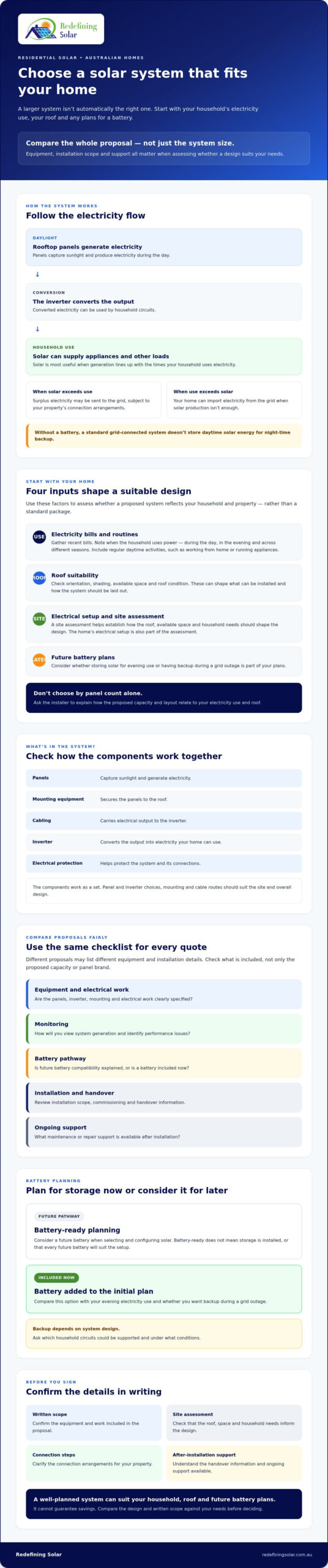
What happens during residential solar system installation
A residential solar system installation usually moves through clear stages, from the first discussion to system handover. Timing and connection steps vary with the property, the proposed system and the relevant electricity network processes, so don’t rely on a universal timeframe.
What is checked before panels are installed?
A site assessment checks usable roof area, shading, mounting considerations and the home’s electrical setup. This helps identify constraints and any work that may affect the design. Ask how proposed changes will be explained and approved before the installation scope is altered.
Before work begins, confirm access arrangements, any site preparation needed and who is responsible for each task. Check that the proposal describes what’s included and what may need separate attention. State and territory requirements, network processes and applicable standards can vary or change, so ask how these will be checked for your installation.
The usual process looks like this:
- Discovery: Discuss your household needs, electricity use and plans for the system.
- Site assessment: Review the roof, shading, mounting options and electrical setup.
- System design: Confirm the proposed equipment, layout and installation scope.
- Approvals: Clarify the required approvals and connection steps for your property and network.
- Installation: The agreed panels and system equipment are installed, with electrical work completed as specified.
- Commissioning and handover: The system is checked, monitoring is set up where included, and operating information is provided.
What should happen at commissioning and handover?
Ask what system checks are completed before handover and how you’ll know the system is operating normally. If monitoring is included, confirm how to access it and what information it shows. Request the relevant system documents, equipment details and service contact information, and make sure you understand who to contact if you have questions later.
A careful handover should leave you clear about what was installed, how to monitor it and what support arrangements apply. If you’re considering solar for your home, discuss your home solar requirements with Redefining Solar.
Choosing a residential solar installer and planning your next step
The right installer should help you understand how the proposed system fits your household and property, not just present a list of equipment. A careful, site-specific proposal can reduce uncertainty by making the design, responsibilities and support clear. It can’t guarantee a particular bill reduction or financial outcome, because results depend on factors including your electricity use, solar production and applicable electricity arrangements.
When is a residential solar proposal a good fit?
Before proceeding, check that the proposal reflects your household’s electricity use and the conditions found at your property. Make sure equipment choices and installation responsibilities are explained in writing, and that you know what support is available after handover. If a technical detail, exclusion or contract term is unclear, ask for an explanation before you sign.
- Household needs: Does the design account for when you use electricity and any future plans you’ve raised?
- Roof and system design: Are the site assessment and proposed layout explained clearly?
- Written scope: Can you see what equipment and installation work are included, and what is excluded?
- Ongoing support: Do you understand who to contact about maintenance, repairs or system questions?
These checks help you compare proposals by their full scope, rather than choosing by system size or equipment list alone.
How can Redefining Solar support the installation journey?
Redefining Solar is an Australian-owned and operated renewable-energy company directed by a licensed electrician. Its residential offering brings design, equipment supply and installation together, with maintenance and repairs available for ongoing care. This joined-up service can help you consider not only the initial system, but also the support you may want after installation.
If you’re considering a battery later, ask whether a battery-ready upgrade suits your plans. If storing energy is already a priority, discuss whether a solar battery should be part of the proposal. Neither option is necessary for every household, so the recommendation should relate to your needs and system design. If you already have panels and are thinking about adding storage, understanding how to upgrade your solar system for battery storage can help you assess whether your existing equipment is compatible before committing to a battery.
A useful next step is to discuss your property, electricity use and priorities. You can ask questions, clarify what needs assessing and consider suitable options without assuming that one system is right for every home. Talk with Redefining Solar about your home.
Make your next solar decision with confidence
A suitable residential solar system installation starts with your household’s electricity use and your property’s conditions, not just a headline system size. Compare proposals by checking the equipment, design, installation scope and handover details. A site-specific assessment can help reduce uncertainty, but it can’t guarantee a particular level of savings.
Consider the full journey, from system design and supply through installation and ongoing service. Battery-ready upgrades or a battery may suit some households, but your choice should reflect your plans and how you use electricity.
Redefining Solar is Australian-owned and operated, directed by a licensed electrician, and provides residential solar design, supply, installation and ongoing service nationally. If you’re ready to discuss your property and priorities, discuss a residential solar system for your home.
With clear answers and a proposal shaped around your home, you can take the next step at a pace that feels right.
Frequently Asked Questions
How long does residential solar system installation take?
Installation time depends on the property, system design and work involved, so there isn’t one timeframe that applies to every home. The full process also includes steps before installation, such as site assessment, design and relevant approvals or network connection processes. Ask your installer which stages apply to your property, what could affect timing and when you’ll receive an update if plans change.
Do I need approval to install solar panels on my home in Australia?
You may need approvals or connection arrangements, and the requirements depend on your property, location and electricity network. Before work begins, ask your installer to identify which applications or approvals apply and who will manage each step. Check that the proposed system meets current state or territory requirements, network processes and applicable standards. Don’t assume the process is identical across Australia or that panels can be connected without the relevant checks.
How do I know what size solar system my house needs?
Use your electricity bills and household routines as a starting point, then have the roof and electrical setup assessed. Consider when you use power, including daytime activity and evening demand, as well as seasonal changes. Roof area, orientation and shading can affect the design. The right residential solar system installation is site-specific, so avoid choosing by panel count alone. Ask the installer to explain how the proposed system relates to your usage and property.
Can I add a battery to my residential solar system later?
Often, a battery can be added later, but compatibility depends on the existing system’s design and equipment. Ask whether the proposal includes battery-ready planning and what that means for the inverter, wiring or other components. Battery readiness doesn’t mean a battery is installed or that every future battery will suit the system. If you want backup during an outage, ask what additional equipment and configuration would be needed to support selected circuits. For a detailed look at what’s involved, see this guide on how to upgrade your solar system for battery storage in Australia.
What should I compare in solar installation quotes?
Compare more than system size. Check the panel and inverter specifications, system design, monitoring, mounting and electrical work, site inspection, commissioning and handover. Make sure connection responsibilities, exclusions and site-specific assumptions are clear. Read warranty terms and confirm who handles maintenance or repairs. If two quotes list the same capacity, they may still differ in equipment, installation scope and support, so ask installers to explain any gaps before deciding.
Does rooftop solar work on a shaded or south-facing roof?
It may still be possible, but shading and roof orientation can affect how much electricity a system generates and how it should be designed. The impact depends on the roof layout, when shade falls and which areas are available for panels. A site assessment can clarify suitable placement and design options. Ask the installer to explain any expected limitations and how the proposed layout responds to them, rather than relying on a general rule.
What happens to my solar system during a power outage?
A typical grid-connected solar system shuts down during a grid outage for safety, so rooftop panels alone usually won’t keep household circuits running. Backup power requires suitable battery and system configuration, and not every battery setup provides backup. If this matters to you, ask which circuits could be supported, how the system behaves during an outage and what equipment is included. Confirm the answer in the written proposal before choosing a system.
[…] assessment can help clarify the next step. If you’re also weighing up a new installation, the residential solar system installation buying guide can help you understand what to look for when comparing proposals and system […]