
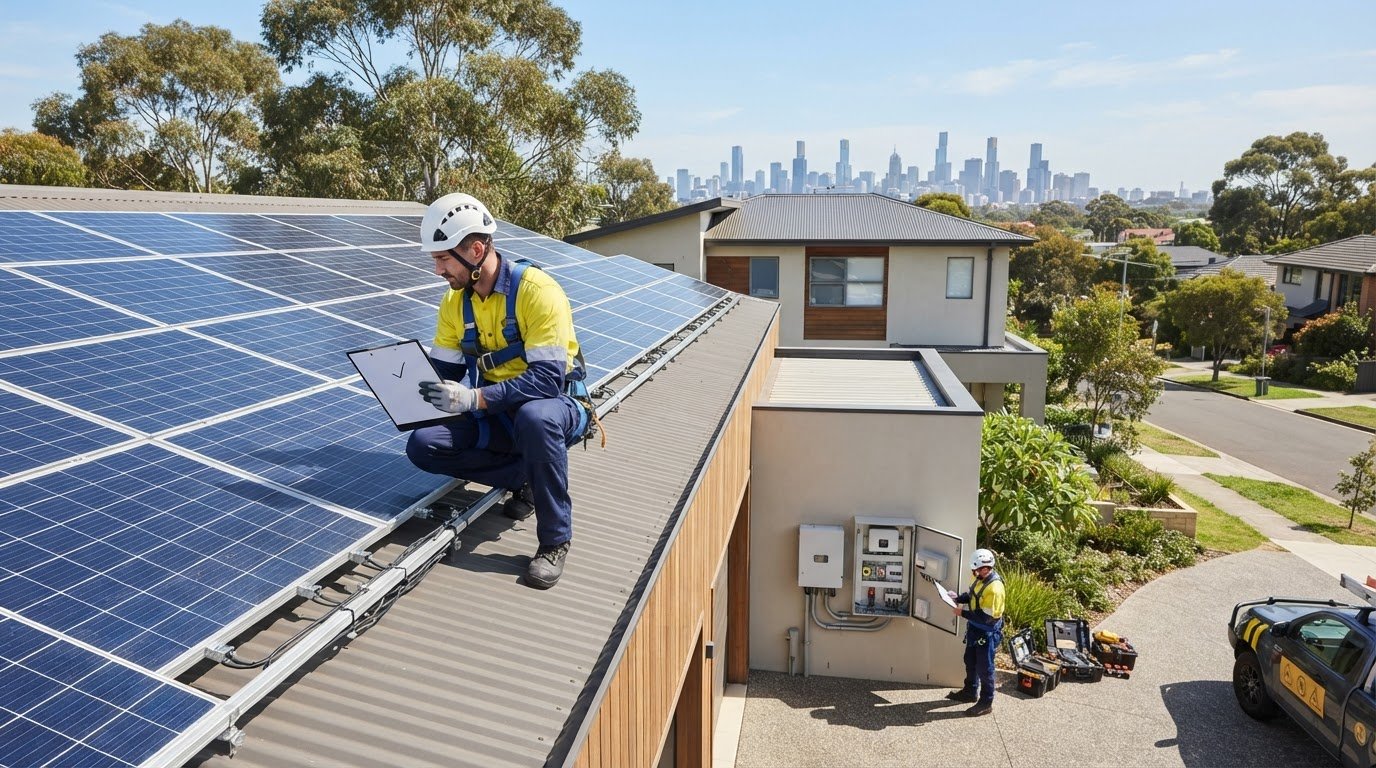
Before you commit to a solar project, ask who will design the system, carry out the electrical work and take responsibility for the installation. For a licensed electrician solar installation, an electrical licence and solar accreditation are separate credentials, and the requirements can depend on your state or territory.
A low quote can leave important questions unanswered. If you don’t know who will do each part of the job, what the quote includes or who will provide the handover records, it’s difficult to compare proposals fairly. Ask for names, current credentials and a clear explanation of each person’s responsibilities.
This practical 2026 checklist explains how to verify the electrical licence relevant to your project, check Solar Accreditation Australia credentials where applicable and ask about installation standards and records. You’ll also find a consistent way to compare quotes, clarify responsibility at each stage and identify gaps before signing. Use the questions to get specific answers from any installer before making your decision.
Key Takeaways
- Check which electrical licence applies to the proposed work in your state or territory, then verify it with the relevant regulator.
- Understand the difference between an electrical licence and solar accreditation, and check the named people’s credentials where applicable.
- Compare quotes by checking who designs and installs the system, supplies the equipment, commissions it and provides handover documents.
- Get the scope, schedule and responsible people confirmed in writing before work starts. Raise technical or safety concerns with the contractor.
- Look for clear accountability from design through handover. Ask direct questions if any part of the process is unclear.
Licensed electrician solar installation: what should a homeowner check first?
Before comparing system sizes or equipment, find out who is responsible for each part of the work and which credentials apply to their role. A sales representative may be able to explain the proposal, but that doesn’t confirm the qualifications of the people designing or installing the system. Ask for their names and responsibilities, then verify the credentials relevant to the proposed work.
If you’re getting familiar with how panels convert sunlight into electricity, the Solar power overview provides useful background. For practical guidance on planning a home project, see this Australian residential solar installation buying guide.
Electrical licence and solar accreditation: why both terms matter
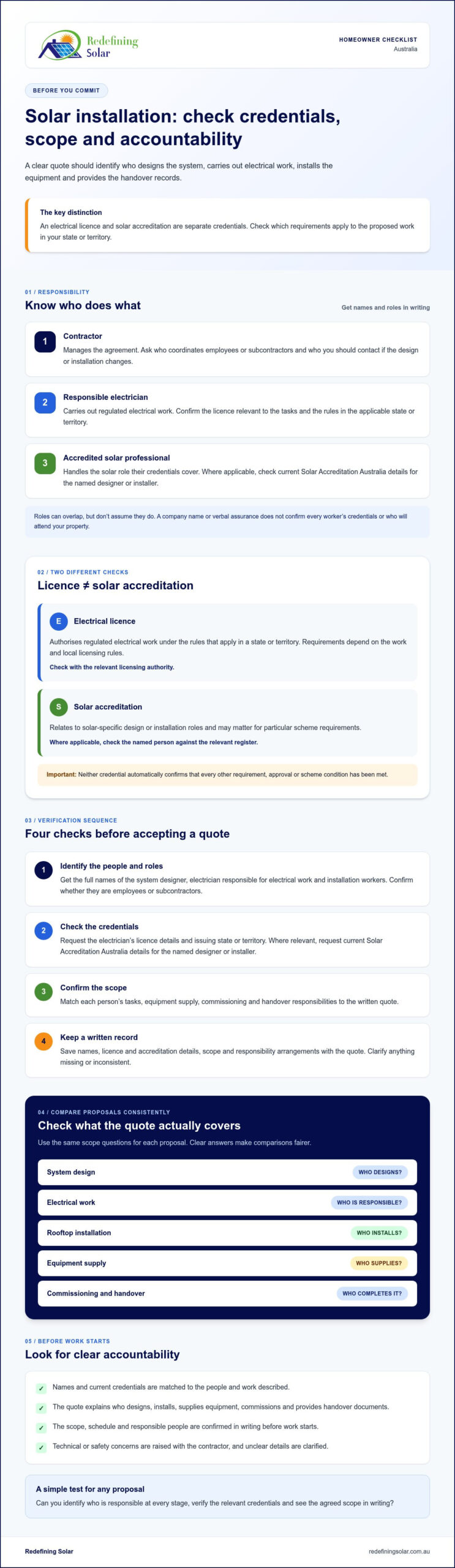
An electrical licence authorises regulated electrical work under the rules that apply in a state or territory. Requirements depend on the work and local licensing rules. Ask which licence applies to the electrical tasks in your project, and how to verify it with the relevant regulator.
Solar accreditation is separate. It relates to solar-specific design or installation roles and may be relevant to particular scheme requirements. Where applicable, ask whether the named designer or installer holds current Solar Accreditation Australia credentials, then check their details against the relevant register. Neither credential automatically confirms that every other requirement, approval or scheme condition has been met.
Who is responsible for each part of a solar installation?
Ask the contractor to identify who designs the system, performs electrical work and installs the rooftop components. Find out whether employees or subcontractors will attend, who coordinates their work and who you should contact if the design or installation changes. Get those details in writing rather than relying on a company name or verbal assurance.
The contractor manages the agreement, the responsible electrician carries out regulated electrical work, and the accredited solar professional handles the solar role their credentials cover. Roles can overlap, but don’t assume that they do. Ask who is responsible for each part of your specific project.
A company directed by a licensed electrician may be able to provide useful technical context, but this alone doesn’t establish the credentials of every worker or confirm who will attend your property. For a licensed electrician solar installation, verify the named people, their roles and current credentials before accepting the quote. Clear answers make it easier to assess the proposal and know who is accountable as the work progresses.
How to verify an electrician and solar installer before accepting a quote
A company name on a proposal doesn’t tell you who will design the system or perform the electrical work. Before accepting a quote, match each person’s credentials to their role and ask for details you can verify yourself. This sequence can help you identify unanswered questions while there’s still time to clarify them.
A practical credential-checking sequence
- 1. Identify the people and roles. Ask for the full names of the system designer, the electrician responsible for electrical work and the people installing the system. Check whether they’re employees or subcontractors, and who coordinates the work.
- 2. Check the credentials. Request the electrician’s licence details and issuing state or territory. Where relevant, ask the named designer and installer for their current Solar Accreditation Australia details. Match each credential to the person and work described, not just to a company-level claim.
- 3. Confirm the scope. Ask which tasks each person will perform, who supplies the equipment and who is responsible for commissioning and handover. Check that the answers match the written quote.
- 4. Keep a written record. Save the names, licence and accreditation details, scope and responsibility arrangements with your quote. Ask for clarification if anything is missing or inconsistent.
Verify, then clarify
Check the electrician’s current licence status through the official licensing authority for the relevant state or territory. Requirements can vary by jurisdiction and by type of work, so confirm that the licence details apply to the proposed tasks. For solar credentials, use Solar Accreditation Australia’s current official register or guidance to check the named professional’s status and role.
Where possible, check credentials through an official source rather than relying on a screenshot, an old document or a verbal assurance. Missing names, expired credentials or vague explanations of responsibility are reasons to pause and ask for clear answers before signing. Confirm which electrician will perform or take responsibility for the electrical work, and how to contact them if questions arise.
Incentive eligibility is a separate check. If a proposal mentions Small-scale Technology Certificates or another benefit, confirm the current requirements using official Australian scheme guidance. Credentials alone don’t establish that a particular system or installation qualifies. The U.S. Department of Energy’s Homeowner’s Guide to Going Solar offers general consumer considerations, but it isn’t a source for Australian licensing or incentive rules.
Use these checks when assessing a licensed electrician solar installation, and ask for a practical explanation of any unclear project responsibilities. If you’d like to discuss your project scope or credential questions, you can speak with the Redefining Solar team.
Compare solar installation quotes for compliance, scope and accountability
Once you know who is involved, compare what each proposal actually commits to delivering. A lower headline price may reflect a narrower scope, different equipment or work you’ll need to organise separately. Put the quotes side by side and check the written details rather than filling gaps with assumptions.
Use a side-by-side quote check
Record what each installer has included. If a detail is missing, ask for it in writing before comparing the proposals.
| Check | Quote A | Quote B |
|---|---|---|
| Named personnel and credentials | Who designs, installs and performs electrical work? What credentials are stated? | Who designs, installs and performs electrical work? What credentials are stated? |
| Design and installation scope | What system design and work are included? | What system design and work are included? |
| Equipment and supply | Who supplies the panels, inverter and other listed components? | Who supplies the panels, inverter and other listed components? |
| Commissioning and documentation | Who commissions the system and provides the handover records? | Who commissions the system and provides the handover records? |
Check the assumptions that could affect the work required. Does the proposal cover roof access and any switchboard work identified for the project? Is monitoring included, and who sets it up? Review the exclusions, site assumptions, payment stages and written process for approving changes. If equipment approval or incentive eligibility matters to you, ask how these will be checked against current official guidance.
Check the handover, not just the installation
Ask which documents you’ll receive when the work is complete. Depending on the project and applicable requirements, these may include relevant compliance statements, commissioning information, equipment manuals and system records. Confirm who will provide them, when you’ll receive them and how to report an unresolved defect or discrepancy.
A comparable quote names the responsible people, defines the work scope and lists the handover documents. If a proposal doesn’t mention commissioning or records, ask whether those items are excluded or simply not described. Without a written answer, you may not know who is responsible for completing the work or providing the information you need.
Use the same questions for every proposal, including one for a licensed electrician solar installation. Compare personnel, scope, equipment and handover alongside the price. A clear written proposal makes differences easier to understand and gives you a basis for asking the installer to fill any gaps before you sign.
Solar installation checklist: what to confirm before, during and after the work
A clear plan helps you know what to expect on installation day and who to contact if something changes. Keep the agreed scope and contact details handy, and use this checklist to follow the project from preparation through handover.
Before the installer arrives: confirm scope and responsibilities
Check that the written agreement matches the design and equipment you accepted. Confirm site access arrangements, planned work dates, who will attend and your main contact. If subcontractors are involved, ask what each person is responsible for and who coordinates their work.
- Confirm the equipment and installation work match the agreed proposal.
- Check access arrangements and the expected schedule with the contractor.
- Ask how changes will be explained, priced where relevant and approved before additional work proceeds.
- If the project includes battery storage or a future battery upgrade, review the solar system battery storage upgrade guide and confirm that the battery-related scope is recorded in your proposal.
During installation: keep communication clear and safe
You don’t need to supervise the technical work. If you have a safety concern, notice a difference from the agreed scope or need an explanation, raise it with the responsible contractor or your nominated contact. Don’t intervene in electrical work or enter a work area unless the crew says it’s safe. Ask for proposed changes to be explained and agreed in writing before proceeding.
For a licensed electrician solar installation, keep the electrician’s contact details available so you know who to approach with questions about electrical work. If the person on site differs from the names you were given, ask the contractor to clarify their role and responsibility.
At handover: collect records and understand the system
Before treating the job as complete, request the records that apply to your installation and confirm who will provide them. Depending on the work and applicable requirements, these may include compliance documents and commissioning details. Ask for equipment manuals, warranty information, monitoring access details and a straightforward explanation of how to operate the system.
Write down anything still outstanding, including the agreed steps to address it and the person responsible for following up. Keep the handover material with your quote and installation records. If you’d like to discuss your project scope or battery-related questions, speak with the Redefining Solar team.
Choose a solar installer who can explain the work and stand behind the process
A sound choice depends on more than a confident sales conversation. Look for credentials you can verify, a written scope you understand, named people accountable for their roles and a clear handover plan. For a licensed electrician solar installation, these checks help you understand who is qualified and who will answer your questions as the project moves from design to completion.
Questions that reveal whether an installer is a good fit
Ask how responsibility is managed across the job. Who is accountable for the design, electrical work, installation, commissioning and customer handover? How will the contractor explain relevant compliance requirements and provide the project records? Look for answers that are specific, consistent with the quote and straightforward to verify.
- Who is my main contact if the scope or schedule changes?
- Who will explain a proposed change and get my approval before extra work begins?
- Which records and operating instructions will I receive at handover?
Pay attention to how the installer responds. If an answer is unclear, ask for it in writing. A reliable process should make it easy to understand who is doing what, without asking you to take a company-level claim on trust.
A low-pressure next step for your solar project
Before asking for advice, gather your quote, basic site details and a short list of questions. This gives the team useful context to discuss the proposed system and clarify what is or isn’t included. Redefining Solar is directed by a licensed electrician, which can provide relevant technical perspective for that conversation. It isn’t, by itself, proof that every worker or project has a particular licence or accreditation, so continue to check the named people and credentials for your job.
Take your time, compare proposals on the same basis and choose an installer who can explain the process in plain language. You should feel comfortable asking who is responsible, what the work includes and which documents you’ll receive. If you’re ready to talk through your project scope or credential questions, discuss your solar installation with the team.
Make your solar decision with confidence
A good installer should explain who is responsible, what the quote includes and which records you’ll receive. Before choosing a licensed electrician solar installation, verify the relevant credentials, compare proposals by scope and accountability, and make sure you understand the handover.
Redefining Solar is directed by a licensed electrician and provides solar system design, installation, maintenance and repairs. That experience can inform practical conversations about your project, but it doesn’t replace checking the credentials of the people assigned to your work.
Have a quote or questions about your proposed system? Discuss your solar installation with Redefining Solar. Bring your project details and credential questions, then take the time you need to choose a path that feels clear and right for you.
Frequently Asked Questions
Does a solar installer need to be a licensed electrician in Australia?
Electrical work on a solar system must be done by people who meet the applicable licensing rules for the state or territory and the work involved. Not every task on an installation is electrical work, so don’t assume one rule applies to everyone on site. Ask who will perform and take responsibility for the electrical work, then confirm their current licence with the relevant authority.
Is a licensed electrician automatically accredited to install solar panels?
No. An electrical licence and solar accreditation are separate credentials with different purposes. A licence relates to regulated electrical work, while Solar Accreditation Australia credentials may be relevant to particular solar design or installation roles and scheme requirements. Ask for the named person’s current details and check them against the applicable register. Neither credential alone confirms that every project, approval or incentive requirement has been met.
How do I check an electrician’s licence for solar installation?
Ask for the electrician’s full name, licence details and issuing state or territory. Use the relevant state or territory licensing authority’s official register or verification service to check their status, and confirm the licence is appropriate for the proposed work. For a licensed electrician solar installation, also establish whether that person will perform the electrical work or has another defined responsibility, and ask how to contact them.
What is the difference between an electrician and an accredited solar installer?
An electrician holds a licence relevant to regulated electrical work, subject to the rules in the applicable jurisdiction. An accredited solar professional holds solar-specific credentials relevant to the roles and requirements those credentials cover. One person may hold both, but don’t assume this from a job title or company claim. Ask who designs the system, who performs electrical tasks and who installs other system components, then verify each person’s credentials.
Can I claim solar incentives if my installer is not accredited?
It depends on the incentive and current scheme requirements, so don’t rely on a sales claim alone. For Small-scale Technology Certificates under the Australian Government’s Small-scale Renewable Energy Scheme, eligibility can depend on the system and the people involved in its design and installation. Check current guidance from the Clean Energy Regulator before signing, and ask the installer to explain in writing whether your proposed system is eligible and why.
What should I check in a solar installation quote before signing?
Check that the quote names the people responsible for design, electrical work and installation, and describes their roles. It should explain the system design, equipment supplied, work included, commissioning arrangements and handover documents. Review site assumptions, access, exclusions, payment stages and how changes will be approved. If anything is unclear, ask for a written explanation so you can compare proposals on the same scope, not just the headline price.
What documents should I receive after solar installation?
Ask for the documents that apply to your completed system and the work performed. These may include relevant compliance statements, commissioning records, equipment manuals, warranty information and system details. Confirm who will provide them and how you’ll receive monitoring access, if included. Before closing out the job, record any outstanding issues, the agreed steps to resolve them and the contact responsible for follow-up. Keep the records with your quote.
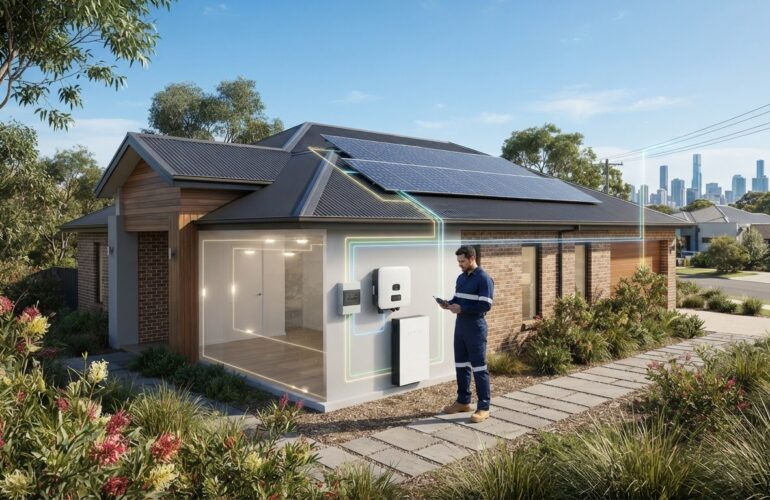

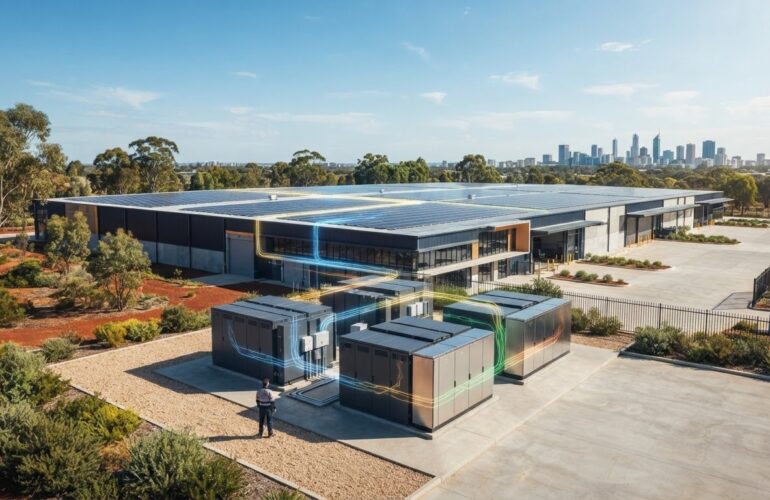
[…] Ask who is responsible for design, installation and commissioning, and who you can contact afterwards with questions. Request details of relevant licences, accreditation and compliance evidence for the proposed work. Check current requirements for your state or territory and connection arrangements, as credentials and processes may not apply uniformly across Australia. For a step-by-step list of questions, see this hiring checklist for a licensed electrician solar installation. […]