
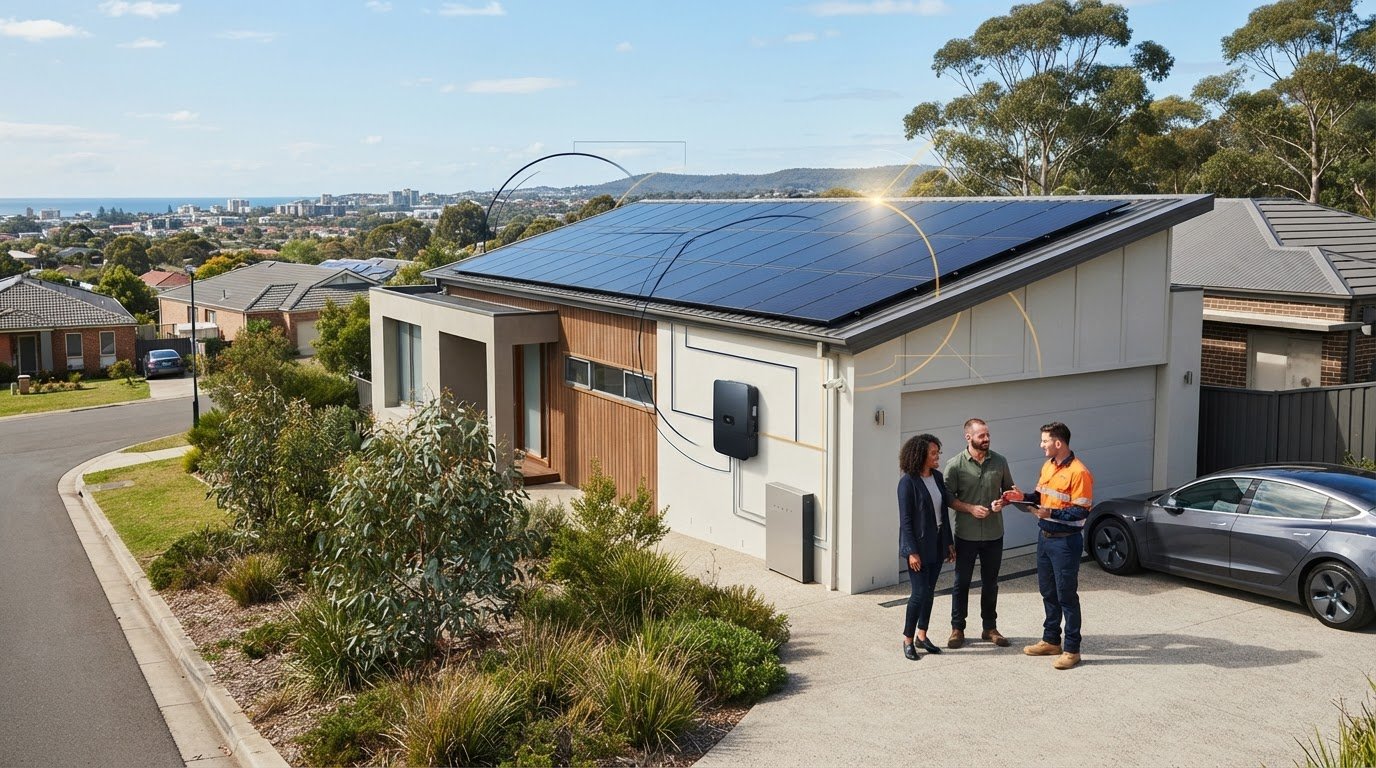
What if the right solar system had less to do with how many panels fit on your roof and more to do with when your household uses power? If you’re researching solar panel installation, you may be wondering whether your roof is suitable, what size system you need and how to prepare for installation.
A sound design starts with your energy use and property conditions. Panels, an inverter and battery readiness all play a part, but the right choices depend on how they work together for your household now and in the future.
This guide covers the key decisions involved, from assessing your roof and electricity use to understanding equipment options and the installation process. You’ll also learn what to expect from system design through to commissioning, and how maintenance can help you look after your system over time.
Redefining Solar brings system design, equipment supply and installation together under the direction of a licensed electrician. Understanding each step can help you make informed choices and prepare for your solar project.
Key Takeaways
- Start with your household’s energy patterns and property conditions, rather than choosing a system by panel count alone.
- Understand how panels, an inverter and a battery each contribute, so you can consider the equipment as a connected system.
- Use a roof checklist to note orientation, shade, usable space and roof condition before planning a solar installation.
- Understand the process from property assessment and system design to installation and handover, with preparation tailored to your home.
- Compare installation plans by design, equipment, included work and post-installation support.
What a well-planned solar panel installation needs to deliver
It’s understandable to be unsure whether solar will suit your home, which system to choose or what installation involves. Start by identifying your household’s needs, then consider the roof and electrical setup when planning the system. The aim isn’t simply to fit as many panels as possible. It’s to choose a design that suits how you live and use electricity.
A residential solar photovoltaic (PV) system uses panels to convert sunlight into electricity. An inverter changes that electricity into a form your home can use. Together, these components generate power for household appliances. A grid-connected home can draw electricity from the network when solar generation isn’t enough. For a plain-language overview of the components, see How Solar Panels Work.
Start with how your household uses electricity
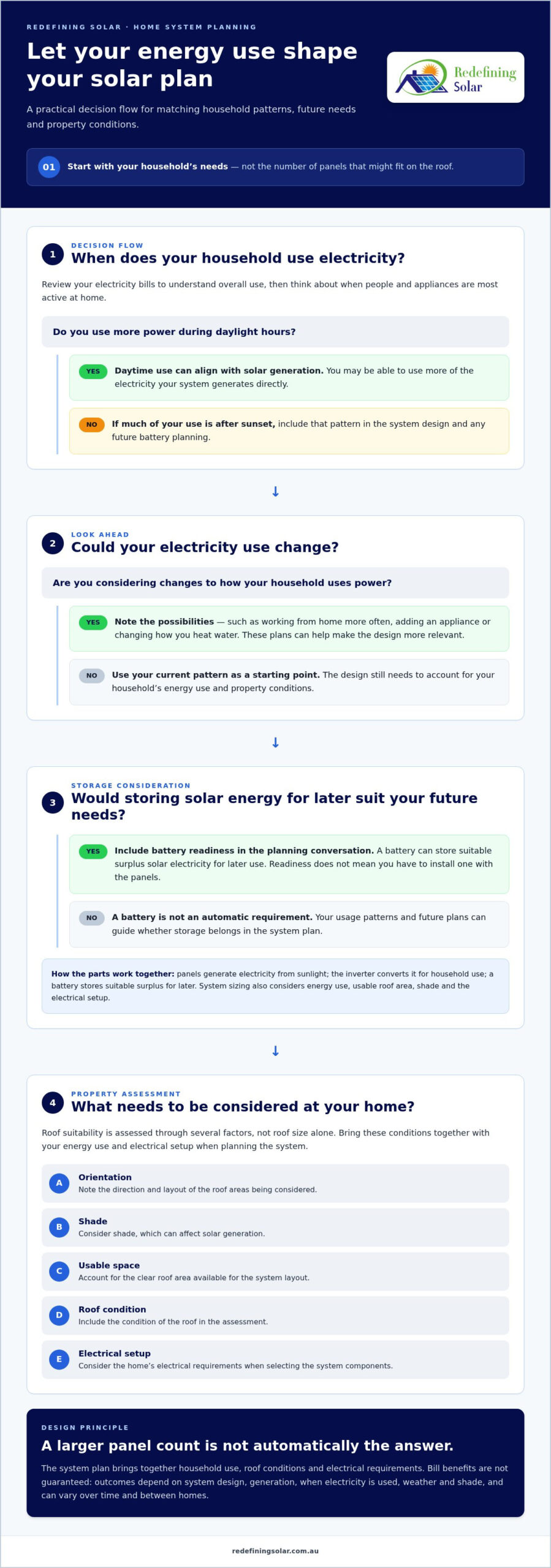
Your electricity bills are a practical starting point. Review them to understand your overall use, then consider when people and appliances are most active at home. If you use more power during daylight hours, you may be able to use more of your solar generation directly. If much of your electricity use happens after sunset, that pattern can inform the system design and any future battery plans.
Think about possible changes, too. Working from home more often, adding an appliance or changing how you heat water could affect future electricity use. These plans don’t need to be certain, but noting them helps make the system design more relevant than choosing by panel count alone.
Set expectations before choosing equipment
Solar can help meet household electricity needs and may reduce the amount of power you draw from the grid, but bill benefits aren’t guaranteed savings. The outcome depends on the system design, how much electricity it generates and when your household uses that power. Weather and shade also affect generation, so results can vary over time and between homes.
Battery readiness is a planning consideration, not an automatic requirement. Think about whether storing solar energy for later use might suit your future needs, then consider how that preference relates to the system design and equipment. You don’t need to make every future decision at once, but raising the question early can help the design reflect your priorities.
A grid-connected solar system links your home to the electricity network. Your home can use solar power while it’s being generated and draw grid electricity when needed. That’s a starting point, not a complete design. A well-planned installation brings together your energy use, roof conditions and household priorities in one practical system plan.
How solar panels, inverters and system sizing fit together
Solar equipment works as a connected system, not a set of independent parts. Panels generate electricity, an inverter converts it for household use, and mounting equipment secures the panels in a position suited to the roof. The right combination depends on the home’s energy needs, available roof space and electrical setup. That’s why a solar installation plan should be shaped around the property, rather than starting with a standard panel count.
What panels and inverters each do
Solar panels produce direct current (DC) electricity from sunlight. An inverter converts that electricity into alternating current (AC), which household appliances use. The inverter is selected as part of the overall system design, taking account of the panels and the home’s electrical requirements. Mounting equipment is part of the same plan: its placement affects how the panels fit the roof and how the system is arranged.
| Component | Main role |
|---|---|
| Panels | Generate electricity from sunlight. |
| Inverter | Converts the panels’ DC electricity into AC for household use. |
| Battery | Stores suitable surplus solar electricity for use later. |
System sizing is a design decision, not just a calculation of how many panels fit. Household electricity use, usable roof area, shade and the electrical setup all help determine how the components should work together. For example, a roof with limited clear space may need a different layout from a larger, less shaded roof, even if the households use similar amounts of electricity.
Panel capacity alone doesn’t determine household savings. The outcome also depends on system design, roof conditions and when you use electricity. A considered design accounts for these factors together, rather than treating a larger system as the automatic answer. Redefining Solar brings system design, equipment supply and installation together, with work directed by a licensed electrician.
Should you plan for a battery from the start?
A battery stores suitable surplus solar electricity so it can be used later, such as when panels aren’t generating. Planning for battery readiness means considering how the system could accommodate a future battery. It doesn’t mean you have to buy and install one with the panels. Your household’s usage patterns and future plans can help guide the decision.
If you’re considering storage as a later step, the Australian solar battery upgrade guide explains what to think about when upgrading a system. To bring your energy use, equipment and future plans together, explore Redefining Solar’s system design and installation.
Is your roof and electrical setup suitable for solar?
A roof doesn’t need to be unusually large to be worth assessing for solar. Suitability depends on several factors, including orientation, shade, usable space, roof condition and the home’s electrical setup. A look from the ground can help you spot things to discuss, but it can’t confirm the final layout, output or savings.
Use this checklist to note what may affect panel placement:
- Orientation: Note which roof sections receive sunlight during the day. Orientation can influence the panel layout and how much sunlight the panels receive.
- Shade: Look for trees, neighbouring structures and roof features that may cast shadows at different times of day.
- Usable area: Consider clear roof sections, allowing for features such as skylights, vents and edges that can limit where panels fit.
- Roof condition: Note visible signs of wear or damage. Roof condition is part of planning where equipment can be installed safely and appropriately.
Roof space, orientation and shade
Roof space is about more than total surface area. Different sections may have different orientations or shade patterns, so the design needs to consider which areas are practical for panels. Trees and structures can affect sunlight exposure, while roof features can interrupt a straightforward panel layout. An on-site assessment helps determine suitable placement for your property instead of relying on a checklist alone.
Electrical setup and future household needs
The switchboard and the home’s electrical capacity are also part of installation planning. Their condition and configuration can influence how a system is designed and connected. Plans for a battery or new appliances are useful context, too, as they may shape equipment choices and future requirements considered during design.
A checklist is a preparation tool, not a technical sign-off. During an on-site assessment and electrical review, the installer can consider roof conditions alongside the existing electrical setup and household requirements. That review informs the final system design. A roof checklist by itself can’t guarantee approval, energy output or bill savings.
Before an assessment, note any roof concerns, recurring shade and planned household changes. You can also use this licensed electrician solar installation checklist to understand the role of electrical expertise in solar planning.
Redefining Solar brings system design, equipment supply and installation together under the direction of a licensed electrician. To consider how your property’s conditions fit into a home solar design, explore residential solar installation.
Solar panel installation step by step: from assessment to handover
A clear installation process helps you understand what’s happening and what you’ll need to decide. Design, equipment and preparation are tailored to the property, so the sequence below is a guide rather than a fixed script. Site requirements can affect project details and timing; there’s no single timeframe that applies to every home.
Assessment, system design and preparation
Before equipment is selected, the design needs to account for the home’s electricity use, roof conditions and electrical requirements. This helps determine panel placement and which equipment suits the system. If you’re preparing for a solar installation, recent electricity bills and notes about future plans, such as new appliances or battery storage, can make the discussion more useful.
- Review your household needs. Discuss electricity use, daily routines and expected changes. This gives the design process practical context instead of relying on a standard system size.
- Assess the property. Roof layout, available space, shade and the existing electrical setup inform what can be planned. An on-site assessment connects those conditions to the proposed design.
- Develop the system design. The design brings together panel placement, inverter and other equipment choices, and your household priorities. Future battery plans can also be considered at this stage.
- Prepare for the work. Installation arrangements are based on the project requirements. You can review what’s planned and raise practical questions about access and the work at your property.
- Install the system. Installation involves fitting the selected equipment and carrying out the electrical work needed to connect the system. The exact work depends on the design and the home, so projects may differ.
- Check, commission and hand over. System checks and commissioning are part of completing the installation. At handover, you should receive basic information about the installed system, its operation and the equipment fitted.
Installation, testing and system handover
Commissioning means checking the installed system and preparing it for operation. It’s an important step between fitting the equipment and handing the system over to you. The handover should explain the essentials, including which components were installed and the basic information you need to understand the system. When design, equipment supply and installation are brought together, the process runs from the original assessment through to commissioning.
Redefining Solar’s installation work is directed by a licensed electrician, supporting a considered approach to the system’s electrical requirements. Discuss your solar installation to talk through your property, energy needs and plans.
Choose a solar installation plan that suits your home and future
A useful solar plan should fit your household, your property and the way you expect to use electricity in the years ahead. Before comparing proposals, bring the key decisions together: what you use, what the roof can accommodate, which equipment suits the design and whether future changes may affect your needs. This makes choosing a solar system a considered home decision, not just a choice between panel counts.
- Energy use: Consider your bills, when electricity is used and any expected changes at home.
- Roof suitability: Look at usable space, orientation, shade and roof condition, as these factors shape the layout.
- Equipment: Understand how the proposed panels, inverter and any battery planning work together.
- Future needs: Note possible changes, such as new appliances or a later interest in battery storage.
Compare solar proposals on more than panel count
For a useful comparison, proposals should reflect the same household needs and property conditions. Panel count alone doesn’t show whether one design is a better fit. Compare the system layout and equipment specifications, then review the installation scope: what work is included, how the equipment is selected for the property and what support is available after installation.
Check that the design accounts for your roof and electrical setup instead of relying on a generic system description. Look for clear information about the proposed panels and inverter, and whether future battery plans have informed the design where relevant. Comparing like with like helps you understand the choices and assess how each proposal responds to your home.
Plan for maintenance and changing energy needs
Your household’s needs may change after installation, and system performance may need attention over time. Maintenance and repairs can help address faults or concerns about changing performance. Keeping the system information provided at handover can also make it easier to describe what’s happening if you need support.
A battery may be a relevant future option if storage suits your household’s energy use and priorities. It doesn’t need to be part of every installation. Consider it alongside your current system design and likely needs, so the decision is based on your circumstances rather than assumption.
Redefining Solar provides residential system design, equipment supply and installation, as well as maintenance and repairs for solar systems. The process is directed by a licensed electrician and connects the design to your property and household requirements. Discuss your solar installation.
Move forward with a plan that feels right for your home
You don’t need to have every technical answer before taking the next step. Start by thinking about what matters most to your household, then use those priorities to guide a practical discussion about your property and solar options. A considered plan gives you a clearer basis for deciding without rushing into equipment choices or assuming one system suits every home.
If you’re researching solar panel installation rowville, turn your questions into a short list: what you want solar to support, what may change in your household and what you’d like explained before work begins. Redefining Solar is an Australian-owned and operated company that can help you work through a residential solar plan suited to your circumstances.
Talk with Redefining Solar about a solar system for your home and take the next step with a clearer understanding of your options.
Frequently Asked Questions
Can solar panels still generate electricity on cloudy days?
Yes. Solar panels can generate electricity under overcast skies, though output may be lower than on a bright, sunny day. The amount depends on factors such as cloud cover, panel placement and system design. A cloudy afternoon may still produce power, but not at the same level as clear conditions. Treat generation estimates as estimates, not a promise that your household will receive a set amount of electricity in every type of weather.
Will solar panels work during a power outage?
Not necessarily. A standard grid-connected solar system may shut down during a power outage for safety, so having panels alone doesn’t mean your household circuits will keep running. Backup depends on the equipment and system design. If you want selected appliances to operate during an outage, make that a design requirement from the outset. This helps ensure the proposal addresses backup needs rather than assuming a standard solar setup provides it.
Do solar panels need to be cleaned regularly?
Not always, but dirt, debris or bird droppings may affect panel operation in some circumstances. What’s appropriate depends on your property and the system’s condition. Don’t climb onto the roof or use unsuitable cleaning methods to reach panels. If you notice a change in performance, arrange an appropriate inspection to help identify the cause. A performance change may have more than one explanation, so don’t assume dirty panels are the only issue.
Can I add a battery to solar panels later?
Possibly. Some existing solar systems can be upgraded with a battery, but compatibility depends on the original system design and the battery selected. If storage may matter later, mention it while planning your installation so equipment decisions can take that possibility into account. That doesn’t mean you need to buy a battery now. Consider how your household uses electricity and whether storing solar power for later would suit your needs.
What happens to solar electricity my household does not use?
Depending on your system and electricity arrangements, surplus generation may be exported to the grid and could earn a feed-in credit. The applicable terms depend on your retailer and electricity plan, so don’t assume you’ll receive the same rate as another household. When reviewing a proposal, look at its assumptions about electricity used directly at home and any exported power. This helps you understand which parts of an estimated bill benefit rely on export credits.
How long does solar panel installation take?
Installation duration depends on your property, system design, selected equipment and any electrical work required. A project with additional preparation may follow a different schedule from a more straightforward installation. Timing should be discussed in relation to the actual site rather than taken from a general estimate. Review the expected sequence and timing for your project, allowing for details to change if site requirements differ.
Can I install solar panels if my roof needs repairs?
Roof condition should be considered before panels are fitted. If repairs are needed, the installation design and sequence need to account for them so the roof work can be addressed first. Solar installation isn’t roof replacement or roof tiling. Raising visible concerns during the property assessment helps ensure the proposed system and its timing reflect the roof’s condition, rather than treating it as ready based on appearance alone.
[…] comparing solar system sizes and equipment, find out who is responsible for each part of the work and which credentials apply to their role. A […]