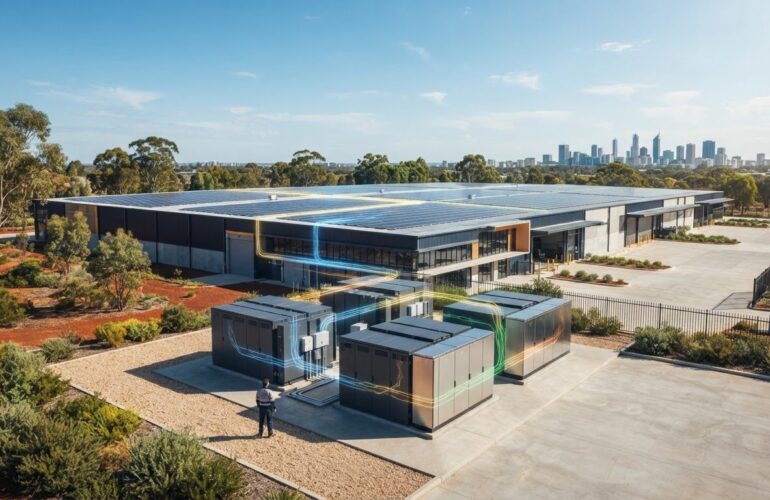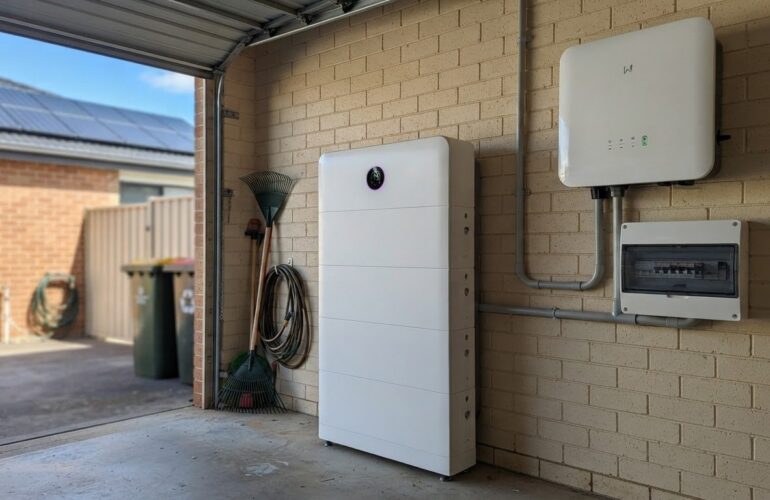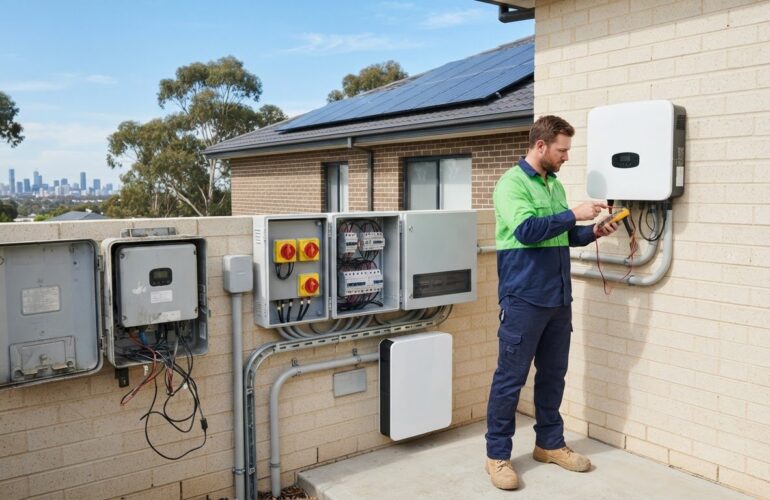
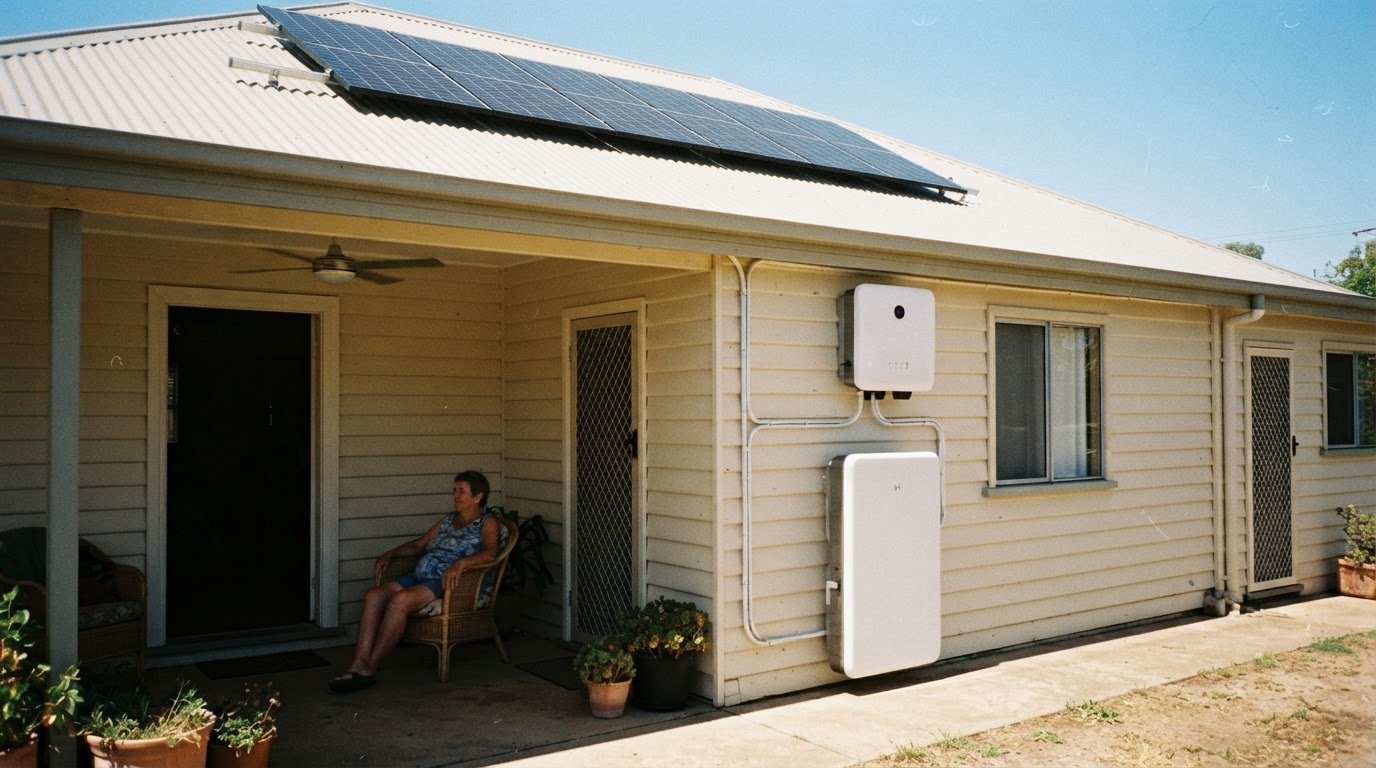
Solar panels can continue generating in extreme weather, but they won’t necessarily keep your home powered during a grid outage. So, is solar power reliable in extreme weather? Generally, yes, although heat can reduce panel output and backup during an outage depends on having a suitably configured battery system.
It’s understandable to wonder how well solar will cope when Australian summers bring high temperatures and severe weather can disrupt the grid. Heat affects panel performance, while cloud, smoke or debris can limit the sunlight reaching your system.
This article explains how temperature affects solar panels, what to expect from solar in hot climates and how batteries can help during outages. It also covers why system design matters, so you can understand what your solar setup can provide in the conditions that matter to you.
Key Takeaways
- Learn how heat, cold and hail can affect panel output and why hail-test standards matter when assessing weather resilience.
- Understand why high air temperatures can affect system performance, including the role of the inverter.
- Match system design to local conditions such as heat, wind, smoke and snow, rather than treating every climate the same.
- See how solar batteries can support essential power during an outage and what to consider when planning storage.
How do extreme temperatures affect solar panels?
Temperature affects panel output, while hail and dust can disrupt generation in different ways. Understanding these limits helps you assess what your system can deliver in Australia’s changing weather.
Solar output in extreme heat
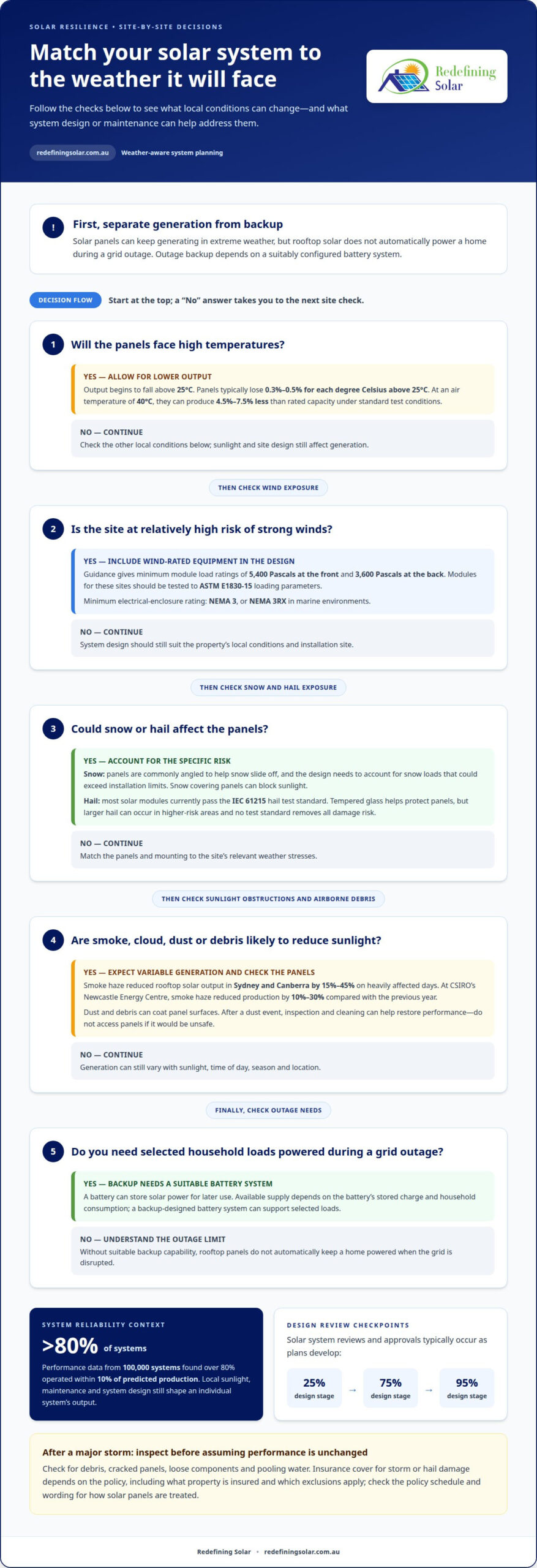
Solar panels convert sunlight into electricity, but high temperatures reduce their efficiency. Output begins to fall above 25°C, with panels typically losing 0.3% to 0.5% for each degree Celsius above that point. At an air temperature of 40°C, they can produce 4.5% to 7.5% less than their rated capacity under standard test conditions. In extremely high temperatures, this difference can affect how much renewable energy your system supplies at peak demand.
Cold-weather panel efficiency
Crystalline silicon panels typically become more efficient as temperatures drop below 25°C, increasing output by 0.3% to 0.5% for each degree below that point. Cold alone doesn’t necessarily reduce panel efficiency. However, sunlight still determines how much electricity is generated, and snow covering the panels can block it. For example, a clear, cold day may support stronger panel efficiency than a hot day, but less sunlight can limit total generation.
Hail resistance also depends on the panel’s tested performance. Most solar modules currently pass the IEC 61215 hail test standard, according to the International Electrotechnical Commission, although larger hail can occur in areas with relatively high hail risk. Tempered glass helps protect panels from impacts, but no test standard removes all risk of damage.
In Australia, home insurance cover for storm or hail damage to solar panels depends on the policy, including what property is insured and which exclusions apply. Check your policy schedule and wording to see how it treats solar panels.
Dust storms create a different problem: particles and debris can coat panel surfaces, reducing the sunlight reaching the cells. After a dust event, inspection and cleaning can help restore performance. Don’t attempt to access panels if it would be unsafe.
How do solar panels perform in hot climates?
During heatwaves, panels may produce less electricity, while storms can reduce sunlight or damage equipment. Performance depends on local conditions, system design and whether the wider electricity network is affected.
Australian weather affects solar generation in several ways. Summer heat can lower panel output, while smoke haze, cloud and debris reduce the sunlight reaching the panels. They may keep operating as conditions change, but production can vary throughout the day. This matters most when a household expects solar generation to meet demand without drawing power from the grid.
Smoke provides a clear Australian example of weather-related production changes. Rooftop solar output in Sydney and Canberra fell by 15-45% on days with heavy smoke haze. At CSIRO’s Newcastle Energy Centre, smoke haze reduced solar production by 10% to 30% compared with the previous year. These examples show how airborne smoke can affect generation even when panels remain physically intact.
Grid reliability is a separate consideration. If severe weather disrupts grid electricity, rooftop panels don’t automatically keep a home powered. Supplying electricity during an outage depends on the system’s configuration and backup capability. A battery can store solar power for later use, but the available supply depends on its stored charge and household consumption.
After a major storm, an inspection should look for debris, cracked panels, loose components and pooling water. These issues can affect generation or drainage after the weather clears. A solar system inspection can identify maintenance needs, while a battery system designed for backup can support selected loads during an outage.
Climate-specific system selection
System performance depends on local climate, installation design and changing sunlight. Choosing equipment to suit the site helps set realistic expectations for output.
Choosing systems for local climates
Choosing a system for the local climate means matching the panels and mounting to site conditions. Sunlight varies with time of day, season and location, so each Australian system needs to suit its setting. A hot, exposed property has different design considerations from a site where snow loads or strong winds are relevant. Panels are designed to withstand weather, but appropriate equipment and mounting help address local stresses.
Solar PV system reliability
Solar PV reliability is the ability of a system to keep producing as conditions change. Performance data from 100,000 systems found over 80% operated within 10% of predicted production. That gives useful context, but local sunlight, maintenance and design still shape an individual system’s output. For your property, reliability depends on how well the full installation suits its climate and operating conditions.
Design reviews can identify mismatches before installation. Solar system reviews and approvals typically occur at the 25%, 75% and 95% design stages. These checkpoints allow the layout and equipment choices to be considered as plans develop, rather than only after the panels are installed.
Wind exposure also informs mounting and electrical protection. For sites at relatively high risk of strong winds, guidance gives minimum module load ratings of 5,400 Pascals at the front and 3,600 Pascals at the back. Modules for these sites should be tested to ASTM E1830-15 loading parameters. The specified minimum electrical-enclosure rating is NEMA 3, or NEMA 3RX in marine environments.
Solar tracking systems follow the sun’s path to increase power production, but their relevance depends on the site, as sunlight shifts with season and location. In snowy climates, panels are commonly angled to help snow slide off. The system design also needs to account for snow loads that could exceed installation limits.
Distributed solar and battery storage during outages
Solar reliability differs from grid reliability. Rooftop generation depends on sunlight and system conditions, while grid electricity comes from a wider network of generators and transmission lines. So, is solar power reliable in extreme weather? It can contribute electricity, but local solar generation alone doesn’t guarantee power during a grid outage.
Distributed solar generates electricity close to where it’s used, such as on a home’s roof. This can reduce reliance on distant generation during sunny periods, but output may fall under heavy cloud, smoke or storm debris. Shorter winter days also mean less time for solar generation. Heating demand may rise in cold conditions just as available sunlight changes.
A battery stores electricity for later use. In a solar and battery system, stored energy can help power selected household loads when solar generation falls, including after sunset. For outage backup, the system must be designed to supply power. Panels and a battery don’t automatically determine which circuits will keep operating. The outcome depends on system configuration, battery capacity and household demand.
That distinction matters during an outage. A grid-connected solar system without backup capability may stop supplying the home when grid power is unavailable. A properly configured battery system can use stored energy, but higher electricity use, such as running heating alongside other appliances, draws down that reserve sooner. Prioritising essential loads can extend the available supply.
Whether solar power is reliable in extreme weather depends on how generation, storage and grid connection work together. The grid draws on multiple generators, while rooftop panels rely on local sunlight and equipment. A battery adds stored energy, but it doesn’t remove weather-related limits on generation or storage.
If backup power is important for your household, plan a solar battery system around the appliances you need during an outage and how long you want them to run.
Redefining Solar
Redefining Solar helps households and businesses plan solar systems for their property and local weather conditions. Whether you’re planning a new system, reviewing an existing setup or considering backup readiness, its residential and commercial solar installations and Battery Ready & Upgrades can help meet those needs. Solar panel supply-only options are available for projects where you’re sourcing panels separately.
The right next step depends on your priorities: everyday solar generation, future battery readiness or a system for a business site. A clear discussion of how you use electricity and what you want during an outage can help shape the direction. For practical guidance on your solar plans, contact Redefining Solar.
Set your priorities for reliable power
Start by deciding what dependable power means for your property. For one household, that may mean keeping essential routines running; for a business, it may mean planning around work that cannot pause. These priorities give a solar system discussion a practical starting point, without assuming solar can prevent every weather-related interruption.
Reliability isn’t a single panel specification. It depends on how well your needs, site and system design fit together. If you’re weighing whether solar power is reliable in extreme weather, identify the outcome you need most and plan around it. Consider how your energy use may change over time, rather than focusing only on today’s routine. Clear priorities make the next decision easier.
For guidance tailored to your property, contact Redefining Solar and discuss what you want your system to support. A considered plan is a steady place to start.
Frequently Asked Questions
What Happens to Solar Panels in Freezing Weather?
Freezing air doesn’t stop solar panels from generating electricity; crystalline silicon panels can perform more efficiently in cooler temperatures. Output still depends on available sunlight, so a clear winter day may produce more than a heavily overcast one. Snow covering the glass can block light. Consider safe access before any inspection or cleaning after snowfall.
Can solar panels withstand rain and snow?
Solar panels are designed to withstand weather conditions that include heavy rain and snow. Rain can wash dust from the surface, while snow covering the glass can reduce generation by blocking sunlight. For example, a light shower may help clear surface dirt, but persistent snow cover has a different effect. Drainage and mounting are also part of how a system handles water around the installation.
How much solar power do Australian panels generate on cloudy or rainy days?
There’s no single output figure that applies to every cloudy or rainy day. Panels can still generate electricity in cloudy conditions, but reduced sunlight lowers production. The result varies with cloud thickness, location, time of day and season. To compare performance, review generation across similar weather and time periods instead of judging it by one rainy afternoon.
Can rooftop solar panels withstand Australian hail and cyclone conditions?
Rooftop systems are built with impact-resistant glass and mounting hardware, but hail and cyclone exposure can still cause damage. Most solar modules pass the IEC 61215 hail test standard, according to the International Electrotechnical Commission; hail larger than the test can occur in higher-risk areas. Wind resilience also depends on the mounting and installation design being suited to local exposure.
How do extreme temperatures affect solar panel efficiency and lifespan?
Heat reduces panel efficiency, while crystalline silicon panels can convert sunlight more efficiently in cooler temperatures. Repeated exposure to extreme heat and cold can also affect panel lifespan over time. The inverter matters too: it may have a lower temperature tolerance than the panels and shut down first. A temporary production drop during a hot spell doesn’t, by itself, indicate lasting damage.
How reliable are solar batteries during extreme weather and power outages?
A solar battery can supply stored electricity during an outage when the system is configured for backup, but its usefulness depends on stored charge and household demand. Batteries are more temperature-sensitive than panels and may need thermal management. Running several high-demand appliances, for example, can use stored energy faster, so planning which loads to back up helps set realistic expectations.