For Australian homes, the solar panel cost per watt in Australia depends on system size, equipment and installation requirements. Comparing the installed price per watt helps you assess standard and premium systems on a consistent basis, rather than judging by panel prices alone.
It’s understandable to want a clear figure before considering solar, but the total system price depends on the components selected and the work required at your property. The installed cost also differs from the price of panels supplied on their own.
This guide explains how installed system pricing is presented, how to compare standard and premium options, and which factors can affect a quote. You’ll have a clearer way to interpret the figures and decide what matters for your home.
Key Takeaways
- Compare installed system quotes by total capacity and cost per watt, so you’re weighing similar systems rather than panel-only prices against full installations.
- Allow for location and system size when assessing prices: the same capacity can cost differently across Australian cities.
- Premium equipment can raise the upfront cost, so compare the panel and inverter choices against what matters most for your home.
- The Australian government solar rebate is scheduled to end on 31st December 2030, according to the Clean Energy Regulator.
How Much Does a Fully Installed Solar System Cost?
A fully installed system price covers more than the panels, so compare complete quotes rather than hardware alone. Capacity, equipment, location and roof access all affect the final cost.
Panel and Installed System Costs
Hardware-only pricing covers the panels, while an installed system quote accounts for the broader supply and installation work. Panel prices alone don’t show the cost of an operating system. Compare the quoted system capacity and equipment, then divide the total installed quote by its wattage to calculate the cost per watt.
Installed Costs by System Capacity
Installed system costs vary with capacity, from smaller residential systems to larger commercial arrays. A 3 kW or 6.6 kW system serves a different electricity demand from a 10 kW residential system or a 100 kW commercial installation. Compare systems of similar capacity, and check whether the quote includes GST and accounts for the STC discount. The Australian government solar rebate is scheduled to end on 31st December 2030, according to the Clean Energy Regulator. In Victoria, eligible residents may be able to reduce solar installation costs by a further A$1,400 through the state government rebate, according to Solar Victoria.
Factors That Shape Solar Costs
Location and installation conditions affect the work involved. Darwin installation costs can be higher than in Australia’s cheapest locations, while distance from an installer may add travel charges. A steep roof can also increase installation costs, and microinverters may raise the system total. For commercial systems, size affects the equipment and installation scope; comparing the installed cost per watt helps assess proposals of different sizes. These factors explain why prices vary between cities and properties.
Quote Inclusions and Extra Costs
An Australian solar installation quote should identify the panels, inverter, installation work, system capacity, GST and treatment of the STC discount. Extra costs may apply for travel to locations more than 80 km away or roofs with a pitch greater than 25°. These are practical risks to look for when reviewing a quote. The price depends on the system and site, and is provided after a quote request; capacity, equipment, roof access and travel influence it.
How much do solar panels cost in Australia in 2026?
Installed solar pricing varies across Australia, with system size, equipment and site conditions shaping each quote. Comparing like-for-like installations helps you understand what the quoted total covers.
Prices by City and System Size
Installed residential pricing reflects both system capacity and property location. Darwin and Perth illustrate why location matters: local installation conditions can lead to different totals for comparable systems. System size also affects equipment and labour, so compare quotes for the same capacity and installation scope. This gives you a more useful basis for judging value than comparing unrelated system sizes.
Average Installation Cost per Kilowatt
Average installation cost per kilowatt is calculated by dividing the installed system total by its capacity, giving you a common comparison measure. It helps explain why a larger solar system may have a different per-kilowatt figure from a smaller one. Use the same basis for each quote, including GST and the treatment of any STC discount. Otherwise, you may compare different costs and reach a misleading conclusion.
Residential and Business Installation Prices
Residential and business installations differ in scale, site requirements and energy use, so their totals aren’t directly comparable. A home system is assessed against household electricity needs and available roof space. A business installation may involve a larger system and a different site layout. For commercial comparisons, check whether GST is included and compare systems with similar capacity and scope, rather than relying on a residential average.
Component Quality and Installer Choice
Panel and inverter choices affect the system design and its overall cost, while installation scope reflects the property and project. Your final price depends on system size, selected components, location, roof access and installation requirements; the exact figure is provided in a quote for your case. If you’re weighing residential options, residential solar systems can help connect these considerations with a system suited to your property.
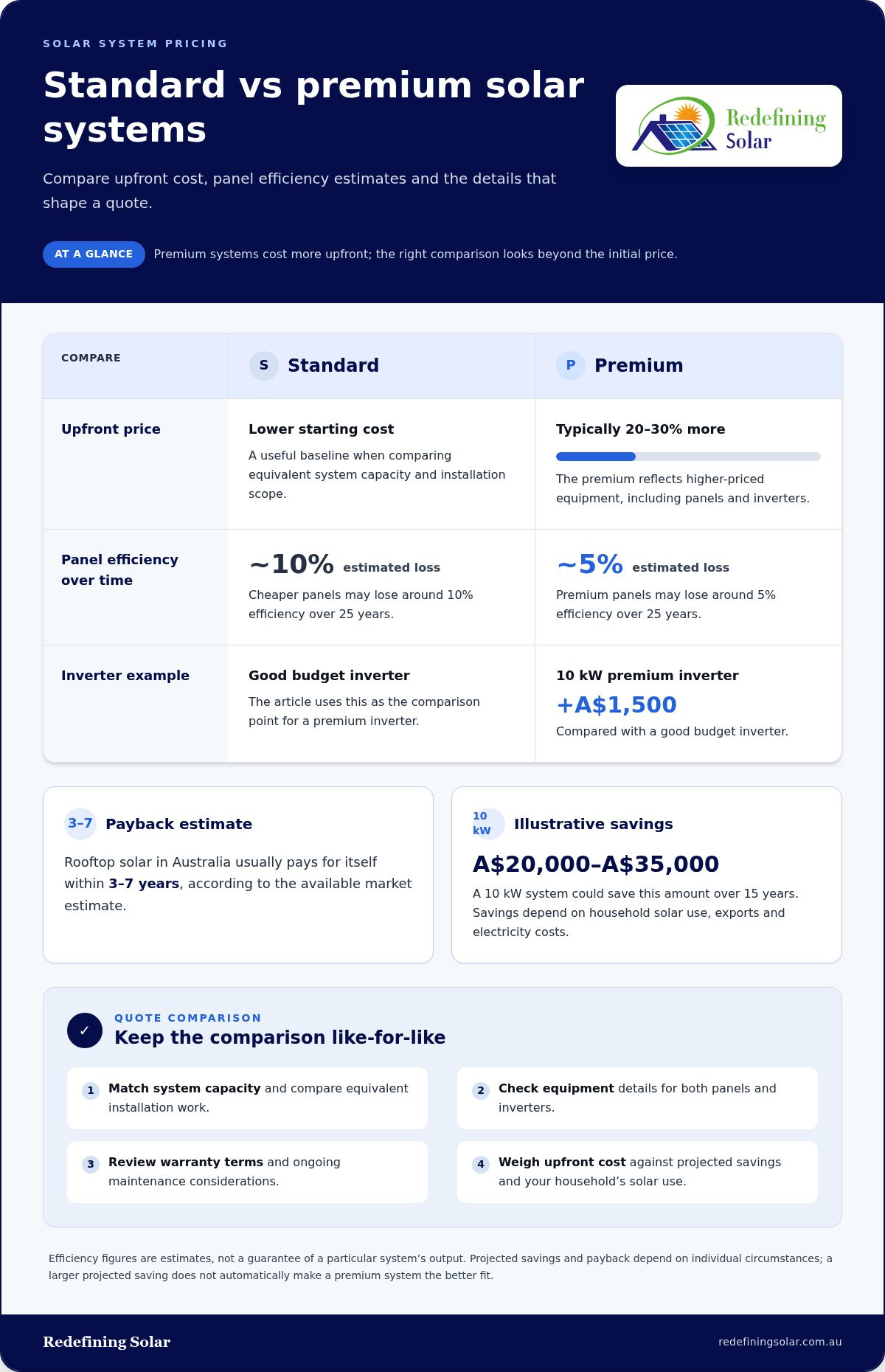
Premium versus standard solar system pricing
Premium systems cost more upfront, but price alone doesn’t show how the equipment may perform over time. Compare panel and inverter choices, expected system life, maintenance and likely savings before weighing quotes.
What the price difference buys
Premium solar systems in Australia typically cost 20-30% more than standard systems. The gap can reflect higher-priced panels and inverters. A premium 10 kW inverter, for example, can add A$1,500 compared with a good budget inverter. Check each quote’s equipment and installation scope before comparing totals.
Lifetime and maintenance
Expected system life affects how you assess an upfront price. Premium panels may lose around 5% efficiency over 25 years, compared with around 10% for cheaper panels. This is an estimate, not a guarantee of a particular system’s output. Review the warranty terms alongside panel and inverter details, and factor in ongoing care.
Payback and savings over time
Rooftop solar in Australia usually pays for itself within 3-7 years, according to the available market estimate. A 10 kW solar system could save A$20,000-A$35,000 over 15 years. Your savings depend on how much solar electricity your household uses, how much it exports, and your electricity costs. A larger projected saving doesn’t automatically make a premium system the better fit.
Compare quotes on value
Compare standard and premium quotes for equivalent system capacity, included equipment, installation work and warranty terms. Then weigh the upfront difference against projected savings and maintenance over the system’s expected life. A premium option may suit priorities such as slower estimated panel efficiency loss; a standard system may better match a tighter upfront budget. Compare the whole system, not just the panel price.
Residential solar cost per watt
This installed-price measure lets you compare systems of different sizes using the same unit. Check that each figure includes the same costs and discount treatment before drawing conclusions from the comparison.
Calculate the rate by dividing the installed system total by its rated capacity in watts. For a 6 kW system, use 6,000 watts as the denominator. Then compare the result with another quote using the same method. This provides a consistent way to assess solar panel cost per watt across Australia, even when system capacities differ.
The per-watt figure is a benchmark, not a measure of your household’s energy use. Capacity, roof layout and equipment choices affect the total cost, while your household’s energy use helps determine a suitable system size. A lower rate may reflect a different specification or installation scope. Read the proposal details before deciding that the lowest figure is the best fit.
The solar rebate also changes the upfront total shown in a quote. Make sure both figures are calculated after the same STC discount, rather than comparing one before and one after the discount. For a like-for-like check, note each system’s capacity, installed total, GST treatment and rebate treatment. Then calculate the cost per watt from comparable figures.
Use the benchmark alongside system design and your household’s energy needs. If you’re considering a system for your home, explore residential solar options and discuss what suits your property.
Redefining Solar: Battery Ready & Upgrades
Redefining Solar helps plan residential solar systems and battery-ready upgrades for customers considering future storage. Businesses can explore commercial solar systems, while customers sourcing panels separately can use the company’s solar panel sales and supply-only service.
The right next step depends on what you already have, what you want your solar system to do and whether you’re planning for a battery. Share those priorities when discussing your project so the conversation can focus on relevant system options. Contact Redefining Solar for a free solar assessment and to discuss your plans, or visit redefiningsolar.com.au.
Make your next solar decision with confidence
The useful next step is to turn a broad price comparison into a plan for how your property uses energy. Note when major appliances run, whether daytime demand may change and what you might add later. Those details help you consider system size and equipment priorities before weighing proposals.
Keep a simple record of your electricity use and any planned changes, such as adding an electric vehicle or replacing gas appliances. Then use the solar panel cost per watt in Australia as one comparison measure, alongside system design and how well it suits your routine. This keeps the focus on suitability, not just the lowest headline figure. A clear picture of your priorities also makes it easier to discuss options for your property.
For tailored pricing advice on your solar plans, contact Redefining Solar. A considered next step can help you move forward with greater confidence.
Frequently Asked Questions
What about solar panel costs in the future?
Future solar prices will depend on equipment supply, installation demand, labour and rebate settings. These factors can shift independently, so a change in one doesn’t determine the final installed price. If you’re planning ahead, focus on the system capacity and components that suit your property, then assess quotes when you’re ready to proceed.
How much of the panel cost is covered by the rebate?
There’s no single rebate percentage that applies to every panel purchase. The STC discount reduces the upfront cost of an eligible installed system, while the amount depends on system details. Eligible Victorian residents may also be able to reduce installation costs by A$1,400 through the state government rebate, according to Solar Victoria. Treat these as installation discounts, not a fixed share of each panel’s retail price.
So what’s the difference between cheap and expensive panels?
Price is only one difference; panel specifications, expected performance and warranty terms also matter. A lower-priced panel may suit a project where upfront cost is the priority, while a higher-priced option may appeal if its documented performance characteristics better match your priorities. Compare the exact panel models and warranty conditions in each proposal, rather than assuming price alone indicates quality or suitability.
Will solar power prices go down in the future?
There’s no set downward price path for solar installations in Australia. Panel and inverter supply, labour, installation requirements and rebate settings all influence what households pay, and these factors can move in different directions. For a future project, compare the total installed scope and system specifications at the time, rather than basing a decision on an assumed price drop.
What is the average solar panel system cost per watt in Australia in 2026?
To compare proposals, divide each installed total by the system’s rated watts, using the same GST and discount basis. This gives you a consistent residential benchmark, but it doesn’t show whether the proposed capacity or equipment suits your household.
How much do 10 kW and 13 kW solar systems cost in Australia?
These ranges vary with location, equipment and installation conditions. A larger system isn’t automatically the better choice: consider your household’s electricity use and available roof space when comparing system capacities.