
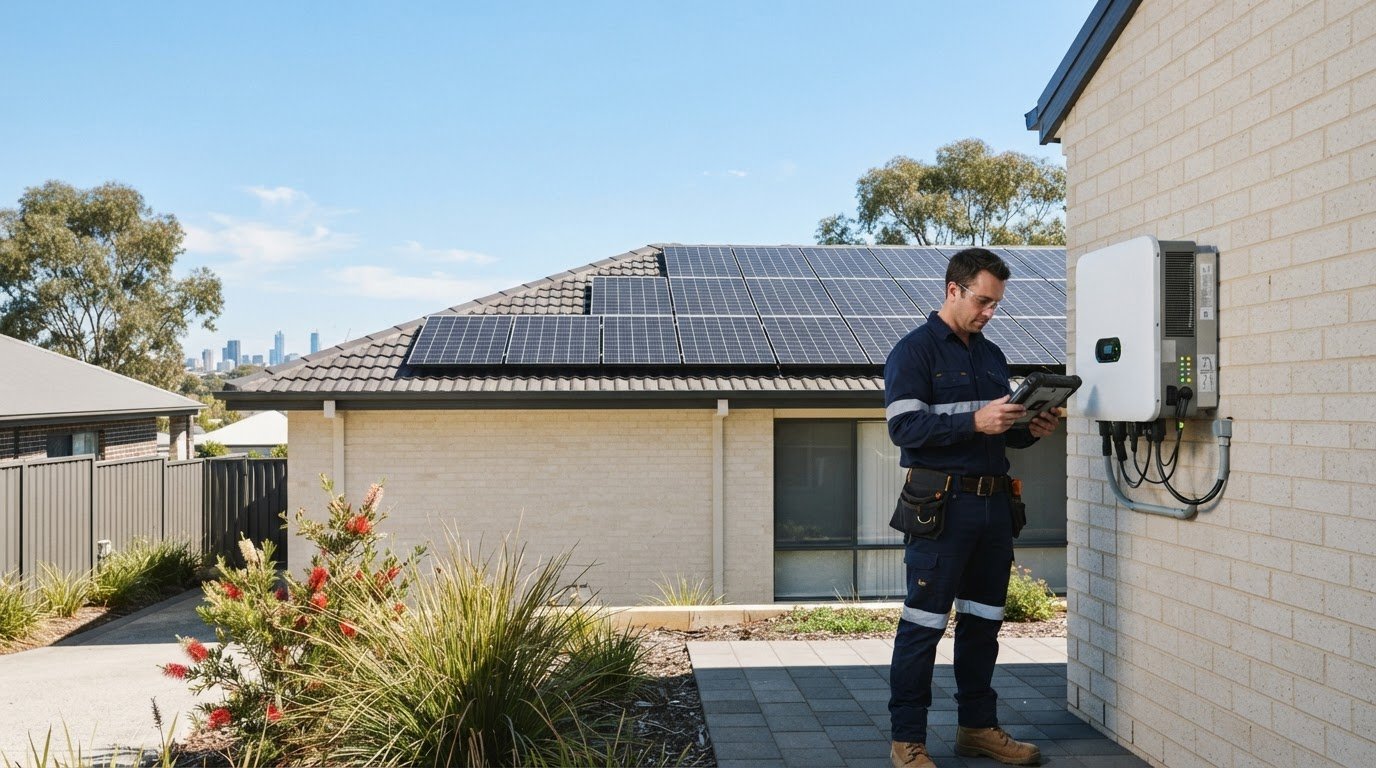
What if a dip in your solar output is a warning sign, not just a cloudy week? A home solar system diagnostic check can help you understand the difference, but a lower reading doesn’t always mean something is broken. Weather, shade and seasonal changes can all affect generation, so it’s understandable if your inverter or monitoring app leaves you unsure what the numbers mean.
This guide explains how to spot changes in your system’s performance and which signs are worth acting on. You’ll learn what a professional diagnostic check can assess, from inverter information to the system’s overall operation, and what details to gather before arranging help.
You can make useful observations without climbing onto the roof or opening electrical equipment. If the cause isn’t clear, a professional assessment is a sensible next step. Redefining Solar provides solar diagnostics, maintenance and repairs, with the business directed by a licensed electrician. The aim is to help you understand what’s happening and make a safe, informed decision about your system.
Key Takeaways
- A home solar system diagnostic check assesses performance, condition and safe operation. A changed reading is a reason to investigate, not proof of a specific fault.
- Compare generation records over time and note inverter messages. Remember that weather, household use and system settings can affect what monitoring data shows.
- Prepare useful information by recording dates, readings, messages and recent changes instead of handling system equipment.
- Persistent output changes, recurring inverter messages, visible damage or safety concerns are sensible reasons to arrange a professional assessment.
- A diagnostic can help narrow down what may need attention. Maintenance or repairs can then be considered based on the findings.
What Is a Home Solar System Diagnostic Check, and When Might You Need One?
A home solar system diagnostic check is a structured assessment of how your system is performing, its visible condition and whether it appears to be operating safely. It considers available generation records, system information and reported symptoms to help identify anything that may need closer investigation.
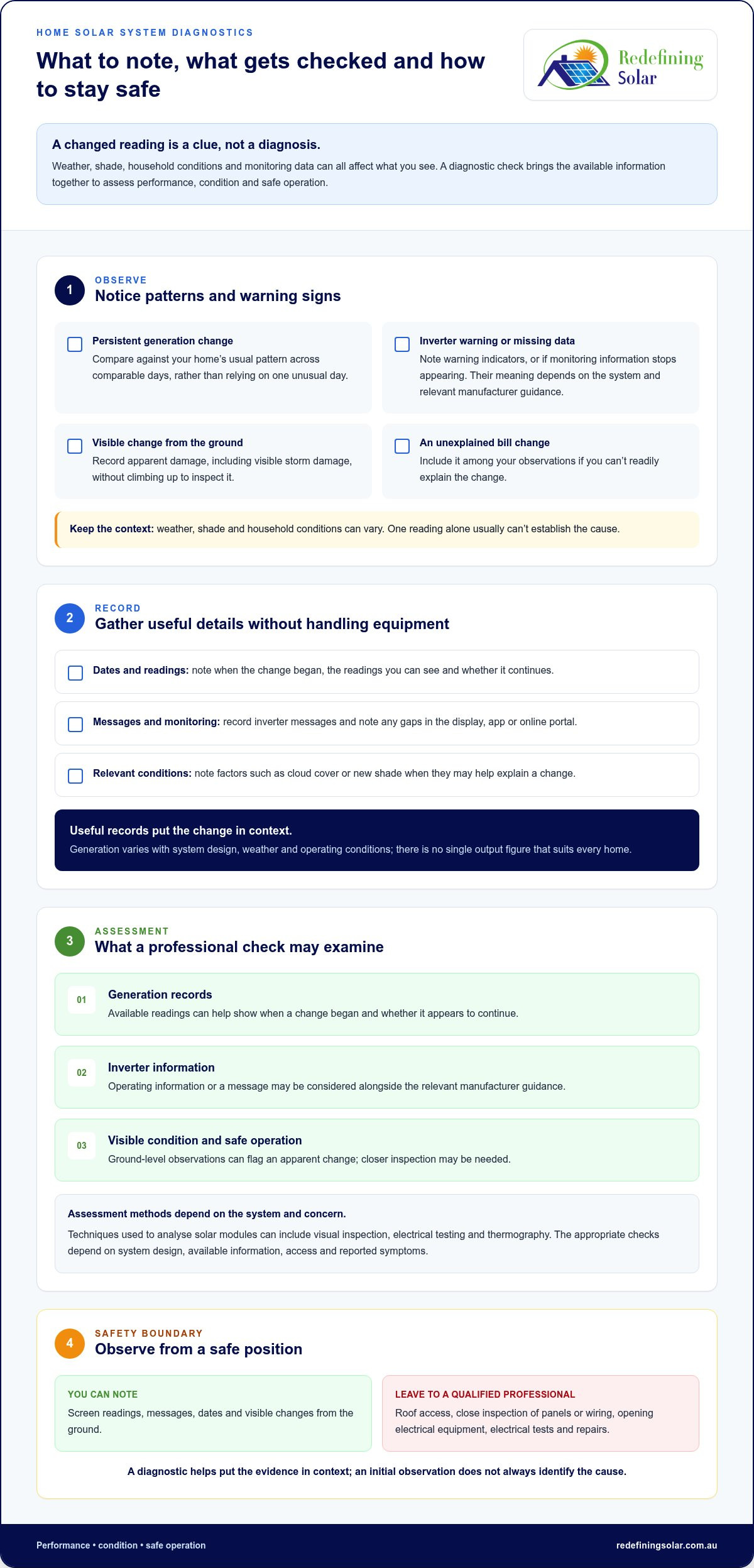
A changed reading is a clue, not a diagnosis. Lower generation could relate to weather, shade, monitoring data or a system issue. One observation alone usually can’t establish the cause. A diagnostic check puts the information in context instead of treating every unusual reading as proof that equipment has failed.
What can prompt a home solar diagnostic check?
Look for a change that persists against your home’s usual pattern, rather than focusing on one cloudy or unusually hot day. Other reasons to investigate include inverter warning indicators, missing monitoring data, visible storm damage or a bill change you can’t readily explain. These observations help describe what’s happening, but they don’t confirm which component, if any, needs attention.
- Generation stays noticeably different from its usual pattern across comparable days.
- An inverter displays a warning, or monitoring information stops appearing.
- You can see damage from the ground, or your bill changes without an obvious explanation.
Weather and household conditions can vary from day to day. Note when a change began and whether it continues, rather than drawing a conclusion from a single reading. If possible, record the date, the reading and any relevant conditions, such as cloud cover or new shade.
What a diagnostic check can and cannot tell you
The findings depend on your system’s design, the monitoring information available and the symptoms you’ve noticed. A check may clarify whether an issue warrants further investigation, but an initial observation doesn’t always identify its cause. Techniques used to analyse solar modules can include visual inspection, electrical testing and thermography. Photovoltaic module analysis techniques describes examples of these methods. The appropriate assessment depends on the system and the concern.
A solar diagnostic check is a structured review of system performance, condition and safe operation, guided by the information available and the symptoms reported.
This distinction matters. A gap in monitoring records tells you that information is missing, not necessarily that the panels have stopped generating. Similarly, a warning indicator deserves attention, but its meaning depends on the inverter and its manufacturer’s guidance. A professional can consider the relevant information alongside the system, rather than relying on a guess based on one signal.
You can begin by noting readings, messages, dates and visible changes from a safe position. Don’t climb onto the roof, open electrical equipment or attempt repairs. If your observations don’t explain a persistent change, arrange a professional diagnostic assessment. Redefining Solar provides diagnostic, maintenance and repair services, with the business directed by a licensed electrician.
What Does a Home Solar System Diagnostic Check Examine?
A home solar system diagnostic check brings several kinds of information together, rather than relying on one display or a quick look at the panels. The assessment may consider generation records, inverter information, visible condition and safe operation. The appropriate checks depend on your system’s components, the access available and the symptoms you’ve reported.
Your observations can help guide the assessment, but they aren’t a substitute for electrical testing. You can review information on a screen and look for obvious changes from the ground. Close inspection of panels, wiring or equipment, and any testing involving electrical components, should be left to an appropriately qualified professional.
Generation records, inverter displays and monitoring data
Use the system’s display, app or online portal to review generation over time, where available. Note the dates, readings and any messages, along with when you noticed a change. If a graph is available, record whether the change appears on particular days or continues across a longer period. These details can help a professional compare the reported issue with the system’s records. There’s no single output figure that suits every home: system design, weather and operating conditions all affect generation.
Panels, wiring and system safety
From the ground, you can note obvious changes such as visible damage, debris or a panel that appears different from the rest. Don’t climb onto the roof to get a closer look. Never open inverter equipment, touch wiring or attempt electrical tests. A visual observation can be useful, but close inspection and electrical checks belong with an appropriately qualified professional.
A diagnostic assessment may cover several areas, depending on what your system includes and what the symptoms suggest:
- Generation records: A review of available readings can show when a change began and whether it appears to continue.
- Inverter information: The display or monitoring record may show operating information or a message for a professional to interpret using the relevant manufacturer guidance.
- Visible condition: Ground-level observations can flag an apparent change. A closer inspection may be needed to assess panels and other components.
- Safe operation: A professional can determine which checks are suitable for the system and whether further investigation is warranted.
In short, a home solar system diagnostic check may assess generation, inverter information, visible condition and safe operation. The specific checks depend on your system and the issue reported. It doesn’t mean every test is needed for every home. A system with different components or limited monitoring information may call for a different assessment from one with a clear record of a change.
Background on solar energy research and development can help explain how solar technology is studied and assessed. The solar energy research and development overview describes work in this wider field, though it isn’t a guide to interpreting your home’s monitoring app or diagnosing a fault. For your system, performance information needs to be considered alongside the equipment and circumstances.
If your observations leave you unsure what the next safe step is, Redefining Solar provides solar diagnostic and maintenance services, with the business directed by a licensed electrician.
Does Monitoring Show a Fault? Reading Solar Data Without Guesswork
Monitoring is useful for spotting a change, but a graph or alert doesn’t confirm what caused it. Weather, shading, household electricity use and system settings can all affect the figures you see. Treat the data as a starting point for sensible questions, not a verdict on a panel, inverter or other component.
A gap in an app or online portal also isn’t proof that the solar system has stopped generating. The monitoring connection or data reporting may be interrupted while the equipment itself is still operating. Conversely, a normal-looking screen can’t rule out every physical or electrical issue. A home solar system diagnostic check considers monitoring information alongside the system’s condition and reported symptoms.
How to compare readings fairly
Compare similar dates or periods where your system allows it, and use the owner’s manual to understand what its display and reports mean. Record the date, reading and any message, then note relevant context such as cloudy weather, new shade, unusual household use or missing data. This gives a clearer picture than comparing different days without context. If you can, look for a pattern across several comparable periods rather than relying on a single reading.
| What you notice | Possible explanations | Sensible next step |
|---|---|---|
| One day’s generation is lower than you expected. | Cloud, rain, shade or a change in household conditions may affect the reading. One low day doesn’t establish that equipment has failed. | Check the weather and compare with similar periods in your records before drawing conclusions. |
| The app or portal has missing readings. | Data may not be reaching the monitoring service, or the display may be temporarily unavailable. This alone doesn’t prove the panels or inverter have stopped working. | Note when the gap began and check the owner’s manual for information about the system’s reporting. |
| Generation remains different from its usual pattern. | Weather, new shade, settings or a system issue could be relevant. Monitoring alone may not show which explanation applies. | Record the dates and context. Arrange professional assessment if the change persists without a clear explanation. |
| A warning message appears more than once. | The meaning depends on the equipment and its manufacturer’s guidance. The message is a prompt to investigate, not a diagnosis by itself. | Save the exact message and seek professional advice if it recurs or you’re concerned. |
When a clue needs professional investigation
Repeated warnings, a persistent unexplained change or visible damage are good reasons to seek advice. Share your notes and message details rather than trying to test equipment yourself. Monitoring can help narrow down what needs attention, but it can’t replace a physical inspection or electrical assessment when one is needed.
Formal solar panel testing can assess performance and durability under defined conditions. UL Solutions Solar Panel Testing offers background on that kind of testing, though it isn’t a guide to interpreting your home’s app or diagnosing a fault. If an inverter issue is identified, a professional can explain the appropriate next steps for your system.
How to Prepare for a Solar System Diagnostic Check Safely
A little preparation can make a professional assessment more useful. Start with what you’ve observed and what your monitoring system shows. You don’t need to inspect electrical equipment or work out the fault yourself. A clear record of when something changed and what you noticed gives the technician helpful context before any checks begin.
Information to gather before the appointment
Follow this sequence using information you can access safely from inside your home or from the ground:
- Describe the change. Note when you first noticed it and whether it happens constantly, at certain times or only occasionally. Record what looks different from your system’s usual pattern.
- Save monitoring details. Write down the dates and readings you’re concerned about. Take screenshots of relevant graphs or gaps in data, and copy any inverter message exactly as it appears. Don’t interpret or try to clear a warning.
- Note what changed around the same time. Record recent storms, new shade from trees or nearby structures, renovations, or a shift in household energy use. These details may help explain why readings differ, but they don’t prove a cause.
- Gather system documents. If available, locate the owner’s manual, installation information and warranty documents. Keep them handy for the assessment. Having paperwork doesn’t guarantee a particular warranty outcome.
- Make a short summary. Bring your notes together in date order, including what you saw and what you haven’t been able to establish. This helps keep the conversation focused on the reported symptoms.
What not to do during a home check
Keep preparation to safe observations and records. Don’t climb onto the roof, approach damaged panels or exposed wiring, open the inverter, handle cables or attempt electrical testing or repairs. Don’t touch equipment to investigate a warning. These actions can expose you to hazards or make the situation worse. Leave close inspection and electrical checks to an appropriately qualified professional.
If you see exposed wiring, serious damage or another immediate danger, keep well clear and keep others away. Don’t approach the equipment or try to make it safe yourself. Follow appropriate emergency and safety guidance; call 000 if there’s an immediate threat to life or a fire.
These preparations are useful whether the concern is a recurring inverter message, missing data or a change in generation. A home solar system diagnostic check uses the information you’ve gathered as a starting point, while the assessment itself depends on the system and reported symptoms. You don’t need to arrive with a diagnosis.
If you’re ready to have a persistent concern assessed, arrange a solar system diagnostic check with Redefining Solar. The Australian-owned business provides solar diagnostic, maintenance and repair services and is directed by a licensed electrician.
When to Arrange Professional Solar Diagnostics and Repairs
Monitoring is useful for spotting changes, but watching the numbers won’t always explain what’s happening. Arrange a professional assessment if generation remains unexpectedly different from your usual pattern, inverter messages keep returning, or visible damage raises concern. Don’t wait for a clearer reading if you’re worried about safety. Keep clear of damaged equipment and leave inspection and electrical work to a professional.
A single low reading or brief monitoring gap may not call for a repair. The important question is whether the change persists, recurs or comes with other signs. Record what you’ve noticed and when, then share those details during a home solar system diagnostic check. The assessment can help determine what needs closer attention without assuming a particular component has failed.
What happens after a diagnostic assessment?
Findings guide the next steps. Depending on the system and symptoms, these may include maintenance, further investigation or a repair recommendation. Ask for a plain-English explanation of what was observed, what it may mean and why a particular step is proposed. The result depends on the issue and system, so an assessment isn’t a promise that every problem can be resolved in one visit or that output will return to a particular level.
It’s reasonable to ask how the findings relate to your monitoring records and reported symptoms. If a repair is recommended, understanding the reason for it helps you make an informed decision. Your system’s design, equipment and condition all matter, so recommendations should suit the system in front of the technician rather than rely on a generic assumption.
How Redefining Solar can help
Redefining Solar provides solar diagnostics, maintenance and repairs for existing systems, inverters and batteries. The Australian-owned business is directed by a licensed electrician. Its diagnostic and repair services are a practical next step when your observations haven’t identified the cause or a concern continues despite monitoring.
If you’re also considering a new system, information about residential solar installation can help you understand the separate decisions involved in planning one. For electrical work, a licensed electrician checklist can provide related context. These topics don’t replace a diagnostic assessment for an existing system, but they may be useful if your needs extend beyond investigating a performance change.
There’s no need to arrive with a diagnosis. Bring your dates, readings and any inverter messages, and explain what you’ve observed. Redefining Solar can assess the concern and discuss suitable next steps based on your system and its symptoms. Talk to Redefining Solar about your system.
Give your solar system a clear next step
You don’t need to work out the cause of a change before asking for help. Your notes and monitoring records can start a useful conversation, while a professional assessment can help determine what deserves attention. A home solar system diagnostic check is a practical way to move from uncertainty towards an informed decision about your system.
Redefining Solar provides diagnostics, maintenance and repairs, and is directed by a licensed electrician. Any recommended next step should be based on the system’s condition and the information available, so you can understand what’s being proposed before deciding how to proceed.
To discuss a concern or arrange an assessment, talk to Redefining Solar about your system. Start with what you’ve noticed, even if you’re not sure what it means. A clear, considered next step can help you feel more confident about looking after your solar system.
Frequently Asked Questions
Is a solar system diagnostic check the same as cleaning the panels?
No. A diagnostic check investigates reported performance and relevant system condition, while cleaning removes dirt from panel surfaces. If output seems lower, don’t assume grime is the cause: weather, shade or monitoring issues may also affect readings. Avoid roof access, abrasive tools and pressure washing, which can create safety risks or damage surfaces. If your records suggest cleaning could help, get advice suited to your panels and installation.
Can cloudy weather make my solar system look faulty?
Yes. Cloud cover can lower generation, so a reduced reading on a cloudy day doesn’t by itself indicate a fault. For a fairer comparison, look at similar times of day and note whether conditions were overcast or sunny. If readings remain unusual across different weather conditions, or an inverter warning keeps appearing, save the relevant details and seek professional advice rather than trying to identify the cause yourself.
Does an inverter error code always mean the inverter needs replacing?
No. An error code is information to interpret, not a replacement recommendation. Its meaning depends on the inverter model and exact wording, so check the manual for your specific unit and record the message before it disappears. Don’t rely on a code list for another model, repeatedly reset the equipment or open the inverter. A qualified professional can assess the message alongside the system’s other symptoms.
Can my solar system still generate electricity if its monitoring app is offline?
It may still generate, as a lost app connection doesn’t necessarily mean the solar equipment has stopped working. If your inverter has a normal user display, note what it shows without opening the unit or changing its settings. Record when the app stopped updating and whether the display shows a message. This gives a professional useful context to distinguish a reporting problem from a generation concern.
Can a diagnostic check explain why my electricity bill has increased?
It can help assess whether solar performance needs attention, but a higher bill doesn’t prove the system is faulty. Compare the bill’s dates with your generation records, and consider whether the billing period, electricity plan or household use changed. For instance, running heating or cooling more often may affect consumption. Sharing these details can help separate a solar performance concern from other reasons your costs have shifted.
Should I switch off my solar system before a diagnostic check?
No. Don’t switch off the system or change its settings unless its manual or a qualified professional instructs you to. Controls differ between systems, and handling electrical equipment can be hazardous. If there’s visible damage or exposed wiring, keep clear and don’t approach the equipment. Note any warning messages from a safe place and share them when arranging a home solar system diagnostic check.

[…] household’s needs may change after installation, and system performance may need attention over time. Maintenance and repairs can help address faults or concerns about changing performance. Keeping […]