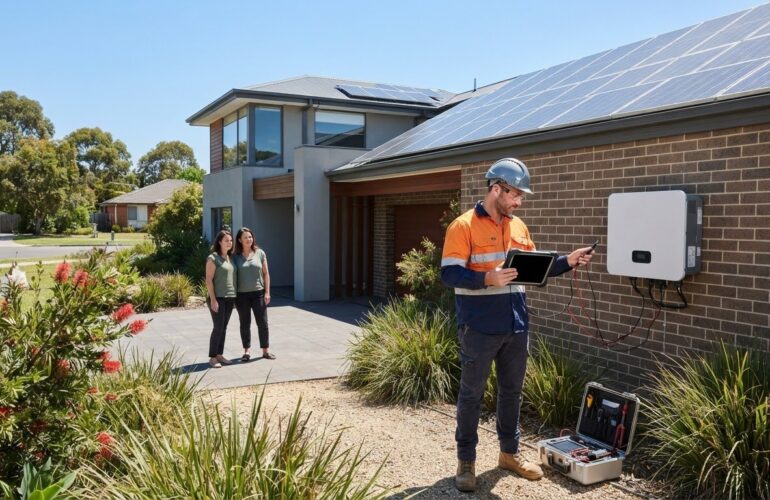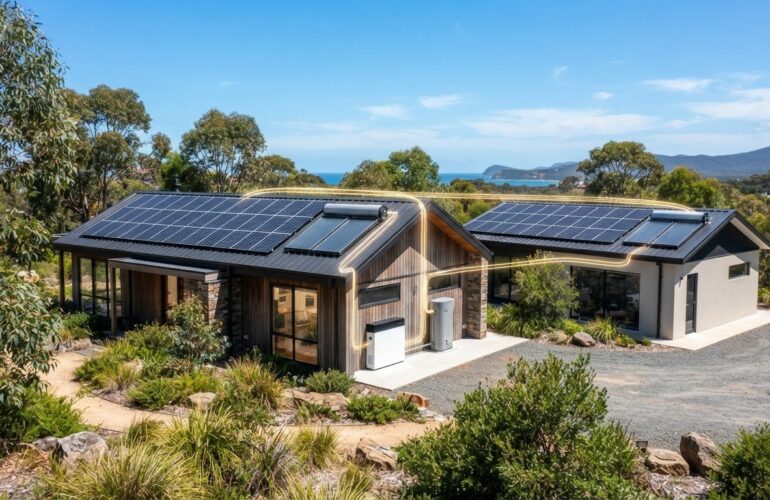

A solar battery isn’t a straightforward DIY add-on. It needs to suit your existing or planned solar system and household electricity use, so treat it as a considered installation, not a weekend project.
It’s understandable to want more value from rooftop solar and greater control over when you use the electricity it generates. A battery can store surplus solar energy for later, but whether it makes financial sense depends on your usage patterns, electricity tariff and system size.
This guide explains whether to add a battery to a new or existing solar system, how storage may affect savings, and what to compare when weighing battery capacity, models and warranties. It also covers the installation process and practical trade-offs, helping you make a more informed decision.
Key Takeaways
- Compare adding a battery to a new solar system with retrofitting one to your existing setup, including how each option fits your household use.
- Estimate potential savings by looking at when you use electricity, your tariff and how much solar power you can store for later.
- Compare battery capacity, chemistry, expandability and warranty terms to find a system that suits your needs.
- Consider whether backup power matters to you, and understand how a battery can change the way you use rooftop solar.
- Learn what an installation involves and how Battery Ready & Upgrades can support a future battery addition.
Battery installation with new or existing solar systems
A battery can be designed into a new solar system or added to existing panels. The right approach depends on your equipment, electricity use and whether you want backup during outages with Redefining Solar.
New and Existing Solar System Integration
With a new solar system, the panels, inverter and battery can be planned together. The design accounts for how electricity flows between your panels, home, battery and grid. Residential and commercial properties can both use tailored battery systems, with equipment selected to suit each site’s energy needs.
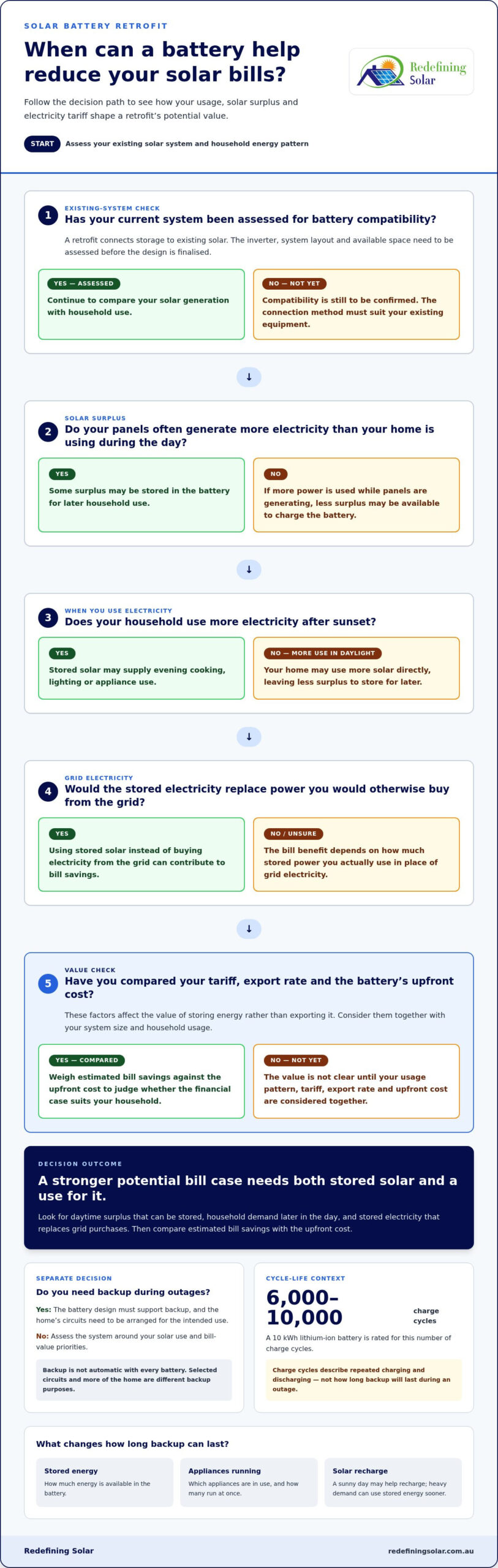
A retrofit connects storage to an existing solar system, but compatibility matters. The installer assesses the inverter, system layout and available space before finalising the design. Lithium-ion technology and modular storage systems have simplified installation, but the connection method still needs to suit your existing equipment. A battery-ready setup can also make a later addition easier to plan.
Battery Package Pricing
A solar and battery package combines panels, an inverter, battery storage and installation in one system design. The price depends on battery capacity, solar system size, equipment compatibility, installation requirements and whether the project is a new installation or retrofit. These factors determine the scope and are reflected in the quote.
Compare package designs by what they include, not just the battery’s stated capacity. Check whether the proposed system includes the components needed to connect storage to your panels and manage electricity flow. Battery chemistry, modular expansion and backup capability can also shape the design. These details help you judge whether a package meets your priorities.
Permits and Grid-Connection Approvals
Battery installation involves electrical work and, for a grid-connected system, connection requirements set by the relevant electricity network. Any applicable permits or approvals should be considered alongside the system design and connection arrangements.
Approval steps depend on the equipment and proposed connection. The installation plan should account for the technical information required by the network, as well as safe electrical work and commissioning. Check that the design explains how the battery connects to the grid and manages electricity flowing to and from your property. This keeps approvals and connection planning within the overall project.
Sizing a Battery for Household Electricity Use
To size a battery, start with your household’s electricity use throughout the day and the times you use the most power. Compare that pattern with your panels’ solar generation and the surplus available to store. This helps show whether a smaller capacity could cover evening use or greater storage better suits your routine.
For example, a household using more electricity after sunset may value storage for evening appliances. A home with daytime electricity demand may use more solar power directly, leaving less surplus for charging. Consider whether backup during an outage is also a priority, because that can change the system configuration. Ensure your system meets all relevant national standards and household energy criteria for optimal performance.
How Much Can a Solar Battery Retrofit Help You Save?
A retrofit can help you use more of your solar electricity instead of exporting it. Its value depends on how much stored power replaces grid electricity and when your household uses energy.
Using Stored Electricity
During the day, rooftop panels may generate more electricity than your home needs. A battery stores some of that surplus for later use, such as evening cooking, lighting or appliance use. The more stored solar energy you use instead of buying electricity from the grid, the greater its potential to reduce bills.
Compare solar generation with household usage throughout the day. If demand rises after sunset, stored energy may supply evening appliances. If your household uses more power while panels are generating, less surplus may be available to charge the battery. Your electricity tariff and export rate also affect the value of storing energy instead of exporting it.
A battery’s financial benefit depends on estimated bill savings compared with its upfront cost. System size, household usage and tariff structure all influence the calculation. Consider these factors together rather than relying on a single payback estimate that may not reflect your daily energy pattern.
Backup During Outages
Some battery systems can be designed to provide backup power during a grid outage. Backup is a system capability, not an automatic result of adding storage: the design must support it, and the home’s circuits need to be arranged for the intended use.
Decide which appliances matter most during an outage, such as essential lighting, refrigeration or communications equipment. A battery supplying selected circuits serves a different purpose from one intended to power more of the home. Available stored energy and the appliances running at once determine how long backup can last.
Lithium-ion batteries are common in solar storage. A 10 kWh lithium-ion battery is rated for 6,000 to 10,000 charge cycles. That figure describes repeated charging and discharging, not outage duration. A sunny day may help recharge the battery, while heavy household demand can use stored energy sooner.
Energy Independence
A battery can reduce reliance on grid electricity by shifting solar energy from daytime generation to later household use. It won’t make a home fully independent: solar production, stored capacity, household demand and operating settings all affect how much grid power you still need.
For a practical estimate, compare your bills and usage throughout the day, then identify how much electricity you import after sunset. Consider your routine, too. Running flexible appliances while panels are generating may leave more stored energy for evening use, while higher evening demand can reduce the battery’s contribution.
Use your usage pattern, tariff and export rate to assess the likely value of a retrofit. A clear solar battery system design can help map storage to your electricity use and backup priorities.
Battery models, capacities and warranties
Compare battery capacity, expandability and warranty terms against your household’s energy needs. These details help you assess how a model may perform over its expected working life.
Battery Models and Capacities
Capacity, measured in kilowatt-hours (kWh), indicates how much energy a battery can store. BYD batteries are available in modular sizes from 5.1 kWh to 66.3 kWh. The Alpha ESS Smile G3 can expand from 10.1 kWh to 60.6 kWh. Modular options let you match storage more closely to changing needs.
Compare each model’s usable capacity with the amount of electricity you want to store and use. A household focused on evening consumption may have different requirements from one prioritising backup. Consider whether the system can be expanded later, too. That flexibility may matter if household demand changes or you add energy-consuming appliances.
Capacity alone doesn’t determine suitability. Check that the model works with your solar system and inverter, and compare its operating specifications with your intended use. A larger battery, for example, may offer more storage, but it won’t automatically improve savings if your home has little surplus solar electricity to charge it.
Rebates can affect the upfront cost comparison. The Australian Government’s Cheaper Home Batteries Program is estimated to reduce installation costs for Melbourne homeowners by about 30%. Compare eligible models and their usable capacity alongside the rebate, rather than choosing on capacity or headline cost alone.
Reliability and Warranty Cover
A battery warranty sets out the cover offered over a defined period and may specify how much capacity the battery will retain. Tesla Powerwall and Sungrow warranties state at least 70% capacity retention over a 10-year warranty period. Compare the written terms for the exact model, including the capacity measure and conditions that apply.
A 10 kWh lithium-ion battery has an approximate functional lifespan of 10 to 15 years under normal daily use. This is a general lifespan estimate, not a replacement for a model’s warranty. A warranty period and an expected functional lifespan describe different things, so assess both when planning for long-term use.
Before choosing, read the warranty for its coverage, exclusions and terms if capacity falls below the stated level. Check how it treats regular charging and discharging, and whether the model’s intended use aligns with its terms. These details matter if your priorities include backup, lower energy bills or regular daily storage.
For a practical comparison, note each model’s capacity, expansion options, stated retention and warranty period. Weigh these details against your household’s solar generation and electricity use. This keeps the decision focused on useful storage and clear written cover, rather than brand recognition alone.
Home battery storage and solar self-consumption
Battery storage lets you use more rooftop solar electricity at home. Its value depends on when you use power, available incentives and how the system operates.
Reasons for Installing a Home Battery
For households in Melbourne, a key benefit is using solar electricity after sunset instead of relying entirely on grid power. During the day, panels can charge the battery with surplus generation. Later, stored electricity can supply household appliances and increase solar self-consumption.
Consider your daily routine before deciding. If your home is often empty during sunny hours, you may have surplus generation to store. If you use more electricity during the day, you may already consume more solar directly. Comparing a typical day’s generation with household demand helps clarify what storage could contribute.
Some battery systems can also charge from the grid when electricity is cheaper. This may suit a tariff with lower-cost periods, but the benefit depends on the tariff and the system’s charging settings. Compare the cost of charging with the value of using that electricity later.
Virtual power plant programs are another consideration. A household with rooftop solar and battery storage may join an aggregation program or trial to help meet local grid electricity demand. Participation can affect how the battery operates, so consider the program’s terms alongside your household’s storage priorities.
Australia’s Cheaper Home Batteries Program launched on 1 July 2025, with A$2.3 billion allocated nationally. The program is estimated to reduce installation costs for Melbourne homeowners by about 30%, while average payback is estimated at 5-7 years after the rebate, compared with 7-10 years previously. These estimates make incentives worth including in a household comparison.
Safety, Fire and Maintenance Risks
Battery installation involves electrical equipment and stored energy, so fire safety and correct system design deserve attention. Consider the proposed location, access around the equipment and the manufacturer’s placement instructions. The battery’s position should also suit your home’s layout and the way the system will be maintained.
Ask how the design manages the battery, inverter and connected circuits as one system. Backup settings and charging behaviour, for example, affect how the battery operates during normal use and outages. Clear operating instructions help household members understand what the system can power and how to respond to an alert.
Plan routine care in line with the manufacturer’s maintenance guidance. Keep the installation area accessible, watch for visible damage or unusual operation, and arrange qualified support for electrical faults. Regularly reviewing system performance can also show whether charging and battery use still match changing household needs.
Solar battery installation services in Melbourne
A battery installation connects storage to your solar panels, inverter and household electricity needs. For solar battery installation in Melbourne, the key is matching the design and work to your property and intended use.
Battery Installation Services
A thorough installation process starts by reviewing your solar panels, inverter and switchboard. For an existing system, equipment compatibility helps determine how the battery can connect. For a new system, the panels, inverter and storage can be planned together.
The design should reflect how you expect to use the battery. If you want backup, identify the circuits and appliances that matter most. If your priority is using more solar power, consider when your home has surplus generation and when electricity demand rises. These choices shape the battery setup and its connection to your home.
Before work begins, read the written proposal and make sure it explains the system design, equipment, installation scope and any grid connection arrangements. Compare battery capacity and warranty terms across brands, but also consider whether each option suits your existing solar panels. A proposal explaining how the system works is easier to assess than a hardware list alone.
Installation involves fitting and connecting the battery and related equipment, followed by commissioning. Ask for an explanation of the system controls and how to read its operating information. You should understand, for example, how to tell whether your panels are charging the battery or your home is drawing electricity from it.
Choosing a Clean Energy Council-Accredited Installer
Choose an installer who can clearly explain their experience and the proposed battery work. Consider accreditation alongside the written design, the explanation of equipment compatibility and the clarity of the proposed work. Accreditation is one useful selection point, not a substitute for understanding what the installation includes.
Compare proposals to check that each addresses the same needs. One design might focus on storing solar power for evening use, while another includes backup for selected circuits. Look for clear explanations of the battery, inverter connection, commissioning and handover, rather than relying on brand names alone.
Before deciding, list your priorities: using more solar electricity, backup during an outage, or the option to expand storage later. Then compare how each proposal addresses them. This makes it easier to spot differences in system design and installation scope without assuming the largest battery is best.
For a considered next step, discuss your solar battery installation and the way you want to use stored power at home.
Redefining Solar: Battery Ready & Upgrades
Redefining Solar can help plan a battery-ready upgrade or a residential solar system to suit your home’s energy needs. If you already have panels, Battery Ready & Upgrades can prepare your setup for storage. If you’re starting fresh, a residential system can be planned with battery use in mind.
For businesses, commercial solar systems can be planned around site requirements. Solar Panel Sales / Supply Only is also available if you need panels without installation. The right next step depends on whether you’re adding storage, upgrading an existing setup or planning a new system.
Contact Redefining Solar to discuss your solar plans and a setup that suits your property.
Make your next solar decision with confidence
Your next step is to turn your priorities into a system design that fits your property. Before discussing solar battery installation in Melbourne, consider what you want the system to do: support a future battery, make better use of rooftop solar, or meet a business site’s energy needs. A clear brief keeps the conversation practical and focused on your requirements.
Redefining Solar offers Battery Ready & Upgrades, Residential Solar Systems and Commercial Solar Systems. These services can support different stages of a solar project, from preparing an existing setup for storage to planning a system for a home or commercial property.
Bring your questions about your current solar setup, energy use and future plans to the conversation. Contact Redefining Solar today to discuss a suitable next step for your property.
Frequently Asked Questions
Can you install a solar battery yourself?
For most households, battery installation isn’t a suitable DIY project. It involves connecting electrical equipment to your solar system and home, then commissioning it so the components work together. An incorrect connection can affect system operation and safety. A qualified installer can assess your inverter, switchboard and battery compatibility, then explain which circuits the battery will support. You can prepare by listing your appliances and backup priorities.
Can I get the government solar battery rebate?
You may qualify for the Australian Government’s Cheaper Home Batteries Program if your system meets its eligibility criteria. The stated capacity range is 5-100 kWh, with the rebate capped at the first 50 kWh. Eligible systems must also appear on the CEC Approved Battery List. Confirm that the proposed battery’s usable capacity and model meet the criteria before relying on a rebate in your household budget.
How do I get the Solar Victoria rebate and Interest-Free Loan?
Solar Victoria’s stated criteria include a home valued under A$3 million and combined household taxable income of all owners less than A$150,000 per year. These criteria apply to the Solar Victoria rebate and interest-free loan. Check both the property valuation and the owners’ combined taxable income against those limits when assessing eligibility. The federal battery program and Victoria’s assistance have separate eligibility requirements, so don’t assume qualifying for one means qualifying for the other.
How does battery storage work?
A home battery stores electricity, usually surplus solar generation, so your household can use it later. For example, panels can produce power during the day while you’re out; the battery stores some unused electricity for evening use. Depending on the system design, stored energy may also supply selected circuits during an outage. Your solar output, household demand and battery settings determine how that electricity is used.
How much can I really expect back from the rebate?
The federal program’s example maximum is about A$330 per kWh of usable battery capacity, with the rebate capped at the first 50 kWh. That figure is a per-kWh example, not a guaranteed payment for every household or system. The eligible battery, usable capacity and program criteria affect the amount. Treat the rebate as part of your project calculation only after matching your proposed system to the applicable rules.
How much should a 10 kWh battery cost?
There isn’t one suitable price for every 10 kWh battery installation. The price depends on the case and is given after a quote request; factors include the battery model, compatibility with your existing inverter, installation work and any system changes required. Compare what each proposal includes, such as equipment, connection and commissioning, rather than judging a battery by capacity alone.
Is it worth adding a battery to existing solar panels?
A battery can be worthwhile if your panels regularly produce surplus electricity and your household uses power later, such as in the evening. First compare solar generation with electricity use throughout the day. Then consider your export rate, electricity tariff, inverter compatibility and whether backup matters to you. A retrofit may be less compelling if little surplus is available to charge the battery or your home uses most solar power as it is generated.
What does solar battery installation cost in Melbourne, including equipment and labour?
The price depends on the project and is provided in a quote. Equipment and labour costs are shaped by battery capacity and model, whether the system is new or a retrofit, inverter compatibility, switchboard work and installation design. A useful quote separates the battery and other equipment from installation tasks, then explains any changes needed to connect the system safely and commission it.