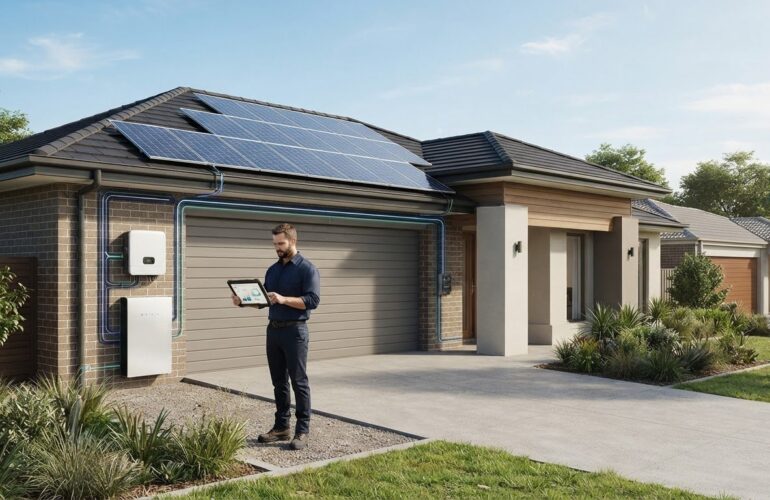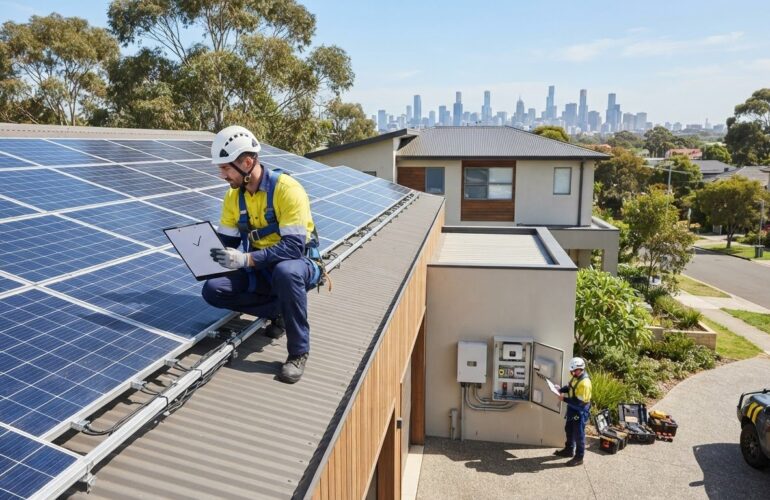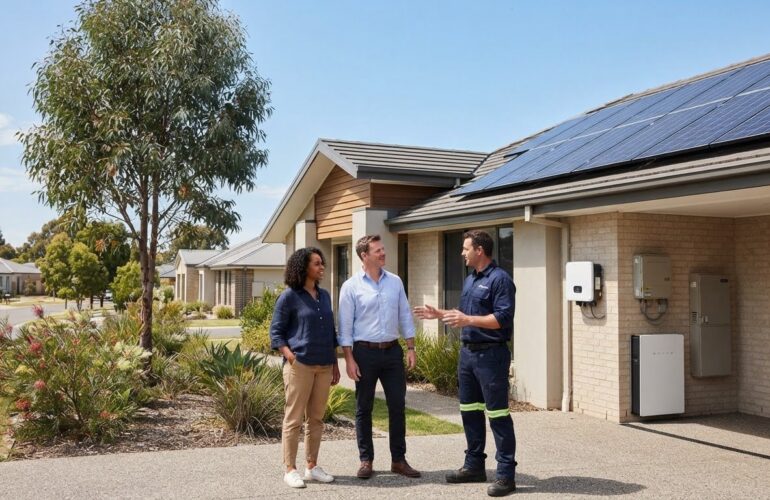
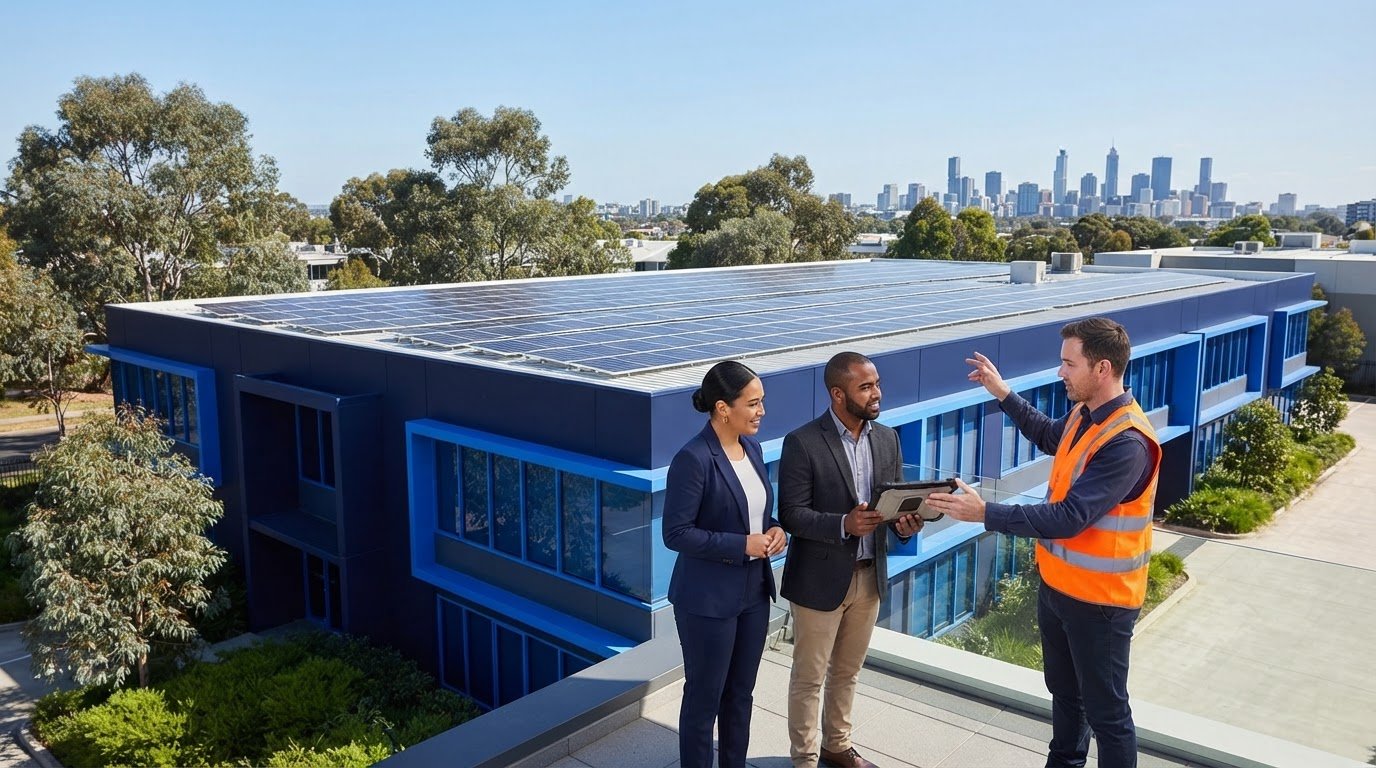
The best commercial solar system for your business isn’t necessarily the largest one your roof can hold. The right fit depends on when your business uses electricity, how much it needs and what your site can support. When comparing commercial solar systems that Australian businesses might consider, start by checking how much of the power generated can be used during the day.
Comparing proposals raises practical questions: are the system size, components and projected returns based on your actual energy use? How will installation fit around your operations, and what support will the system need over time? Start with your operating patterns and site conditions, rather than a one-size-fits-all recommendation.
This guide explains how to assess whether commercial solar suits your business and compare proposals. It covers energy use, system design, installation planning and maintenance, so you can understand the assumptions behind an investment. Redefining Solar is Australian-owned and operated, directed by a licensed electrician, and provides turnkey commercial solar design and installation, with maintenance and repair support.
Key Takeaways
- Match system size to your business’s electricity use, operating hours and available roof space, rather than choosing the biggest design.
- Understand how panels, inverters, mounting, electrical protection and monitoring work together, and how batteries may fit your plans.
- Compare commercial solar systems melbourne proposals by checking the assumptions behind generation, self-consumption, exports and your tariff.
- Plan around site access, roof condition, electrical infrastructure and business schedules.
- Consider how connected design, equipment supply and installation, supported by maintenance and repairs, can help you manage the system over time.
Commercial solar systems: assess whether solar fits your business
A commercial solar system is a photovoltaic system designed around a business site’s electricity use. Solar panels generate electricity from sunlight, while other components convert and manage that power for on-site use or export. For a plain-English overview of how these parts work together, see this guide to a photovoltaic system.
When solar generation aligns with your business’s demand, it can reduce reliance on grid electricity during daylight hours, help manage operating costs and lower emissions associated with electricity use. These are potential benefits, not guaranteed outcomes. Their scale depends on how much power your site uses while the system is generating, as well as the system design and project assumptions.
Substantial daytime use can mean more generated electricity is consumed on site rather than exported. But an industry label alone won’t tell you whether solar is a good fit. Businesses in the same sector can have different equipment, schedules, roofs and energy profiles. When comparing commercial solar systems melbourne options, start with your own site and consumption data.
Which business energy patterns can suit commercial solar?
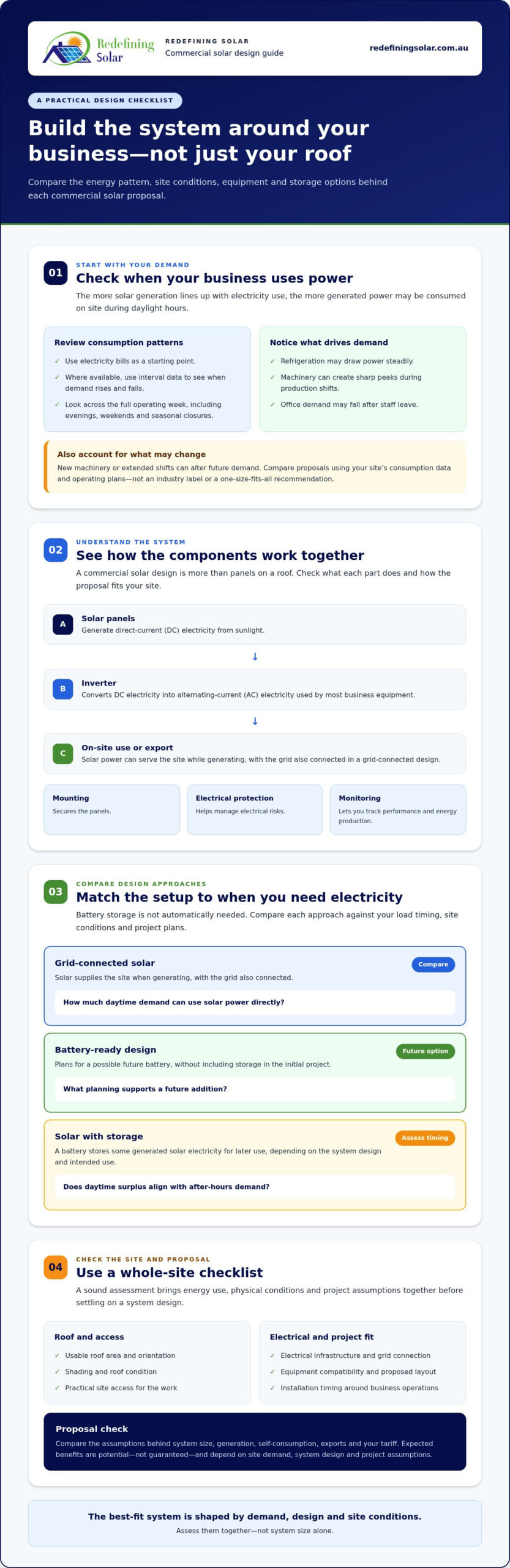
Compare expected solar generation with your electricity use throughout the day. Bills offer a useful starting point; interval data, where available, can show when demand rises and falls. Refrigeration may draw power steadily, while machinery can create sharp peaks during production shifts. An office may use more electricity during working hours, then much less after staff leave.
Consider the full operating week, not just a typical weekday. Evening demand, weekend trading, seasonal closures or quieter production periods can change how much solar power your business uses directly. This gives you a more realistic basis for comparing designs.
What should a first site assessment consider?
Review usable roof area, orientation, shading, roof condition and practical access. These factors affect what can be installed and how work can be planned, but none alone determines suitability. Also note energy-intensive equipment, normal operating hours and planned changes, such as new machinery or extended shifts, that could alter future demand.
Commercial solar suitability depends on matching generation to site demand and conditions. A sound assessment brings consumption patterns, physical site conditions and project assumptions together before treating a system size or expected benefit as a good fit.
Commercial solar system design: understand panels, inverters and batteries
A commercial solar design involves more than panels on a roof. Panels generate direct-current (DC) electricity from sunlight, and an inverter converts it into the alternating-current (AC) electricity used by most business equipment. Mounting secures the panels, electrical protection helps manage electrical risks, and monitoring lets you track system performance and energy production.
Each proposal should reflect your business load, usable roof area, shading, plans for expansion and the site’s grid connection. A design for a roof with shaded sections may differ from one for a clear roof, while plans to add equipment may affect the system layout. For commercial solar systems melbourne, compare design choices and assumptions, not just system size.
How do panels and inverters work together?
Panels produce DC power, then the inverter converts it to AC for use on site. Inverter selection can affect system configuration, monitoring and how future expansion is approached. The right arrangement depends on the equipment, roof layout and intended system size. Assess component compatibility and design details for the individual project rather than assuming a standard package will fit.
Grid connection is another design consideration. The system needs to suit the site’s electrical setup and connection arrangements, so proposals should explain how these factors shape the design. Compare them alongside usable roof space, shading and expected electricity demand.
When might a business consider battery-ready design?
If your business has surplus solar power during the day but uses more electricity after hours, storage may be worth assessing. A battery can store some generated electricity for later use, depending on the system design and intended use. Battery-ready planning is different: it considers how a battery might be added later, without installing one as part of the initial project. For more on planning a later addition, read this guide to upgrading a solar system for battery storage.
| Design approach | What it means | Useful comparison point |
|---|---|---|
| Grid-connected solar | Solar supplies the site when generating, with the grid also connected. | How much daytime demand can use solar power directly? |
| Battery-ready design | The design considers a possible future battery, without including storage now. | What planning supports a future addition? |
| Solar with storage | A battery stores some solar electricity for later use. | Does the timing of surplus generation and after-hours demand suit storage? |
A battery isn’t automatically needed. Compare each option against your load timing, roof and electrical conditions, expansion plans and project priorities. Redefining Solar brings commercial solar design, equipment supply and installation together. Read about commercial solar design and installation as a connected project pathway.
Commercial solar ROI: compare proposals without relying on headline promises
A projected return is only useful when you can see what sits behind it. Bill reduction comes from using solar electricity on site instead of buying as much from the grid. Self-consumption is the share of solar generation your business uses directly; export credits apply to surplus electricity sent to the grid under your electricity arrangements. Total project return brings these effects together with project costs and other stated assumptions over the period being assessed.
Review the inputs behind each forecast: consumption data, tariff structure, estimated generation, expected exports and operating hours. A business using most of its electricity during solar-generating hours may have a different outlook from one with heavier evening demand. Shading, expected system performance, changes to electricity use and export arrangements can also affect results.
Which assumptions can change a commercial solar forecast?
Check how the forecast accounts for changes in energy use, tariffs and export rates, and whether it includes shading and planned operational changes. Longer operating hours or new equipment could change how much generation is used on site; altered tariffs or export arrangements could affect the value assigned to each unit of electricity.
Projected returns depend on site data and the assumptions used in the forecast. Treat savings and payback estimates as projections, not guaranteed outcomes.
How can you compare commercial solar proposals fairly?
Compare proposals using the same evaluation period and, where possible, the same consumption data and tariff assumptions. Then review system capacity, equipment specifications, estimated generation and monitoring inclusions. Separate the system specifications from estimated outcomes, and read the commercial terms alongside the forecast. This gives you a clearer basis for comparing commercial solar systems melbourne proposals without relying on a headline figure.
| Approach | Potential advantages | Points to weigh |
|---|---|---|
| Solar-only | Uses solar generation directly and may reduce daytime grid reliance. | Surplus generation may be exported; forecast value depends on export arrangements. |
| Battery-ready | Plans for a possible future storage addition. | Readiness does not store or shift energy by itself. |
| Solar plus storage | Can store some solar generation for later use, depending on system design. | Compare the expected use of stored energy with the added project scope and forecast assumptions. |
For a fair comparison, look for a clear link between site data, proposed design and forecast outcomes. Redefining Solar connects commercial system design, equipment supply and installation. Learn about commercial solar system design and installation as a connected project pathway.
Plan a commercial solar project around your site and business operations
A well-planned commercial solar project starts with information about how your business operates, then checks it against the site and proposed system. This sequence helps connect the design to your priorities and identify practical constraints before installation planning begins.
- Gather energy data: Collect electricity bills, interval data where available, operating hours and details of major equipment loads.
- Assess the site: Record roof access, shading, roof condition, electrical infrastructure and known site constraints.
- Define priorities: Decide what matters most, such as using more solar during the day, monitoring generation, planning for storage or arranging ongoing system support.
- Compare the design: Review how each proposal responds to your energy use, usable roof area and site conditions.
- Review the assumptions: Check that generation estimates and projected outcomes reflect the information supplied and the stated project assumptions.
Include possible changes, too. Expanded operations, new machinery or future vehicle charging can affect electricity demand and influence system design. Recording these plans early gives the project team a clearer picture of current needs and likely changes.
What information helps shape a commercial solar design?
Alongside energy data, note when equipment operates and whether demand changes across shifts, weekends or seasons. Describe roof access and any shading or physical constraints, and flag planned building work or operational changes. Clear priorities help guide decisions: a business focused on daytime bill reduction may approach storage differently from one planning for more after-hours use.
How should installation planning account for business operations?
Access routes, site safety coordination, electrical infrastructure and work scheduling all contribute to a practical installation plan. A busy loading area, restricted roof access or machinery that needs to remain operational may affect how work is organised. Sharing these requirements early helps align the project plan with site conditions and your business schedule, and can reduce avoidable disruption.
For businesses considering commercial solar systems melbourne, planning should reflect the site and how the business operates, not just a standard installation sequence. Redefining Solar connects commercial system design, equipment supply and installation. To discuss a commercial solar project, get in touch with Redefining Solar.
Commercial solar systems with Redefining Solar: move from assessment to action
Once you understand your energy use, site conditions and priorities, bring them into a project plan. Redefining Solar supplies and installs commercial solar systems through a connected pathway, from understanding site needs to system design, equipment supply and installation. Keeping these stages together helps maintain focus on your business requirements as the project moves from assessment to the installed system.
What does a turnkey commercial solar pathway involve?
The process starts with the details that shape the design: how and when your business uses electricity, practical site conditions and what you want the system to support. The proposed equipment and installation plan can then be considered in that context, rather than separating the design from the work needed to put it in place. System specifications and projected outcomes are specific to each project.
Redefining Solar is Australian-owned and operated and directed by a licensed electrician. This technical leadership supports a practical approach to planning the system and installation around your site information. After installation, maintenance and repair support can help address service needs over time.
What can businesses do before starting a solar discussion?
Preparing a few details can make an initial discussion more useful. Gather recent electricity bills and interval data if available, and note usual operating hours and major energy-consuming equipment. You don’t need to have every detail resolved; a clear picture of the business and site is a useful starting point.
- Record known site constraints, including access considerations, shading and roof condition.
- Note planned changes, such as business growth, new equipment or vehicle charging, that could affect future electricity use.
- Set out your priorities, such as using more solar power during the day, monitoring system performance, planning for storage or arranging ongoing maintenance.
These notes help frame a project discussion around your actual operations rather than assumptions based on business type alone. They also provide a starting point for reviewing how the proposed design, equipment and installation plan fit together. If you’re considering commercial solar systems melbourne, focus on what your site needs and the assumptions behind the proposal.
When you’re ready to take the next step, talk with Redefining Solar about commercial solar. Your energy information and priorities can start a grounded discussion about a system designed for your business and site.
Take the next step with a site-specific solar plan
A sound commercial solar decision starts with your business’s energy patterns and site conditions, not a standard system size or headline return. Compare designs by their equipment, generation assumptions, export estimates and fit with your operating hours. Consider battery storage in light of when your business has surplus solar and when it needs power.
For businesses exploring commercial solar systems melbourne, careful planning can make proposals easier to understand and project requirements clearer. Redefining Solar is Australian-owned and operated, directed by a licensed electrician, and provides commercial solar design, installation, maintenance and repairs. This connected support can help you consider the project from initial design through ongoing system care.
Gather your electricity information, note site constraints and clarify your priorities. Then discuss a commercial solar system for your business with Redefining Solar. A practical conversation is a first step towards a system plan shaped around your needs.
Frequently Asked Questions
Are commercial solar systems worth it for a business?
They can be worthwhile when a system’s generation matches the business’s electricity use and site conditions. Businesses that use much of their power during daylight may use more solar electricity directly, which can reduce grid reliance. To assess commercial solar systems, compare your energy data, tariffs, expected generation, exports and project assumptions. Results vary by site, so treat savings and payback estimates as projections, not guaranteed outcomes.
How do I know what size commercial solar system my business needs?
Start with electricity bills and interval data, where available, to understand how much power your business uses and when. Then consider operating hours, major equipment loads, usable roof area, shading and planned growth. A suitable design balances expected solar generation with site demand and constraints. Comparing proposals is easier when they use the same consumption information and explain their generation estimates and design assumptions.
Can a commercial solar system power a business at night?
Solar panels generate electricity during daylight, so a standard grid-connected solar system doesn’t generate solar power at night. A battery can store some surplus daytime generation for later use, depending on the system design and how the stored energy is used. The grid may also supply electricity when solar generation isn’t available. Consider after-hours demand and operating schedules when assessing whether storage suits your business.
What affects the return on a commercial solar system?
Return depends on how much solar electricity your business uses directly, applicable electricity tariffs, expected generation and the value of any exported power. Operating hours, shading, system performance assumptions and future changes to energy use can also affect projections. Compare proposals using the same consumption data, tariff assumptions and assessment period, and distinguish estimated bill reductions or payback from confirmed system specifications and commercial terms.
Does a commercial solar system need a battery?
No, a battery isn’t required for every commercial solar system. Solar-only may suit a business that uses much of its electricity during daylight, while storage may be worth assessing if there’s daytime surplus and demand after hours. Battery-ready planning considers a potential future battery without including one in the initial project. The best fit depends on load timing, priorities and site-specific design.
How long does commercial solar installation take?
There isn’t one installation timeframe that applies to every commercial site. Project duration can depend on system design, roof access, electrical infrastructure, site-safety coordination and how work fits around business operations. Grid connection arrangements may also form part of project planning. Discussing site conditions and operational requirements early helps shape a realistic plan, but timing depends on the individual project rather than a general estimate.
What maintenance does a commercial solar system need?
Maintenance helps you track system condition and address faults or performance concerns. Monitoring information can help identify changes in generation, while maintenance and repairs can respond to issues with solar equipment or its operation. Appropriate support depends on the system and site. Redefining Solar provides solar maintenance and repair services to help businesses manage system care beyond initial design and installation.
Can an existing commercial solar system be upgraded with a battery?
An existing system can be assessed for a battery upgrade, but compatibility depends on its inverter, configuration, electrical setup and intended battery use. A site-specific review helps establish how storage could work with existing equipment and business demand, including after-hours use. Redefining Solar provides solar batteries and battery-ready upgrades, as well as commercial solar design and installation, to support project-specific upgrade planning.