
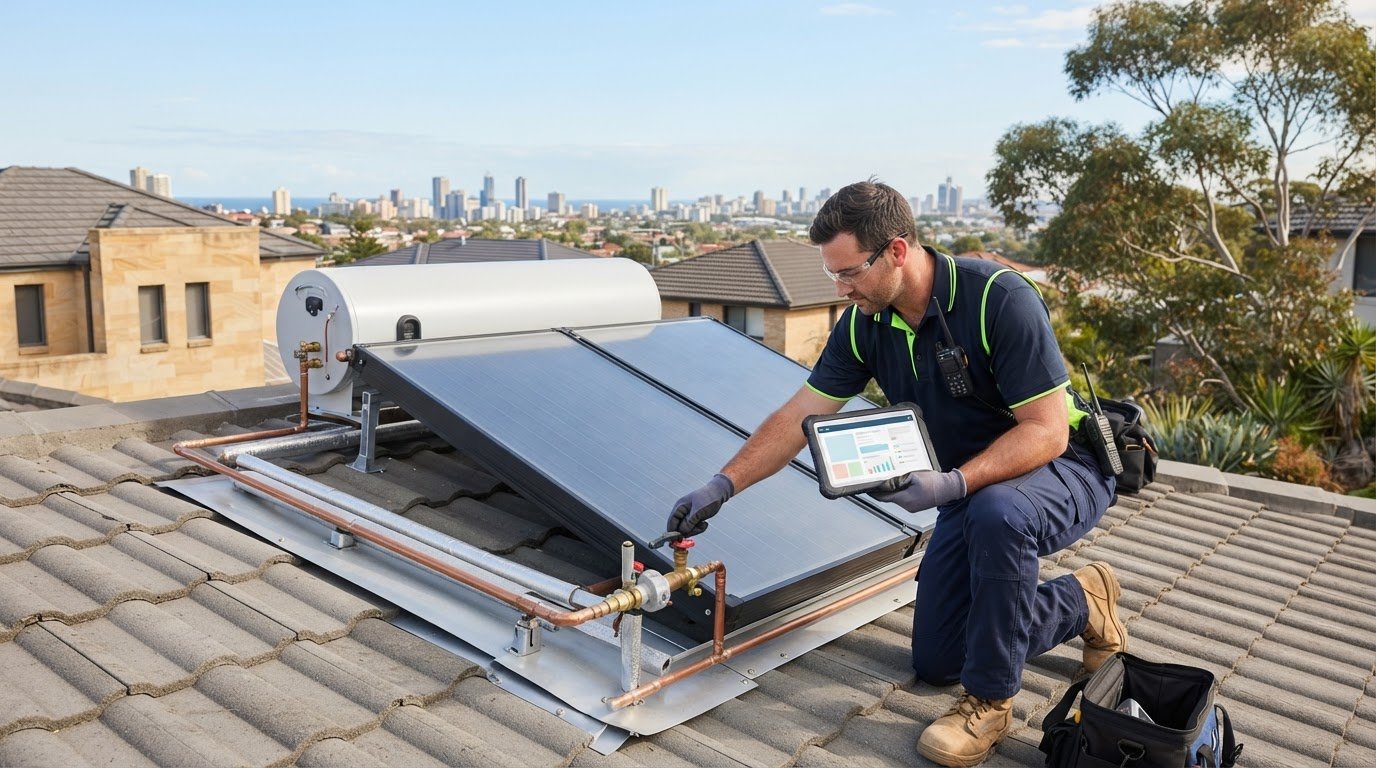
A drop in hot water performance may point to one part of your solar system, not a need to replace the whole unit. If you’re searching for solar hot water servicing, it can be hard to know whether a change in temperature or supply calls for routine servicing or fault diagnosis.
Before arranging a service, it helps to understand what’s involved. A useful assessment starts with the system’s components and the symptoms you’ve noticed, so you can understand what needs attention and whether repair work may be required. Redefining Solar is Australian-owned and operated, and directed by a licensed electrician.
This checklist covers the main parts of a solar thermal water heating system, warning signs that can prompt a service, and details to have ready when you enquire. It also explains the difference between an assessment and a repair, helping you choose a practical next step without guessing at the cause.
Key Takeaways
- A service is an assessment and maintenance visit. Repair work is a separate next step if a fault is identified.
- The relevant checks depend on your system’s configuration and the service scope.
- Note changes such as reduced hot water, intermittent boosting, visible leaks or unusual behaviour. Describe what you’ve observed rather than guessing at the fault.
- Before enquiring about solar hot water servicing, note your system type if known, its approximate age and any service history.
- Use your observations to decide whether to request a routine assessment, a fault-focused enquiry or advice on replacement.
Solar hot water servicing: when is a service worth arranging?
A change in hot water performance doesn’t automatically mean your solar thermal system needs replacing. It is a reason to note what has changed and when. Separate what you can observe from what a technician needs to assess.
Servicing is an assessment and maintenance visit focused on the system’s condition and operation. The checks depend on the system and the agreed scope. Repair is different: it means addressing a fault after it has been identified. An assessment can help clarify whether repair is needed, but the two aren’t the same job.
Which changes suggest your system needs attention?
Keep a simple record of what you notice. Hot water may be inconsistent from one day to the next, or the system may rely on boosting more often than usual. Any noticeable change from its normal performance is useful to report, even if the water is still heating.
- Note when the change began, whether it started suddenly or developed gradually.
- Record whether it happens every time or only in certain circumstances, such as after heavy household use.
- Describe unusual behaviour in plain terms without trying to identify the cause.
These are observations, not a diagnosis. A symptom alone can’t confirm which part, if any, needs repair. Redefining Solar provides maintenance and repairs for solar thermal water heating systems. An assessment of your system’s design, condition and service history can help determine an appropriate next step.
Solar hot water systems use different designs and components. The Solar water heater overview explains common system designs and how they work, which can help you understand why the relevant service checks vary.
Servicing, repair or replacement: what is the difference?
Servicing means assessing the system’s condition and operation, with maintenance based on the system and the agreed service scope. It can establish what needs attention, but it isn’t a repair before a fault has been assessed.
A repair addresses an identified fault. Replacement is a separate decision involving the whole system or a major component. Age can be relevant, but it doesn’t establish by itself that replacement is necessary. The system’s design, operating history and current condition all help inform that decision.
There’s no single servicing interval that suits every system. An older unit with a history of problems may call for a different approach from a newer system that has operated consistently. If you’re weighing up replacement, consider that separately from arranging an assessment. A guide to solar hot water system replacement can help you understand the factors involved, while a service enquiry can focus on the system you already have.
What should a solar hot water service checklist cover?
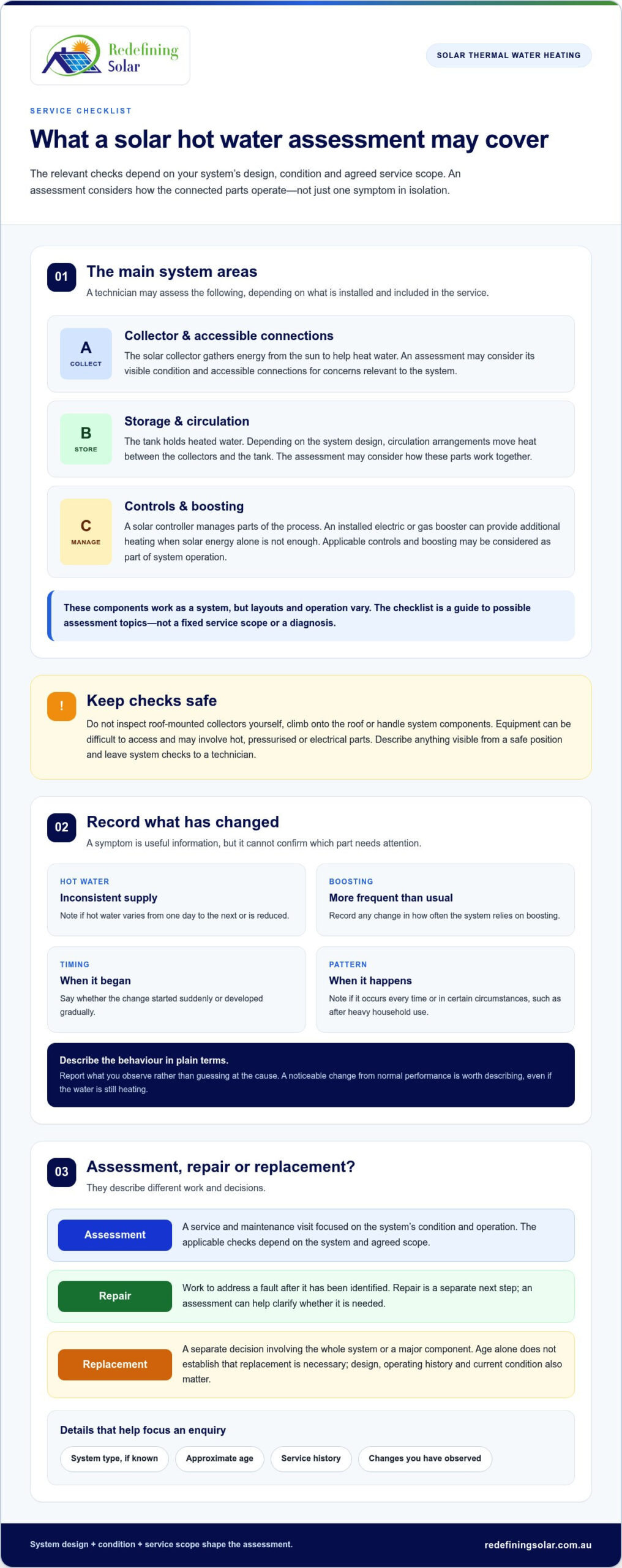
A practical checklist follows the system’s design rather than treating every solar hot water unit as identical. The points below describe areas a technician may assess. What applies depends on your system configuration, its condition and the service scope.
Solar hot water relies on connected collection, storage and control components. A change in one part can affect how the system operates as a whole, so an assessment should consider the setup rather than rely on a generic hot water checklist. If you’re searching for solar hot water servicing melbourne, knowing the main components can help you describe your system and understand what the assessment may cover.
Collectors, connections and visible system condition
The solar collector gathers energy from the sun to help heat water. Depending on the system, a technician may assess the collector and accessible connections for visible condition or performance concerns. Don’t inspect the roof yourself. Collectors and associated equipment can be difficult to access, and the system may include hot, pressurised or electrical components. Leave those checks to a technician.
Roof replacement and tiling are separate from solar system maintenance. If you notice an issue around roof-mounted equipment, describe what you can see from a safe position. Don’t climb onto the roof or handle system components.
Storage, circulation, controls and boosting
The storage tank holds heated water for use in your home or premises. Depending on the design, circulation arrangements move heat between the collectors and the tank. A solar controller manages parts of this process, while a booster can provide additional heating when solar energy alone isn’t enough. A system may use electric or gas boosting, depending on what’s installed.
These parts work together, but their layout and operation vary. A technician assesses how the relevant components operate as a system, based on its design and the agreed scope. For example, checks for a system with a controller and separate tank may differ from those for another configuration.
- Collector and accessible connections: A technician may check for visible condition concerns relevant to the system.
- Storage and circulation: The assessment may consider how the tank and circulation arrangements work within that design.
- Controls and boosting: The applicable controller and installed booster may be considered as part of system operation.
This list is a guide to topics that may matter, not a fixed service scope or a diagnosis. A clear description of your system and any changes you’ve noticed helps focus the assessment. Redefining Solar provides maintenance and repair for solar thermal water heating systems. You can arrange solar system maintenance with a practical understanding of what the service is intended to assess.
How to assess symptoms without guessing at the fault
A clear description of what you’ve noticed helps make a solar hot water assessment more focused. You don’t need to explain why something is happening. Record the change, when it occurs and whether it keeps happening, then leave diagnosis to a technician. If you’re searching for solar hot water servicing melbourne, this symptom-to-action guide can help you explain what’s changed.
| What you notice | A sensible next step |
|---|---|
| Less hot water than usual | Note when the change began, whether it happens consistently and whether it affects everyone using hot water. |
| Boosting seems to happen more often or at unexpected times | Record when you notice the booster operating and whether this differs from its usual pattern. Don’t assume the cause. |
| Visible leakage or damage | Keep clear of the affected area and arrange a professional assessment. Don’t touch equipment or investigate the roof. |
| Unusual system behaviour | Describe what you observed and when. If a display shows a message, note it without changing settings or opening equipment. |
When hot water output changes
Start with the pattern. Is hot water inconsistent throughout the day, or does the change happen at a particular time? Note whether everyone in the household notices it, or whether it affects certain taps or routines. This context helps the technician without suggesting a cause.
You can also record weather and household usage as background. For example, note if the change coincided with overcast days or unusually high hot water use. These details are context, not proof of a cause. If the change persists, an assessment can help identify what’s behind it.
When you notice a leak or visible damage
Prioritise safety. Don’t touch damaged electrical equipment, attempt a roof inspection or handle any part of the system to find where a leak begins. If you can see leakage or damage from a safe position, note where it appears to be and arrange a professional assessment. Avoid standing beneath affected equipment or trying to contain a leak by adjusting system parts.
If water is near electrical equipment, keep people clear and avoid contact with the equipment. Describe what you can safely see when arranging help. A visible leak warrants attention, but it doesn’t confirm which component is responsible. For advice focused specifically on a leak, the article on solar hot water leaking repair covers that concern.
Keep your notes brief and factual: what changed, when you first noticed it, how often it happens and any visible signs. Don’t rely on a particular temperature, pressure reading or fault-code threshold to decide what’s wrong. A technician can assess the system based on its design and condition, then explain whether the next step is maintenance or repair.
Before booking solar hot water servicing: a preparation checklist
Preparing a few details before you enquire can make the conversation clearer and the assessment more relevant to your system. You don’t need to identify the fault or inspect equipment. Share what you know, describe what you’ve noticed and leave technical checks to the service professional.
Information to gather before making an enquiry
Start with the basics. If you know the system type, note it along with its approximate installation age and any service history. Installation paperwork or records from previous visits may help you find the brand or model, but include those details only if they’re readily available. Don’t remove covers or reach into equipment to look for a label.
A short timeline can be more useful than a long explanation. Note when a performance change started, whether it happens regularly and whether there have been previous repairs or recurring issues. If a display shows a message, record the wording as it appears. Don’t change settings or try to reset the system to investigate.
Use this checklist to organise your notes:
- System details: type, approximate age and brand or model if safely available.
- Service history: any past assessments, maintenance or repairs you know about.
- Symptoms: what has changed, when it happens and whether it is recurring.
- Display messages: the exact wording shown, if applicable.
- Photos: take them only from ground level and a safe position. Don’t climb onto the roof or approach damaged equipment.
If you can’t find a detail, that’s fine. Clear observations are still helpful, and guessing at a system type or cause can make your enquiry less accurate.
Questions that clarify the service process
Explain whether you’re seeking a routine assessment or help with a particular change, then ask what the planned service visit covers for your system. This clarifies the intended assessment and where its scope ends. If further work is recommended, the advice should relate to the assessment findings and the system’s condition, rather than an assumption based on one symptom.
For background before you enquire, a solar thermal water heating systems guide can help you become familiar with the main parts of your system and how they work together. You don’t need to know technical terms to describe what you’ve observed.
Once your notes are ready, you can enquire about solar hot water servicing with a clearer picture of your system and the help you’re seeking. Redefining Solar provides ongoing maintenance and repair for solar heating installations, with an assessment helping establish an appropriate next step.
Arrange solar hot water servicing with a clear next step
Once you’ve considered the symptoms and gathered a few details, choose the next step that best fits what you’ve noticed. A system operating as usual may call for a routine assessment. A persistent change, unexpected boosting or unusual behaviour is better described as a fault-focused enquiry. If the system or a major component is ageing or has ongoing issues, you can also raise replacement as a separate consideration.
You don’t need to diagnose the problem before making contact. Redefining Solar provides maintenance and repair for existing solar thermal water heating systems. Sharing the system details and observations you have gives the enquiry useful context and helps the discussion start with the right questions.
What to expect after you make an enquiry
Expect a practical conversation about the installed system, its history and what you’ve observed. Explain when a change began, whether it recurs and whether there have been previous repairs. If you know the system type or approximate age, include that too. It’s fine if some details aren’t available.
The aim is to understand what you’re seeking and the context around the system. Any further work should be guided by an assessment of its condition and the issue identified. An enquiry doesn’t establish a fault or determine the repair scope by itself. The appropriate next step depends on what the system needs.
Make your next step straightforward
Before getting in touch, keep your notes together. A short, factual summary is usually easier to follow than trying to remember every detail during the conversation. Include:
- System information: type and approximate installation age, plus brand or model if readily available.
- Observed symptoms: what has changed, when it happens and whether it occurs consistently.
- Relevant history: previous servicing, repairs or recurring concerns.
- Display messages: the wording shown, if your system has a display.
Don’t dismantle equipment, access the roof or carry out electrical checks to prepare. Your observations and existing paperwork are enough to explain what you know safely.
If you’re unfamiliar with your system’s setup, a solar hot water installation guide can provide useful background on how its components are arranged. You don’t need technical knowledge to make an enquiry. Describe the system in everyday terms and explain what has prompted you to seek help.
For a practical next step, get in touch about solar hot water servicing and share the details you’ve gathered. You can discuss whether a routine assessment or a fault-focused enquiry best matches your situation, without deciding on repair or replacement in advance.
Take the next step with confidence
Deciding what to do doesn’t mean committing to a repair or replacement before the system has been assessed. Start by explaining what you’ve noticed and what you’d like checked. That gives the conversation a clear starting point and helps keep decisions grounded in the condition of your solar hot water system.
If you’re considering solar hot water servicing melbourne, Redefining Solar provides maintenance and repairs for solar heating installations. The business is Australian-owned and operated, and directed by a licensed electrician.
Share the system details you have, describe any changes in performance and mention relevant service history. From there, you can discuss an appropriate assessment and consider further work based on the findings. There’s no need to diagnose the issue yourself before getting started.
Arrange a solar hot water service enquiry and take a clear, considered step towards looking after your system.
Frequently Asked Questions
How often should a solar hot water system be serviced?
There isn’t one servicing interval that suits every solar hot water system. The system’s design, age, usage and maintenance history can all affect what’s appropriate. Check any maintenance guidance supplied with your system and keep a record of previous visits or repairs. If you don’t have documentation, a technician can discuss an assessment based on the system’s current condition rather than applying a schedule that may not fit.
What happens during a solar hot water service?
A service involves assessing the system’s condition and operation, with specific checks depending on its configuration and the agreed scope. The technician can explain what was assessed, outline observations and distinguish routine maintenance from a fault that may need repair. Before work proceeds beyond the assessment, you should understand what has been identified and what further work is recommended for your system.
Can I service a solar hot water system myself?
You can prepare for a service by noting changes in performance, recording display messages and gathering available system paperwork. Leave servicing tasks to a suitably equipped professional. Don’t climb onto the roof, open equipment covers, touch electrical components or handle hot or pressurised parts. These precautions let you provide useful background without putting yourself at risk or disturbing equipment before it’s assessed.
What should I do if my solar hot water system is leaking?
Keep clear of the leak and arrange a professional assessment. Don’t touch the system, try to locate the source by handling components or climb onto the roof to inspect it. If water is near electrical equipment, avoid contact and keep others away from the area. From a safe position, note where you can see water and whether the leak is ongoing, then include those details in your enquiry.
Does solar hot water servicing include repairs?
Not necessarily. Servicing is an assessment and maintenance visit, while repair work addresses a fault identified during assessment. If a repair is recommended, ask what issue was found and what work is proposed before proceeding. The appropriate next step depends on the system’s condition and the assessment findings. Redefining Solar provides maintenance and repair services for solar heating installations.
Why is my solar hot water system using its booster more often?
More frequent boosting is a change worth recording, but it doesn’t identify the cause by itself. Note when you notice the booster operating and whether the pattern coincides with changes in weather, hot water use or supply. Those details provide context for an assessment, not proof of a fault. If the change continues, an enquiry about solar hot water servicing melbourne can help establish whether the system needs further attention.
Should I service or replace my solar hot water system?
Start with the system’s condition, rather than its age alone. If its performance has changed or it has recurring issues, an assessment can help clarify whether maintenance or repair is a sensible next step. Replacement may be worth considering if the system or a major component is in poor condition, or if ongoing problems make it unsuitable for your needs. Base that decision on the findings, not a symptom alone.


[…] how supplementary heating could support hot-water demand when solar input is limited, and what solar hot water servicing the system will need. Keep questions about these practical details together for the design […]