A roof that looks suitable doesn’t automatically make solar hot water the right-value replacement. The cost to replace gas hot water with solar depends on the system design, your household’s hot water use, roof layout and installation requirements; pricing is provided after a quote request. Payback is generally estimated at 5-10 years, with running-cost savings and household use shaping the result.
It’s understandable to want a clear figure before deciding, especially when roof sunlight, available space and the existing setup all affect the options. This guide explains what shapes the cost to replace gas hot water with solar, which NSW incentives may apply, and how solar hot water can affect energy costs and payback. It also covers roof suitability and practical factors to consider when comparing systems.
Key Takeaways
- Understand why advertised system prices can differ from the final installed cost, and which project details influence a quote.
- See how NSW hot water upgrade incentives may affect the upfront cost of switching from gas.
- Learn what can shape your ongoing savings, including household hot water use and the system’s booster.
- Find out how roof suitability and your household’s usage can influence solar hot water payback.
Advertised versus supplied-and-installed pricing
The cost to replace gas hot water with solar depends on the equipment and installation scope. An advertised price may cover equipment only, while an installed quote should include the work required to connect and commission the system.
System supply and installation costs
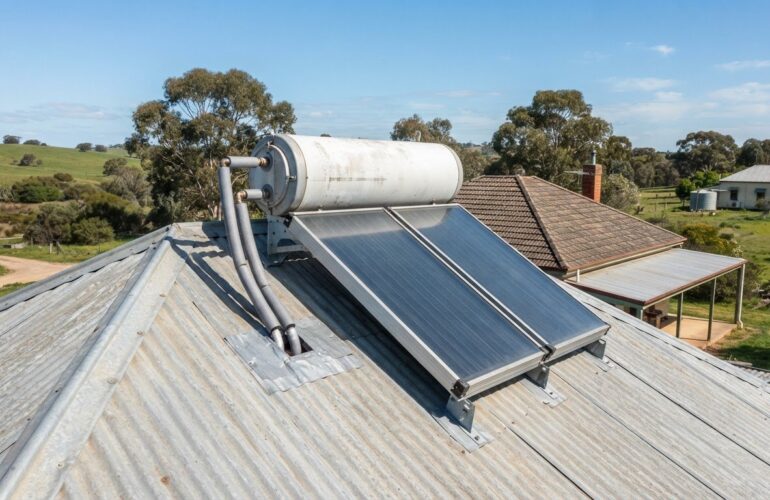
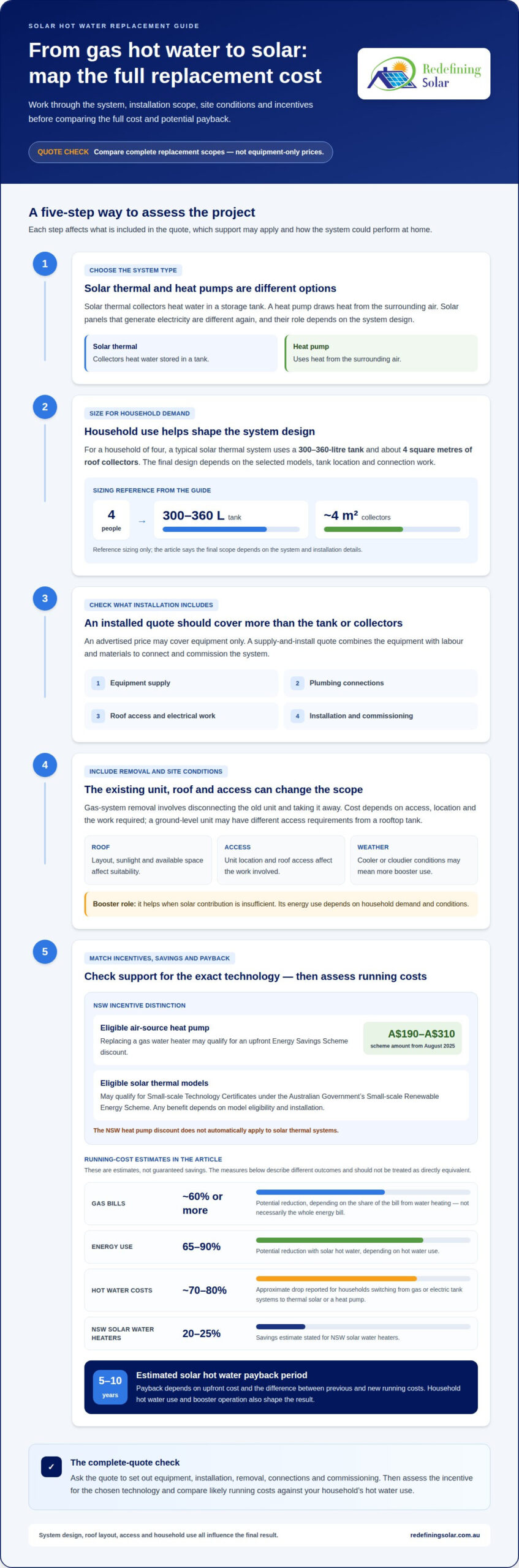
A supply-and-install price combines solar thermal equipment with the labour and materials required for installation. This matters because an advertised tank or collector price may exclude plumbing connections, roof access, electrical work or commissioning. For a household of four, a typical solar thermal system uses a 300-360-litre tank and about 4 square metres of roof collectors. The final scope depends on the selected models, tank location and connection work. A heat pump is a different hot water option, so its supply cost isn’t a solar thermal price.
Removing and disposing of the gas system
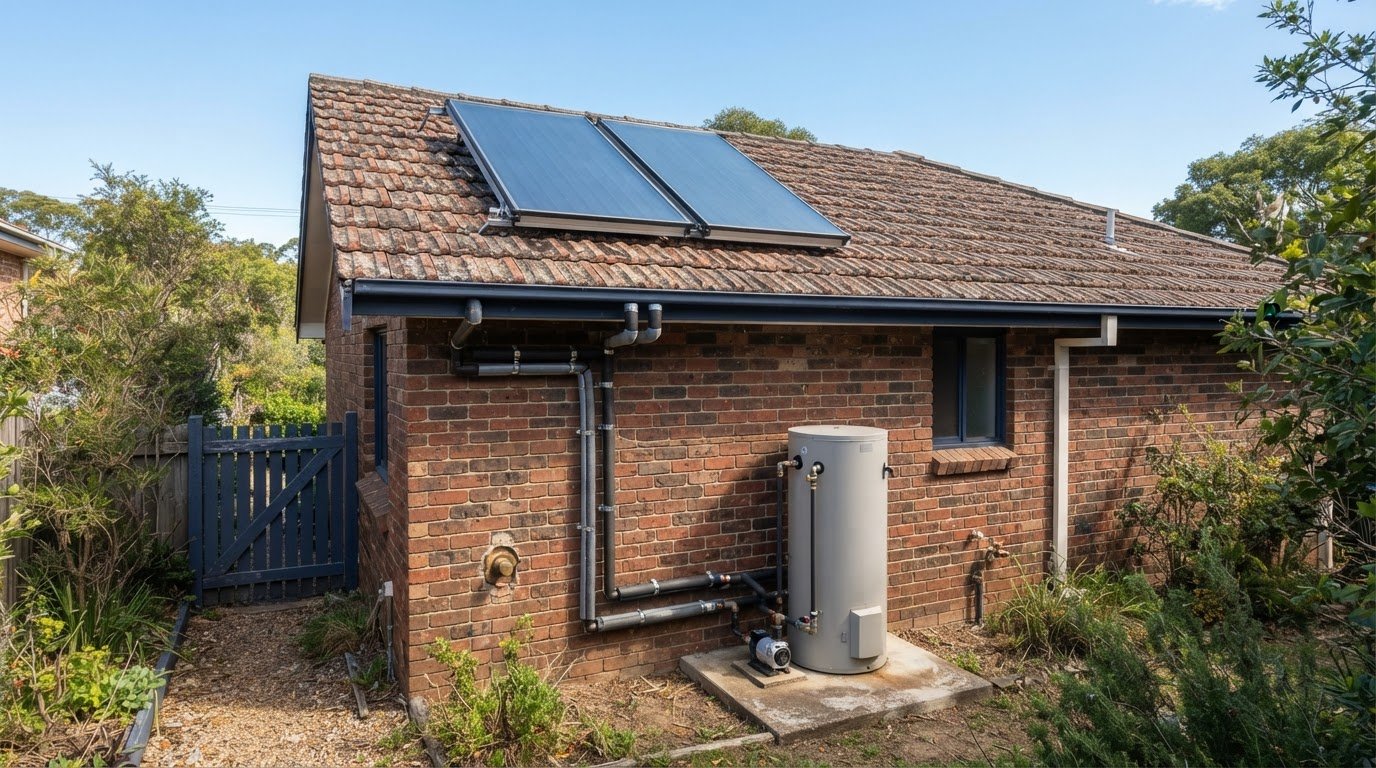
Removal and disposal involve disconnecting the existing gas hot water system and taking it away. The cost depends on access, where the unit is located and the work involved, so check that the quote spells out this part of the scope. A ground-level unit may have different access requirements from a rooftop tank. Including removal makes it easier to compare complete replacement costs rather than equipment-only prices.
Climate affects how much heat solar collectors contribute. Sunnier conditions can provide more solar input, while cooler or cloudier weather may mean the booster needs to supply more heat. The booster helps when solar contribution is insufficient, and its energy use depends on household demand and conditions.
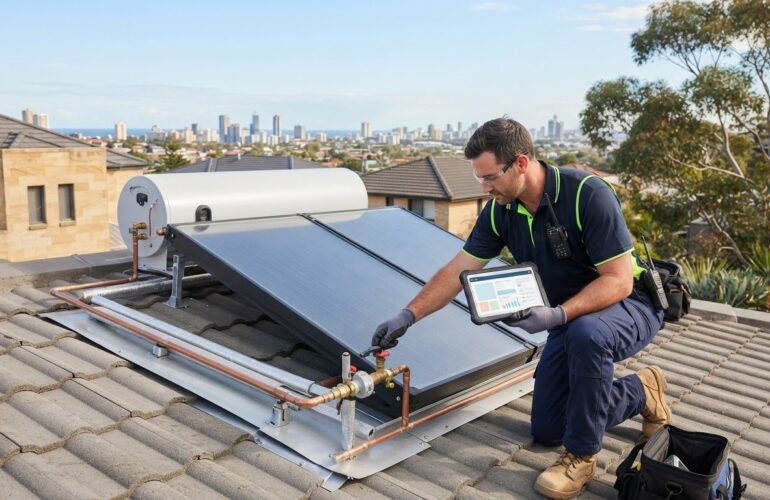
Installation includes connecting and commissioning the system. When estimating the cost to replace gas hot water with solar, consider the roof, access, chosen system and existing plumbing together. Ask for a quote that clearly sets out equipment, installation, removal and connection work to understand the project’s full scope.
NSW Government hot water upgrade incentive
For NSW households replacing gas hot water, the incentive depends on the replacement technology. Under the Energy Savings Scheme, replacing a gas water heater with an eligible air-source heat pump water heater may qualify for an upfront discount of A$190-A$310, based on the scheme amount from August 2025.
This discount applies to eligible heat pump installations, not automatically to solar thermal systems. The distinction matters when comparing options: a storage tank heated by rooftop solar collectors works differently from a heat pump, although both can reduce reliance on gas. Household hot water demand, available roof space and preferred system type help determine which option may suit.
Solar thermal may have a separate support pathway. According to the Clean Energy Regulator, eligible solar hot water models can qualify for Small-scale Technology Certificates under the Australian Government’s Small-scale Renewable Energy Scheme. These certificates can contribute to the upfront cost, but the benefit depends on model eligibility and the installation. They are distinct from the NSW Energy Savings Scheme discount for eligible heat pumps.
Compare the options by separating the equipment price from any incentive, then consider how each system would meet your household’s hot water needs. Solar thermal collectors heat water in a storage tank; a heat pump draws heat from the surrounding air. Solar panels that generate electricity are different again, and their role depends on the system design.
For a NSW home, check the replacement technology first, then match the incentive to that system. Don’t assume a discount for a heat pump applies to solar thermal, or that every solar hot water model qualifies for certificates. If you’re considering a solar thermal system, explore solar thermal water heating as one part of comparing the available options.
Savings when replacing gas hot water
These are running-cost estimates, not guaranteed household savings. Actual energy use depends on your hot water demand and how often the booster operates.
Replacing gas hot water with solar can reduce gas bills by about 60% or more, depending on how much of the bill comes from water heating. That reduction isn’t the same as a 60% drop in the whole energy bill. Gas charges for cooking or heating may remain, while the solar system may use electricity for boosting. Consider the hot water portion separately when assessing potential savings.
Solar hot water can reduce energy consumption by 65-90%, depending on hot water use. Households switching from gas or electric tank systems to thermal solar or a heat pump may see hot water costs drop by approximately 70-80%. These measures describe different outcomes: energy consumption is not identical to running cost, which also depends on energy prices and system operation.
NSW solar water heaters can deliver savings of 20-25%. Household demand affects the result: frequent hot water use gives the system more work to do, while a larger tank size stores more heated water for later. A booster helps heat water when solar input is insufficient, but its contribution affects electricity use. Solar panels and collectors also serve different roles, so match the comparison to the equipment being considered.
Rebates can change the upfront calculation outside NSW. Eligible heat pump or solar hot water systems in Victoria may receive up to A$1,000 through Victorian Energy Upgrades, according to Essential Services Commission Victoria. That Victorian support doesn’t establish eligibility in NSW. Compare the system’s running costs, hot water demand and any applicable incentive together, rather than judging savings from the equipment type alone.
Solar hot water payback period
Payback describes how long energy savings take to offset the replacement investment. For Australian households replacing gas hot water, the estimated solar hot water payback period is generally 5-10 years. The result depends on the system’s upfront cost and the difference between previous and new running costs.
Household hot water use can shift that estimate. A large household taking many long showers or baths could reach payback in as little as three years. A two-person household taking brief showers could take more than 10 years. These examples show why household size alone doesn’t tell the full story: daily routines also affect how much heated water the system supplies.
Weather and solar contribution matter, too. Collectors heat water for storage when sunlight is available, while a booster supplies heat when solar input falls short. More frequent booster use can reduce energy savings and extend payback. The balance depends on local conditions, hot water demand and system operation.
Keep system boundaries clear when comparing estimates. A solar hot water system and a solar electricity system are different equipment, even though both use the sun. One estimate places payback close to 20 years where solar panels also need to be installed. That longer period reflects a broader installation cost, so it shouldn’t be treated as the same calculation as replacing a gas heater with solar thermal alone.
For a useful comparison, consider the system cost, your current gas use, the booster’s energy use and household routines together. A heat pump hot water system has different operating characteristics from a solar thermal heater, so compare like with like. If you’re weighing solar thermal for your home, explore solar hot water options and how system design relates to your household’s demand.
Redefining Solar: Solar Thermal Water Heating System
Redefining Solar supplies and installs solar thermal water heating systems for households considering a switch from gas hot water. A tailored design considers your roof and hot water use, with collectors, storage and a booster working together to meet household demand.
Redefining Solar can help you understand how a solar thermal system may fit your property, alongside the pricing and payback factors explained above. If solar thermal does not suit your circumstances, compare the alternatives against your energy use and priorities.
Contact Redefining Solar to discuss a solar thermal water heating system for your home.
Make the next step fit your property
Relate the figures to your roof, hot water habits and existing energy setup. This gives you a clearer basis for deciding whether the cost to replace gas hot water with solar suits your priorities, rather than relying on a general estimate.
Redefining Solar also supplies and installs residential and commercial solar systems, and offers battery-ready upgrades. If you are considering a broader energy plan alongside a hot water change, these options can help shape a solution around your property’s needs.
Contact Redefining Solar to talk through your solar plans and the right next step for your property.
Frequently Asked Questions
Is My Roof Suitable for Solar Hot Water?
A roof may suit solar hot water if it has a sunny area for collectors, enough space and a practical route for connecting pipes to the storage tank. Shade, orientation, roof shape and tank location can affect the design. For example, nearby trees or roof structures may limit sunlight on part of the roof, making collector placement important.
What Can Change the Solar Hot Water Installation Price?
The installation price can vary with the system, roof access, collector placement, plumbing changes and removal of the old unit. The distance between collectors and the storage tank can also affect connection work. An advertised equipment price may exclude installation or disposal. Compare quotes by checking that they include the same equipment and work, not just similar headline figures.
What rebates or government incentives are available for solar hot water in Australia in 2026?
Incentives vary by technology and location. In NSW, eligible air-source heat pump replacements may qualify for an upfront A$190-A$310 discount under the Energy Savings Scheme, based on the scheme amount from August 2025. Eligible solar hot water models may qualify for Small-scale Technology Certificates under the Australian Government scheme, according to the Clean Energy Regulator. Victoria has separate support through Victorian Energy Upgrades.
How much can solar hot water save on annual energy bills compared with gas?
The difference between these ranges gives a rough comparison, not a guaranteed household saving. Your gas bill may also cover cooking or heating, so replacing the water heater will not remove those charges. Booster use and household hot water habits also affect costs.
What factors affect the cost of installing solar hot water, such as roof type, tank size and backup heating?
Roof access and structure affect collector placement and connection to the system. Tank size should suit household hot water demand, while the booster type determines how water is heated when solar input is low. Existing plumbing, equipment location and removal work also shape the installation scope. Check that the quote makes clear which equipment and work it includes.
Do Australian homes need council approval or licensed tradespeople to install solar hot water?
Approval and trade requirements depend on the property, proposed system and state or territory rules, so they can differ between Australian homes. Roof-mounted equipment, plumbing connections and electrical work may each affect what applies. Before installation, establish the requirements for the specific property and work scope, including any local planning approval and relevant trade qualifications.