Thinking about installing solar for your business but not sure where to start? A well-designed commercial solar system can help generate electricity on site, reduce reliance on grid power and make better use of your available roof space. It can also support better energy management as your business grows and its power needs change.
Continue reading to learn more about commercial solar systems in Melbourne, including their key benefits, components, how to choose a suitable system and practical maintenance tips.
What are Commercial Solar Systems?
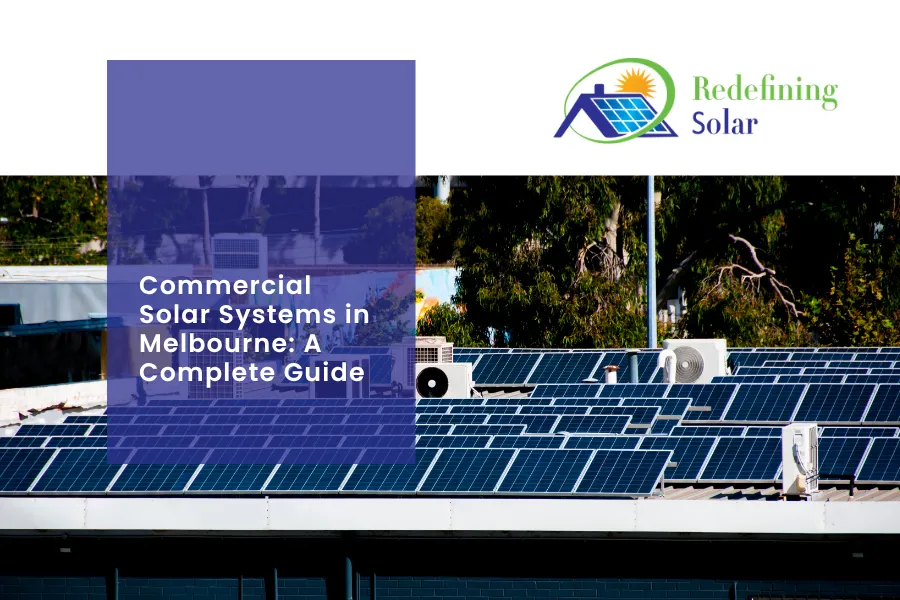
Commercial solar systems use solar panels to generate electricity from sunlight for businesses. The power produced can help run lighting, equipment, air conditioning, refrigeration, computers and other electrical systems during the day.
The size of an installation depends on factors such as available roof space, electricity usage and business operating hours. A properly designed setup can help a business make better use of solar power and reduce its reliance on grid electricity.
How Do Commercial Solar Systems Work?
Understanding each stage can help businesses see how solar electricity is produced and used throughout the day.
-
Solar Panels Capture Sunlight
Solar panels capture sunlight and convert it into direct current (DC) electricity. The amount generated depends on factors such as sunlight, panel orientation, shading, system size and weather conditions.
-
Inverter Converts Electricity
The inverter converts the DC electricity produced by the panels into alternating current (AC) electricity. This allows the power to be used by standard electrical equipment and systems within the business.
-
Business Uses Generated Power
The electricity produced can be used directly to operate lighting, equipment, air conditioning, refrigeration, computers and other electrical systems. Using solar power on site can reduce the amount of electricity purchased from the grid.
-
Excess Power is Exported or Stored
When solar generation is higher than the business’s immediate electricity needs, excess power may be exported to the grid or stored in a compatible battery system. This provides another way to make use of electricity generated by the panels.
Benefits of Commercial Solar Systems for Businesses
Solar power can provide several practical advantages for businesses with suitable premises and energy consumption patterns. The potential benefits depend on system design, electricity usage, tariffs and site conditions.
-
Lower Electricity Costs
Generating electricity on site can reduce the amount of grid power purchased during daylight hours. For businesses with substantial daytime consumption, this can make solar generation particularly useful.
-
Better Use of Daytime Solar
Many commercial properties operate during daylight hours when solar panels produce electricity. Matching generation with business consumption can improve the amount of solar power used directly on site.
-
Greater Energy Independence
Producing part of your electricity requirements can reduce reliance on external energy supply. A suitable system can give businesses greater control over where some of their electricity comes from.
-
Reduced Environmental Impact
Solar generation produces electricity without directly burning fossil fuels during operation. Using renewable energy can help businesses reduce their reliance on conventional grid electricity and support broader sustainability objectives.
-
Long-Term Energy Planning
A well-designed system can form part of a business’s longer-term energy strategy. It can also provide a foundation for future additions such as battery storage or electric vehicle charging.
Key Components of a Commercial Solar System
A commercial solar setup consists of several components that work together to generate, convert and monitor electricity. Understanding these parts can make it easier to compare different system configurations.
-
Solar Panels
Panels capture sunlight and generate DC electricity. The number and type required depend on the available roof area, desired capacity and expected energy production.
-
Solar Inverters
The inverter converts the electricity generated by the panels into usable AC power. Its capacity and compatibility should be considered alongside the panel configuration and overall system design.
-
Solar Batteries
A battery can store excess electricity for later use. For businesses with energy demand outside peak solar generation periods, storage may provide another way to use more of the electricity produced on site.
-
Monitoring Systems
Monitoring technology can provide information about system production and performance. Regularly reviewing this information can help identify changes in output and support ongoing system management.
How to Choose the Right Commercial Solar System
Choosing a commercial solar system requires consideration of your business’s energy use, property, equipment and future. Looking at these factors together can help you select a setup that suits your electricity needs and available space.
-
Assess Your Business Energy Usage
Start by reviewing your electricity bills and identifying how much power your business uses throughout the day. Understanding your daily and seasonal consumption can help determine the amount of solar generation required.
-
Check Available Roof Space
Consider the roof area available for solar panels, along with its orientation, pitch and shading. These factors can affect panel placement and the amount of electricity the system can generate.
-
Determine the Required System Capacity
The system should be sized according to your electricity consumption, available roof space and expected solar generation. The right capacity can help balance your energy requirements with the available installation area.
-
Select Suitable Solar Panels
Compare panel efficiency, specifications, warranties and expected performance. Commercial solar panels Melbourne businesses use should suit the property’s conditions and work effectively with the other system components.
-
Choose the Right Inverter
The inverter should be compatible with the selected panels and have sufficient capacity for the installation. Consider efficiency, monitoring features, warranty and reliability when comparing options.
-
Consider Battery Storage
A solar battery can store excess electricity generated during the day for use when solar production is lower. Battery storage may be useful for businesses with evening operations or higher electricity demand outside daylight hours.
-
Review Your Power Requirements
Consider the equipment and electrical loads the system needs to support. Machinery, refrigeration, air conditioning, lighting and other high-demand equipment can influence the required system capacity.
-
Plan for Future Energy Needs
Think about potential changes such as business expansion, additional equipment, longer operating hours, electric vehicle charging or future battery storage. Considering these requirements early can make future upgrades easier.
-
Consider Installation and Space
Look at the installer’s experience, workmanship, warranties and ongoing maintenance services. Reliable support can help maintain system performance and address issues after installation.
-
Consider Your Budget and ROI
Compare the upfront cost with potential electricity savings over the system’s expected life. System quality, energy generation, warranties and ongoing costs should all be considered when assessing the overall value of the investment.
Solar Maintenance and System Performance
Ongoing maintenance helps keep a solar system operating reliably after installation. While modern systems generally require limited routine attention, regular checks can help identify performance issues early.
Monitor system output and look for unexpected changes in electricity generation. Panels should also be kept reasonably clear of significant dirt and debris, particularly where these may affect performance.
Electrical components, connections and other system elements should be inspected by appropriately qualified professionals when required. Redefining Solar also provides maintenance and repair services for solar systems.
Why Choose Redefining Solar?
Redefining Solar provides tailored solar solutions for residential and commercial properties, with a focus on quality, safety and reliable system performance. The team combines solar design experience with professional electrical expertise to help customers select and install systems suited to their energy requirements. Ongoing maintenance and repair services are also available to support the system after installation.
- Australian owned and operated
- 10+ years of solar design experience
- Licensed A Grade electrician
- Tailored solar system design
- Professional installation and ongoing support
- Maintenance and repair services
Final Thoughts
Commercial solar can help businesses generate their own electricity, reduce grid dependence and take greater control of ongoing energy costs. The right setup depends on energy consumption, roof space, system capacity, equipment and future requirements.
A professional assessment can help identify a suitable configuration and ensure the system is designed around the property’s specific needs. With careful planning and quality installation, solar can become a practical part of a business’s long-term energy strategy.
FAQs About Commercial Solar Systems
Are commercial solar systems suitable for small businesses?
Yes. Small businesses can also benefit from solar generation when the property has suitable roof space and sufficient electricity consumption. The system should be sized according to actual energy requirements.
How much electricity can a commercial solar system generate?
Generation depends on factors such as system size, panel efficiency, roof orientation, shading, location and weather conditions. A site-specific assessment can provide a more accurate estimate.
Do businesses need batteries with solar panels?
Not necessarily. A battery can be useful for storing surplus generation for later use, but the suitability depends on the business’s consumption patterns, operating hours and energy goals.
How long does commercial solar installation take?
Installation time varies according to system size, roof conditions, electrical requirements and project complexity. Redefining Solar states that a standard commercial installation can typically take between one and three days.
Do commercial solar systems require regular maintenance?
Solar systems generally require limited routine maintenance, but monitoring performance and arranging professional inspections when needed can help maintain reliable operation.
Can commercial solar systems be expanded later?
Expansion may be possible if the existing system, roof space, electrical infrastructure and grid connection arrangements can accommodate additional capacity. Future energy requirements should be considered during the initial design stage.