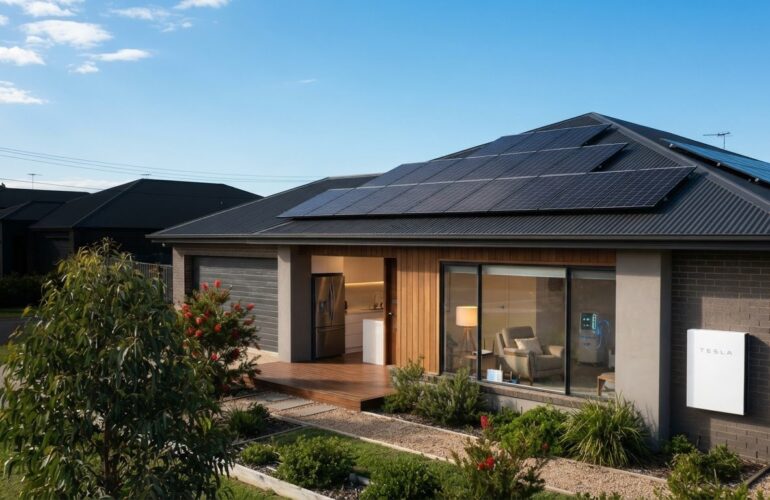
Living off-grid in Australia is legal, but disconnecting from the electricity network doesn’t remove local planning, building or land-use requirements. You don’t need to live 400 kilometres from the nearest settlement; the rules depend on the property’s location and setup. Understanding how to get off the grid legally in Australia starts with assessing the land and its requirements before choosing equipment.
If you’re considering how to get off the grid legally in Australia, check the rules for your property before making changes. Off-grid living means taking responsibility for essential services and planning how they’ll meet your household’s needs.
This guide covers location choices, council rules and the trade-offs of living off-grid. It also explains what to consider when comparing an independent power system with a grid connection, helping you make a more informed decision for your property.
Key Takeaways
- Check land-use, building and permit requirements for your chosen location before committing to an off-grid home.
- Compare the ongoing responsibilities of generating power, sourcing water and managing waste with the independence off-grid living can offer.
- Understand how local council rules can affect dwellings, water storage and wastewater arrangements.
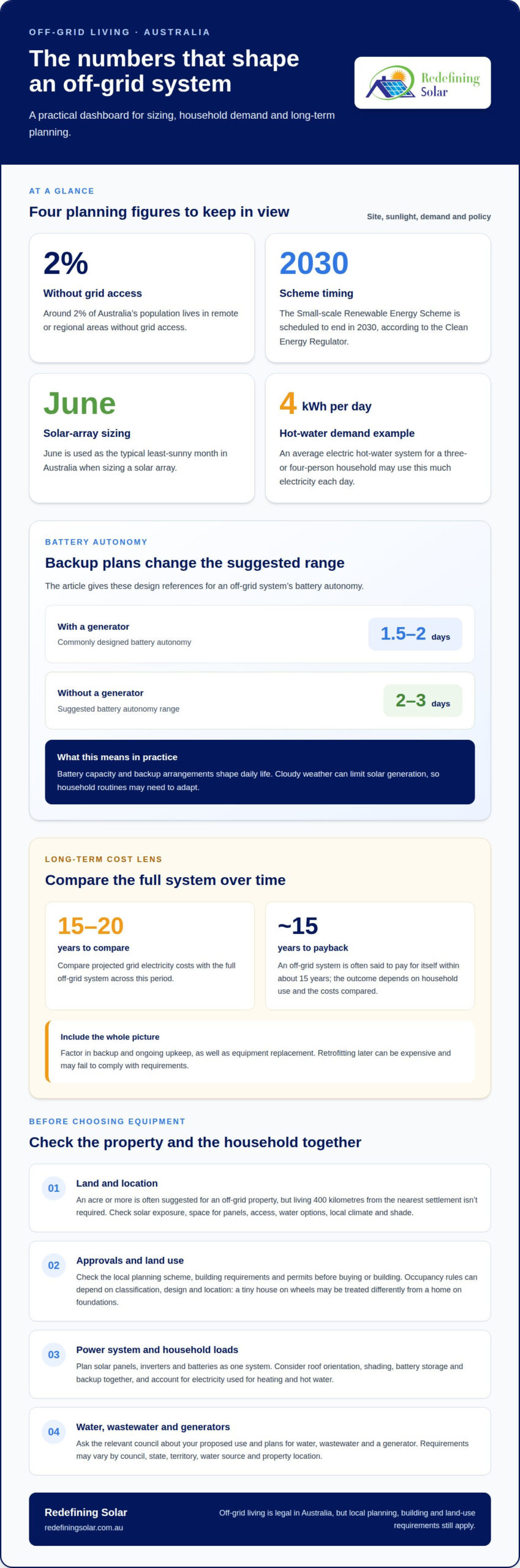
- Include the Small-scale Renewable Energy Scheme’s scheduled end in 2030, according to the Clean Energy Regulator, when considering your solar plans.
Choosing a location and checking zoning and permits
Assess the land and local rules before choosing an off-grid home or solar power system. Your location can affect approvals, solar access and practical options for water and waste.
Finding suitable land
Suitable land is property that can support your home, energy setup and essential services. It matters because site conditions affect both daily living and the systems you can install. An acre or more is often suggested for an off-grid property, but you don’t need to live 400 kilometres from the nearest settlement. Check the site’s solar exposure, available space for panels, access and water options. Consider how local climate and shade may affect solar panels through the year. A remote block may offer independence, but it can also make access to services and supplies more difficult.
Checking zoning and permits
Zoning and permits govern land use and building work. Owning land doesn’t automatically mean every dwelling or use is allowed. Before buying or building, check the local planning scheme, building requirements and any permit process for the property. Long-term occupancy rules can depend on the dwelling’s classification, design and location. A tiny house on wheels may be treated differently from a home on foundations. Ask the relevant council about your proposed use, not just the building type. Discuss water, wastewater and generator plans too, as local requirements may apply to each.
Plan your energy system around the site and how you expect to live. Solar power is widely accepted and well regulated in Australia, but an off-grid system must suit your household’s demand and conditions. Consider roof orientation, shading, battery storage and backup needs together. The Small-scale Renewable Energy Scheme can also affect solar planning: it is scheduled to end in 2030, according to the Clean Energy Regulator.
When choosing an installer and components, match the system design to the property and how you intend to use it. Compare solar panels, inverters and batteries as parts of one system, rather than choosing each in isolation. Supply-only panels may suit someone arranging installation separately; a complete system may better suit a project that needs coordinated design and installation.
Australians may choose off-grid power for greater independence or because grid access is unavailable. Around 2% of the population lives in remote or regional areas without grid access. For these households, the land’s suitability, council requirements and a properly planned solar system all influence whether living off-grid is practical.
Benefits and drawbacks of off-grid living
Generating your own electricity can give you more control over how your home is powered and suit properties without a grid connection. The trade-off is responsibility: you manage generation, storage and backup instead of relying on network supply. Your routine may need to change when cloudy weather limits solar generation. Designing around actual household use helps balance independence with the practical work of keeping essential systems running.
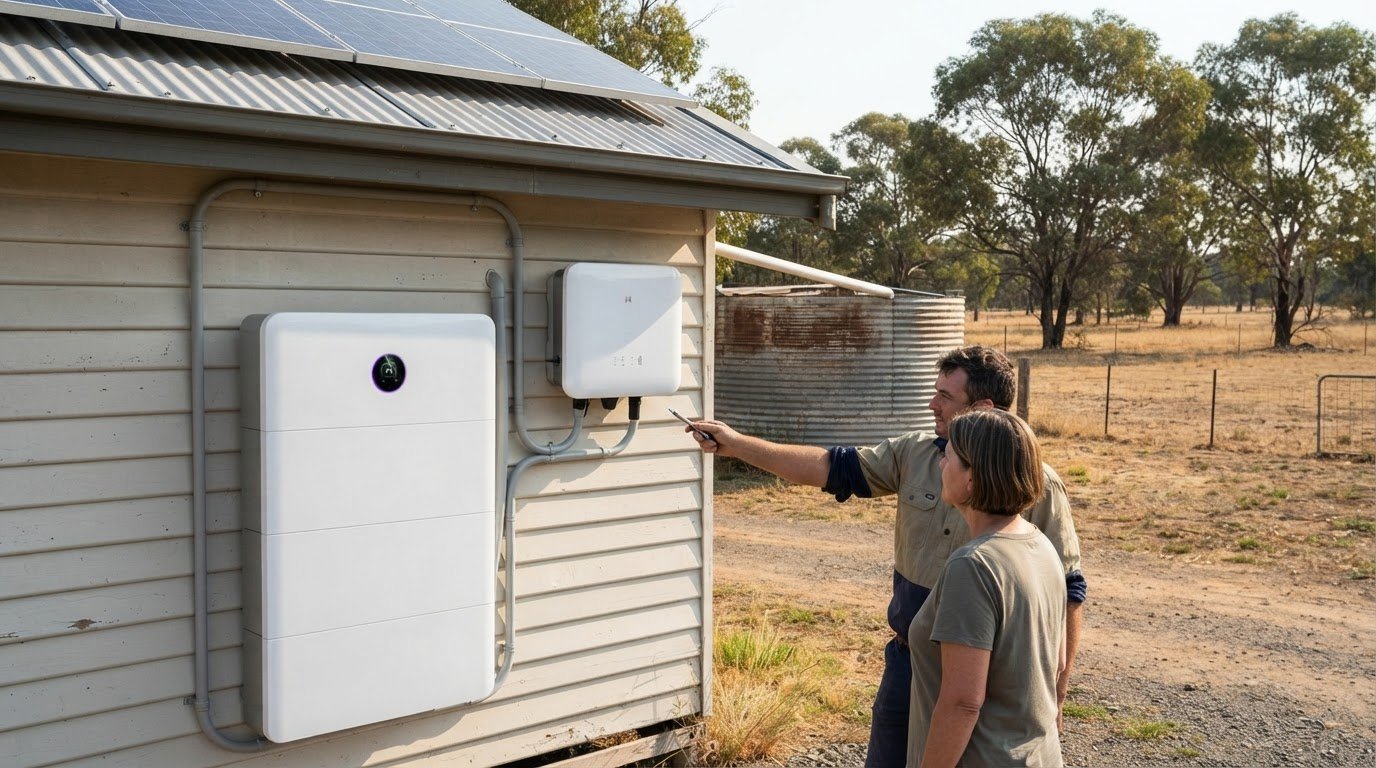
Battery capacity and backup arrangements shape that experience. An off-grid system with a generator is commonly designed for 1.5-2 days of battery autonomy; without a generator, the suggested range is 2-3 days. June is used as the typical least-sunny month in Australia for solar-array sizing. These demands make careful planning important, especially for homes that rely on electricity for heating or hot water.
Compare projected grid electricity costs with the full off-grid system over 15-20 years, including backup and ongoing upkeep. An off-grid system is often said to pay for itself within about 15 years, but that outcome depends on household use and the costs being compared. Replacing equipment and maintaining the system also form part of the decision. Retrofitting later can be expensive and may fail to comply with requirements, so consider future needs during the initial design.
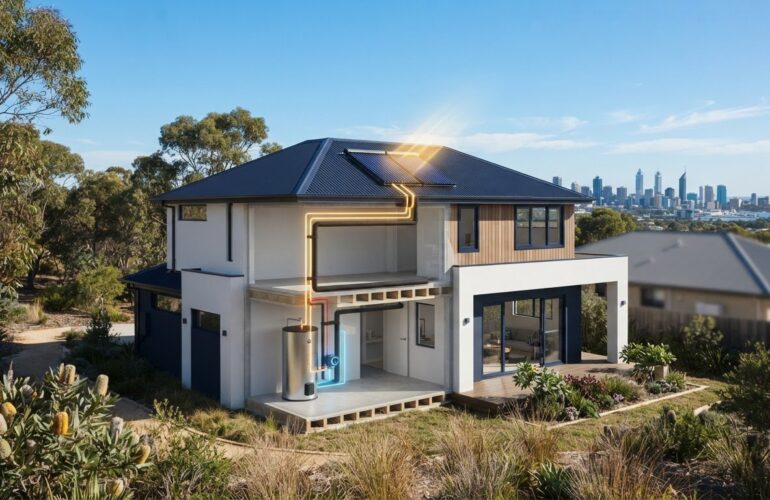
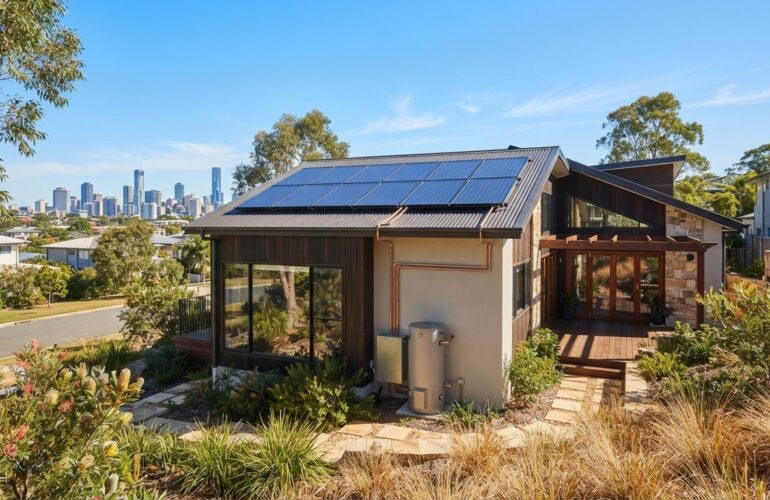
Climate adds another consideration. Conditions across Queensland, South Australia and Victoria can affect whether off-grid tiny-house living is practical. In warmer areas, cooling demand may influence system design; in cooler locations, heating needs matter. Hot water is another load to plan for: an average electric hot water system for a three- or four-person household may use 4 kWh per day. A solar thermal water heating system may be relevant when considering how your home supplies hot water, alongside the wider power plan.
Council rules and local requirements
Living off-grid doesn’t remove local responsibilities. Councils consider land use, health, safety and environmental impacts.
Planning and building approvals
Planning and building approvals govern where and how a dwelling can be built or used. Rules vary between states, territories and councils. A caravan or tiny house on wheels may be classified as a movable dwelling, and councils can limit how long it may be occupied without approval. A tiny house on foundations is generally treated more like a small home and usually needs council approval and building-code compliance.
Can you live in a caravan, tiny house, shed or unapproved dwelling on private land? It depends on the structure’s classification, design, location and local approvals. Owning the land alone doesn’t make long-term occupation permissible. Unapproved use can create compliance and insurance difficulties, and the site plan should account for emergency access.
Water sources and licences
Water rules cover collection, extraction, storage and safe household use. Requirements can depend on the water source and location. Councils often require proof of adequate water storage for full-time living. Rainwater tanks, bores and dams may each be subject to different local or state requirements, including licensing. Don’t assume one rule applies across Australia.
For drinking water, plan how it will be stored and kept suitable for household use. A remote property may need a different arrangement from a home using rainwater tanks. Confirm the requirements for your particular water source to make sure the plan is workable.
Managing wastewater and waste
Wastewater rules govern how a property treats and disposes of sewage and greywater. They matter because poor disposal can affect household health and the surrounding environment. Greywater disposal must meet health and environmental standards, and composting toilets are allowed in some regions but banned or restricted in others.
How must off-grid households manage septic systems, greywater and waste? Use systems that meet local health and environmental requirements, including rules for wastewater disposal and toilet types. Include household rubbish in your sustainable living plan rather than treating power independence as the only requirement.
Disconnecting from mains services
Disconnecting from mains services means ending or changing a property’s connection to electricity, water or sewerage. Each service has separate arrangements. Generating power, sourcing water and managing waste aren’t illegal in themselves, but disconnection doesn’t automatically settle an account, contract or property obligation.
Can you disconnect from mains electricity, water, sewerage and postal services? Electricity, water and sewerage arrangements depend on the service and property; postal delivery is a separate practical matter. Before changing an existing connection, ask the relevant council or service body about disconnection procedures, remaining charges and address arrangements.
What planning and building approvals are needed for an off-grid home in each Australian state and territory?
Off-grid power doesn’t exempt a home from planning or building requirements. Local rules apply, and the approvals you need depend on the property’s location, proposed use and dwelling type.
The same broad checks matter across Australia, but local requirements differ. Whether your property is in New South Wales, Victoria, Queensland, South Australia, Western Australia, Tasmania, the Northern Territory or the Australian Capital Territory, start with the council responsible for that land.
- New South Wales and Victoria: check the local planning rules, building approvals and requirements for the intended dwelling and use.
- Queensland and South Australia: establish which approvals apply to the home, construction and land use before work begins.
- Western Australia and Tasmania: check local requirements for the proposed building and its ongoing occupation.
- Northern Territory and Australian Capital Territory: confirm the relevant planning and building processes for the property’s location and dwelling type.
These are starting points, not a substitute for checking the rules for a particular block. A tiny house on wheels may be treated differently from a home fixed to foundations. The classification, design and intended length of occupancy can affect which planning and building checks apply. A structure described as a shed isn’t automatically approved for residential use.
Separate land-use questions from construction requirements. Planning rules address whether the proposed use is suitable for the site; building requirements concern the structure and its compliance. Ask the council about both. Explain whether the home is movable or fixed, how it will be occupied and what services it needs. Include power, water and wastewater arrangements.
For a solar system that fits your approved home and intended use, discuss your solar system requirements as part of planning the project. Resolve the property’s planning and building pathway before committing to construction or system design.
Redefining Solar
Once you understand the property requirements, Redefining Solar can help plan the solar part of your project. Its residential and commercial solar systems are designed for different property needs, while Battery Ready & Upgrades can help you plan for storage. Solar panel supply is also available if you’re arranging installation separately.
The right setup depends on your site, expected electricity use and plans for the property. Discussing these factors with Redefining Solar can help you identify suitable solar components while keeping council approvals, water and waste arrangements in view.
If you’re ready to discuss solar for your off-grid plans, contact Redefining Solar.
Turn your off-grid plans into a practical next step
Planning how to get off the grid legally in Australia means matching your property, household needs and energy choices. Start by listing the home’s essential electricity use and how it may change. This helps you assess whether an independent system or a grid connection better suits your plans.
Keep future flexibility in mind. Your energy needs may change as you use the home, so consider how the system can support your plans over time. A concise project brief can focus a discussion about system design and the practical steps involved in getting off the grid legally in Australia.
If you’re ready to discuss the solar side of your plans, talk with Redefining Solar. A considered next step can help you move forward with confidence.
Frequently Asked Questions
Why choose to live off-grid in Australia?
People choose off-grid living for more control over their power supply, less reliance on electricity networks or because a property has no grid access. It can also suit those seeking a more self-sufficient lifestyle. The trade-off is taking responsibility for energy generation, storage and backup. Consider whether that ongoing role suits your household, not just whether independence appeals.
Can you start with a hybrid system and upgrade to fully off-grid later?
Yes, a hybrid system can be a starting point, but transitioning later requires equipment and design suited to independent operation. A grid-connected setup may not provide enough generation, storage or backup for off-grid use. Before choosing a system, consider future household demand, battery expansion and how it would operate without mains electricity. Planning ahead can help avoid unnecessary redesign.
Should you go off-grid or get a grid connection?
Compare the responsibilities and costs of each option for your property. Off-grid power may suit a remote block without practical grid access, but you’ll need to plan storage, backup and equipment upkeep. A grid connection gives you access to network supply, though connection costs and ongoing electricity charges still matter. Compare connection expenses, expected bills, and off-grid replacement and backup needs over the same timeframe.
What incentives or rebates are available for off-grid solar power?
Eligible small-scale solar PV systems up to 1 MW may generate Small-scale Technology Certificates (STCs). STCs are optional and can be assigned, sold or used for an upfront discount; their open-market value changes daily and differs from the capped Clearing House price. The Cheaper Home Batteries program covers up to the first 50 kWh of usable capacity. Battery STC rates are 6.8 STCs per kWh from May to December 2026.
What does off-grid living mean, and where do you start?
Off-grid living means meeting your household’s essential needs without relying on mains electricity, and often managing water and waste independently. List the appliances and services you need each day, including hot water, cooking and heating. Then identify which require continuous power and which can be scheduled for sunny periods. This practical inventory gives your system design a clearer starting point.
What does living off-grid legally mean in Australia?
It means living independently while complying with the rules that apply to your property and dwelling. Generating your own power, collecting water and managing waste aren’t illegal by themselves. The home’s use, construction and sanitation arrangements may still be subject to local planning, building, health and environmental requirements. Treat “off-grid” as a way of supplying services, not an exemption from ordinary property rules.