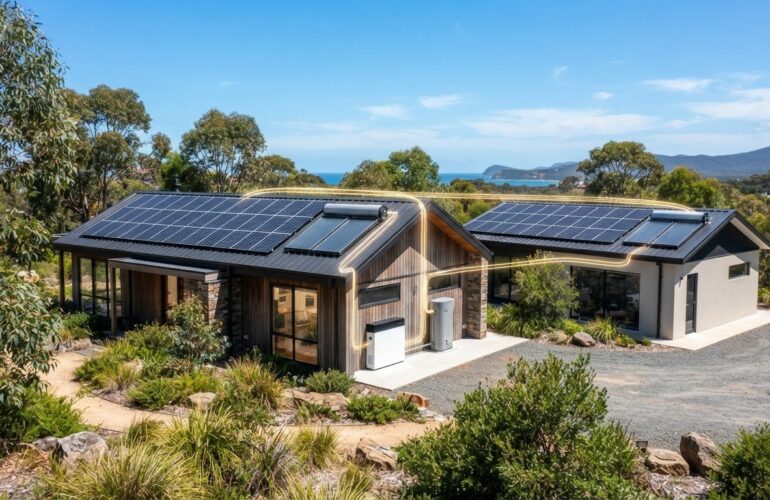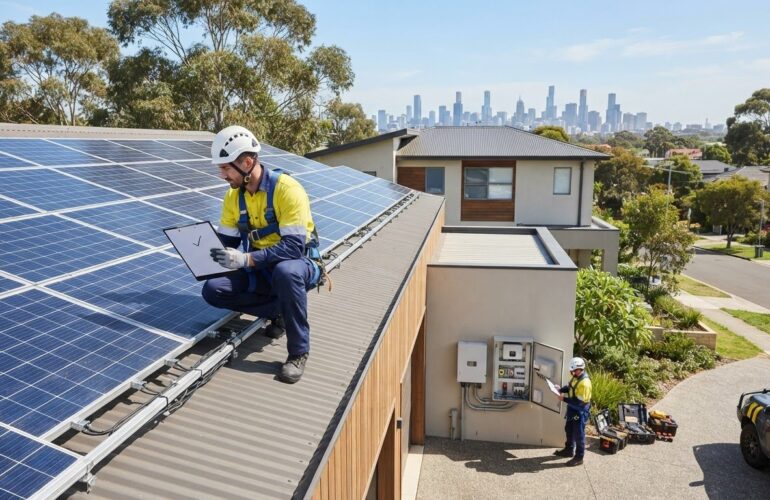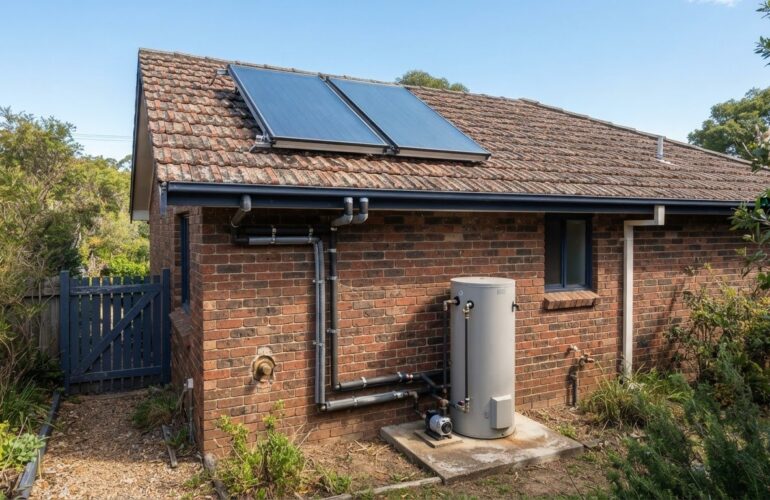
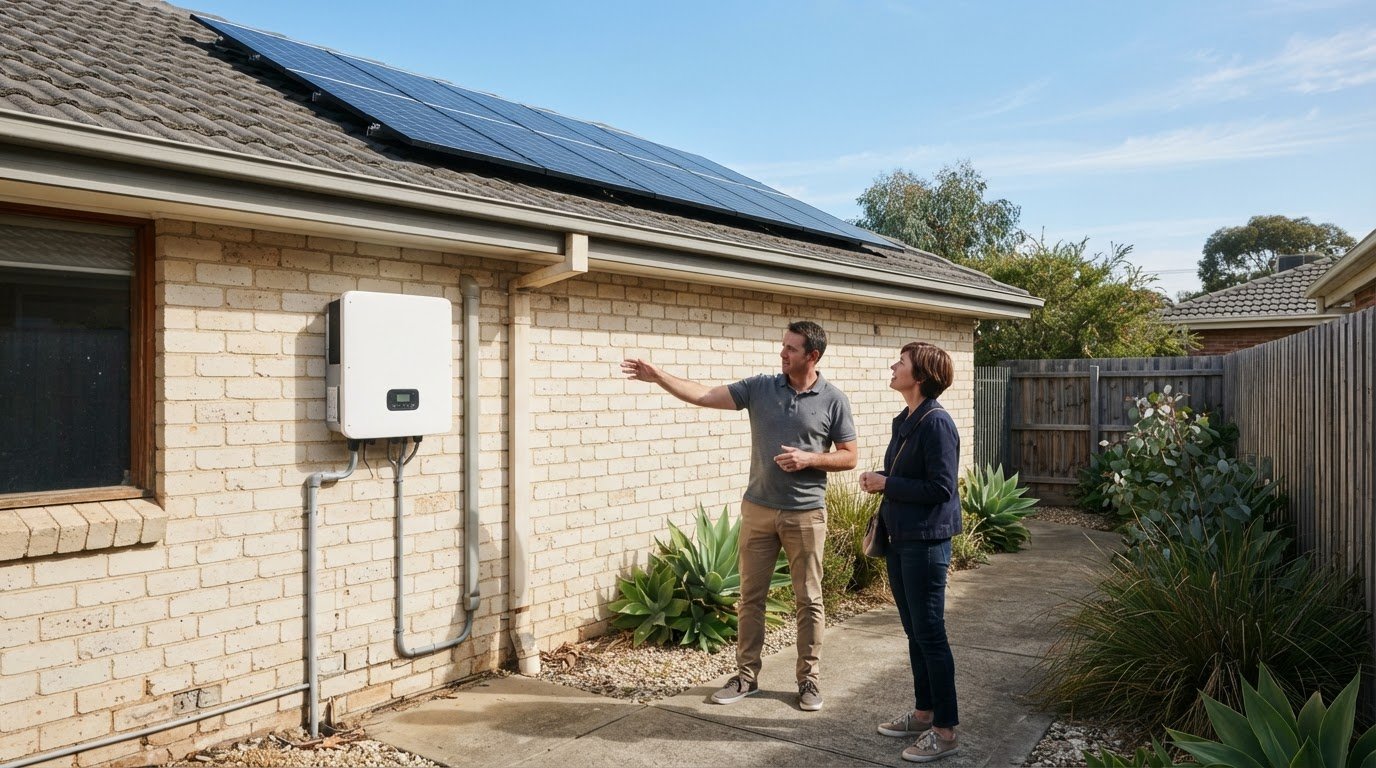
That’s a useful guide, not a guaranteed uplift: the system’s condition, the property and buyer demand all influence how solar affects property value in Australia.
Solar can make a property more appealing by giving buyers a way to generate electricity at home. A well-presented system can be a practical selling point, but its contribution depends on more than panel capacity alone.
This article explains what a 5kW system may add, why solar’s impact varies between properties, and how buyers view solar and batteries. It also looks at what the same value question can mean for commercial property owners.
Key Takeaways
- Solar can strengthen a property’s appeal, but its value depends on how well the system suits the home and local buyer priorities.
- Look beyond system size when considering a solar-related uplift: condition, performance and the property’s overall energy features matter too.
- Buyers may value the added flexibility of a battery, while its upfront cost can affect how they weigh it against solar alone.
- For commercial properties, consider how solar fits the building’s energy use and operating needs before assessing its potential value.
Do solar panels increase your home’s value?
Solar is associated with higher Australian home values, but buyers also consider the system’s condition, ownership and practical benefits.
National solar value uplift
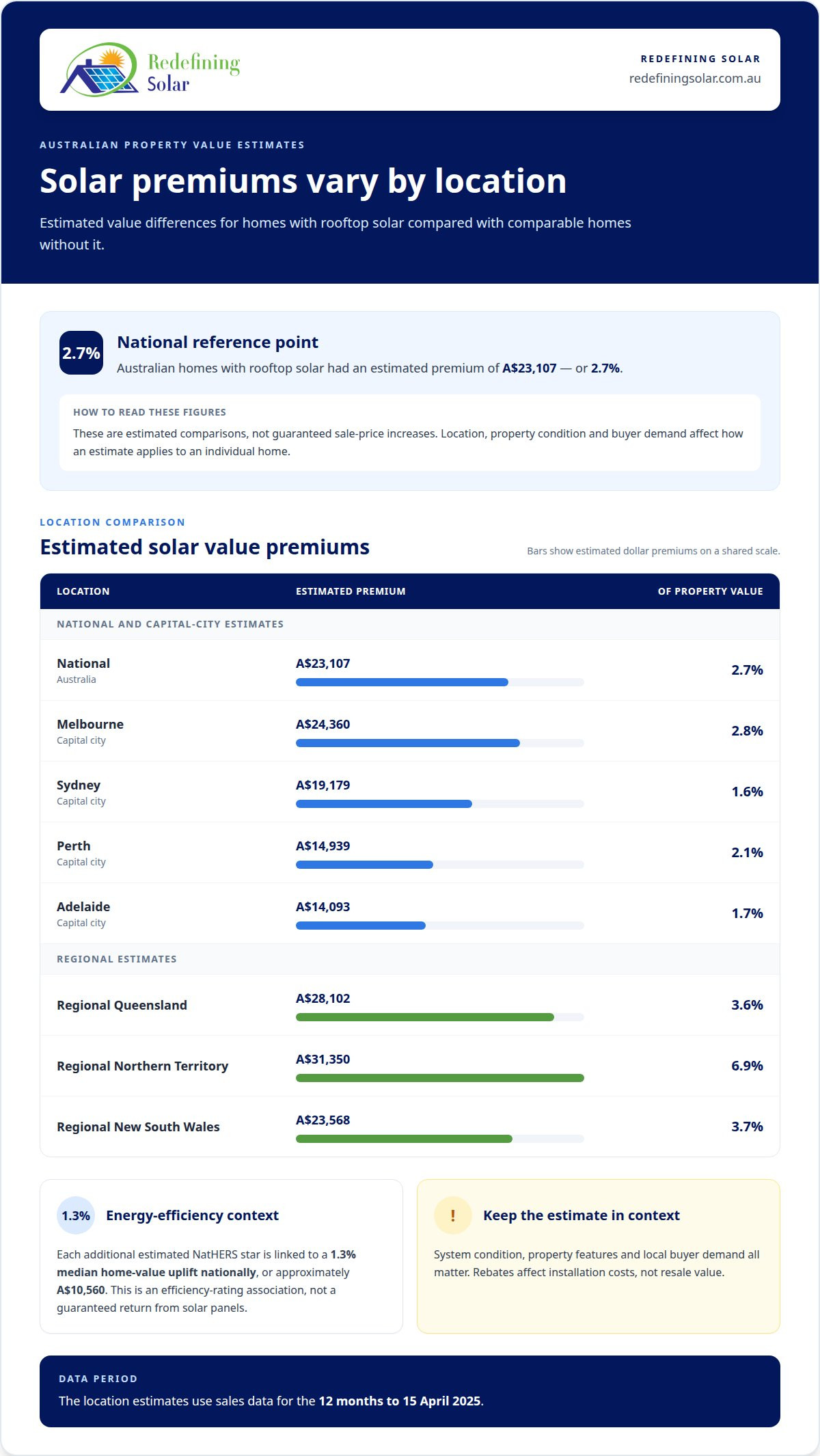
The national average uplift compares estimated values of homes with rooftop solar against comparable homes without it. Australian homes with solar systems had an estimated A$23,107 premium, or 2.7%, using sales data from the 12 months to 15 April 2025. That provides a national reference point, not a guaranteed sale-price increase for every property.
For your home, the figure helps frame the potential value rather than set an asking price. Location and buyer demand matter: Melbourne homes with solar had an estimated A$24,360 premium, or 2.8%, over the same period. A property in Victoria may therefore perform differently from the national average.
Solar and Australian resale values
Solar can support resale appeal by giving buyers access to solar power and potential electricity savings. The Domain Sustainability in Property Report 2024 found that 85% of Australian buyers consider solar and sustainable energy a sought-after factor. That interest can make panels a useful feature in a sale, especially when their operation is clearly demonstrated.
Show buyers how the system works using its monitoring app or recent electricity information. They may also ask about its age, condition and warranty, since coverage may have expired by the time a new owner moves in. Clear records help buyers assess its practical and environmental value.
Solar compared with other improvements
Solar panels differ from renovations such as a kitchen update because they generate electricity and can affect ongoing power use. Their contribution to home value depends on the system and property, while other improvements may appeal through comfort, appearance or added space.
Compare the likely buyer benefit, not just the installation type. A working solar system with clear performance information may be easier to value than panels with uncertain operation. Nationally, rooftop solar was associated with an estimated 2.7% premium, but that figure does not establish how solar compares with every renovation.
Seller disclosure for rooftop solar
Give buyers clear information about the system’s condition, ownership and known performance. Provide available installation and warranty records, explain any faults or repairs, and share recent monitoring or electricity information. These details help buyers understand what comes with the property and assess how the panels operate.
A leased system or solar finance agreement can complicate a sale because the panels may not be owned outright. Disclose the arrangement and explain its transfer, payout or ongoing obligations according to the agreement. Buyers should understand the terms before committing, rather than assume the system is included without conditions.
Estimated property value increase from a 5kW solar installation
This estimate offers a starting point for understanding how solar affects property value in Australia, while location and energy efficiency can change the figure.
Solar premiums across capital cities
Capital-city premiums compare estimated values for homes with solar and comparable homes without it. Local estimates help sellers understand how solar affects property value in Australia beyond a simple calculation based on system size.
Using sales data for the 12 months to 15 April 2025, solar systems were estimated to add A$19,179, or 1.6%, to Sydney property values. Perth’s estimated premium was A$14,939, or 2.1%, while Adelaide’s was A$14,093, or 1.7%. These figures show how estimates vary between cities.
Regional solar value premiums
Regional estimates offer local context for owners considering solar’s possible contribution to a home’s value. They aren’t a set price adjustment for every property.
In regional Queensland, homes with solar had an estimated A$28,102 premium, or 3.6%. Regional Northern Territory recorded A$31,350, or 6.9%, while regional New South Wales recorded A$23,568, or 3.7%. Property condition and buyer demand also shape how these estimates apply to a particular sale.
NatHERS star ratings offer another measure of energy efficiency. Each additional estimated star is linked to a median home-value uplift of 1.3% nationally, or approximately A$10,560. This reflects an efficiency-rating association, not a separate guaranteed return from installing panels.
Rebates affect installation costs, not resale value. The Small-Scale Renewable Energy Scheme provides a government rebate for eligible residential solar installations. Buyers may also weigh potential savings against local electricity prices.
If you’re considering a system for a property, solar system planning can help connect system size with the home’s energy needs and living patterns.
Buyers’ willingness to pay more for solar and batteries
Solar and battery systems can influence what buyers are prepared to pay, but generation and storage offer different benefits. That distinction matters when assessing buyer interest or planning an upgrade.
Buyer willingness to pay for solar
Buyer willingness to pay is the extra amount some purchasers may accept for a home with energy-saving technology. It helps sellers understand how solar could shape interest, without treating survey responses as a promised sale price.
More than four in five Australians are prepared to pay extra for homes featuring energy-saving technologies. At least 60% of homeowners surveyed said they would pay at least A$10,000 more for a home with solar panels and batteries. Those views indicate interest, but buyers still weigh the property’s overall value and electricity needs.
Battery presence and buyer interest
A battery stores solar electricity for later use, such as at night or when panels aren’t generating enough. This can make a solar-powered home more flexible for buyers who use electricity outside daylight hours.
A home without a battery can still use solar power while the panels are generating, but it doesn’t offer the same stored-energy option. Some battery systems can also power all or part of a home during a blackout. These practical differences help explain why buyers may see a battery as an added feature, rather than treating every solar system as equivalent.
Batteries and property value
A battery’s contribution to property value depends on its usefulness to the next owner, not simply its presence. Buyers may consider how much solar electricity it can store, when the household uses power and whether the system suits those needs.
Battery payback also matters. In Australia, a battery’s upfront cost can mean a longer household payback period than a solar PV installation. Electricity prices and the timing of household use affect the value of stored energy. A battery may appeal to buyers seeking backup power or evening use, while others may prioritise panels without storage.
Commercial property value and solar
Commercial solar can influence a building’s appeal through its energy use, operating costs and sustainability profile. Commercial properties vary widely in size, occupancy and electricity demand, so residential value estimates don’t apply directly.
For owners, the key question is how solar generation matches the site’s daily electricity use. An office occupied during daylight can use power as panels generate it, while a warehouse with different operating patterns has different needs. The fit between generation and consumption helps determine the system’s practical value.
Buyers and tenants can assess more than the panels on the roof. They may consider the system’s condition, performance records, maintenance history and how much electricity the building uses during solar generation hours. Clear information helps them weigh potential operating benefits against the property’s other features.
Sustainability can also contribute to a commercial property’s appeal. A business seeking to reduce grid electricity use may value solar, particularly when the system supports its operating pattern. But sustainability alone doesn’t establish a higher sale price; buyers still assess location, condition, lease arrangements and the building’s suitability.
Before adding solar, owners can map electricity use throughout the day, identify major loads and consider how long the business occupies the premises. This helps clarify whether panels can serve on-site demand. A battery stores surplus generation for later use, but whether storage suits the site depends on its operating requirements.
For commercial property owners assessing system suitability, explore commercial solar options around the building’s energy use and operating needs. This gives the value discussion a practical starting point, rather than assuming every solar-equipped property attracts the same buyer response.
Redefining Solar
Redefining Solar can help you assess how a solar system fits your property, energy use and future plans. Whether you’re considering an upgrade before selling, planning a new installation or assessing solar for a commercial building, the right system depends on the property and how electricity is used.
Redefining Solar provides residential and commercial solar systems, battery-ready upgrades and solar panel supply. Discussing your priorities can help identify an option that suits your property, whether your focus is using solar power, preparing for battery storage or considering appeal to future buyers.
For practical guidance on solar options for your property, contact Redefining Solar.
Make your next solar decision with confidence
Understanding how solar affects property value in Australia is a useful starting point, but any decision should reflect the property’s needs. Consider how long you plan to stay, when electricity is used and whether future buyers or tenants may value solar generation or battery storage. For a commercial site, start with its operating pattern and daytime power demand.
Redefining Solar offers Residential Solar Systems, Commercial Solar Systems and Battery Ready & Upgrades. These options can help you plan around your property, whether you’re preparing for a sale, improving how you use electricity or considering future battery storage. The right approach depends on the building and your priorities.
Talk through your property and plans with the team. Contact Redefining Solar today to discuss a practical next step.
Frequently Asked Questions
Will A Solar System Affect My Property Value?
Yes, a solar system can influence your property’s value and appeal to buyers. Its contribution depends on the property, the system’s condition and how well it suits household electricity use. A system included in the sale and operating as expected gives buyers a clearer picture of what they’re purchasing. Ownership arrangements and finance attached to the equipment can also affect their assessment.
Does Adding a Battery Increase Value Further?
A battery may appeal to buyers by storing solar electricity for later use, but its cost doesn’t automatically translate into the same increase in sale value. Buyers may consider its condition, remaining useful life, usable capacity and compatibility with the existing solar system. For example, a household that uses more electricity after sunset may value stored power differently from one that mainly uses electricity during daylight.
Does Solar Help Your Home Sell Faster?
Homes with solar panels could sell up to 20% faster than homes without solar power. Solar may help a listing stand out to buyers interested in generating electricity at home, especially when the property information clearly explains the system. Sale timing also depends on factors such as location, presentation and buyer demand, so the reported comparison describes a potential market pattern, not a sale timetable for a particular home.
How Much Value Do Energy Efficiency Upgrades Add?
The value associated with energy-efficiency features varies, and estimates can include more than solar alone. The Domain Sustainability in Property Report 2024 found Australian homes and apartments with energy-efficient features, such as solar panels, can sell for at least A$6,000 more than comparable properties without solar panels. Treat that as a comparison across properties with these features, not as a guaranteed uplift from one upgrade.
How many Aussies prefer buying a house with Solar?
Origin Energy reported in 2024 that 12% of people would pay more than 5% extra for a property with solar power installed. This measures a specific level of willingness to pay, rather than everyone who prefers solar. Buyers’ preferences still differ: some may focus on reducing grid electricity use, while others may prioritise the home’s location, layout or overall condition.
Is Solar a Bright Investment in Australia?
Solar can be a worthwhile investment when the system matches your electricity use and property plans. Its financial value depends on factors such as location, system capacity, local electricity costs and how much generated power the household uses. Using electricity while panels are generating can make better use of that power. Weigh potential savings and how long you plan to stay against any effect on resale appeal.