
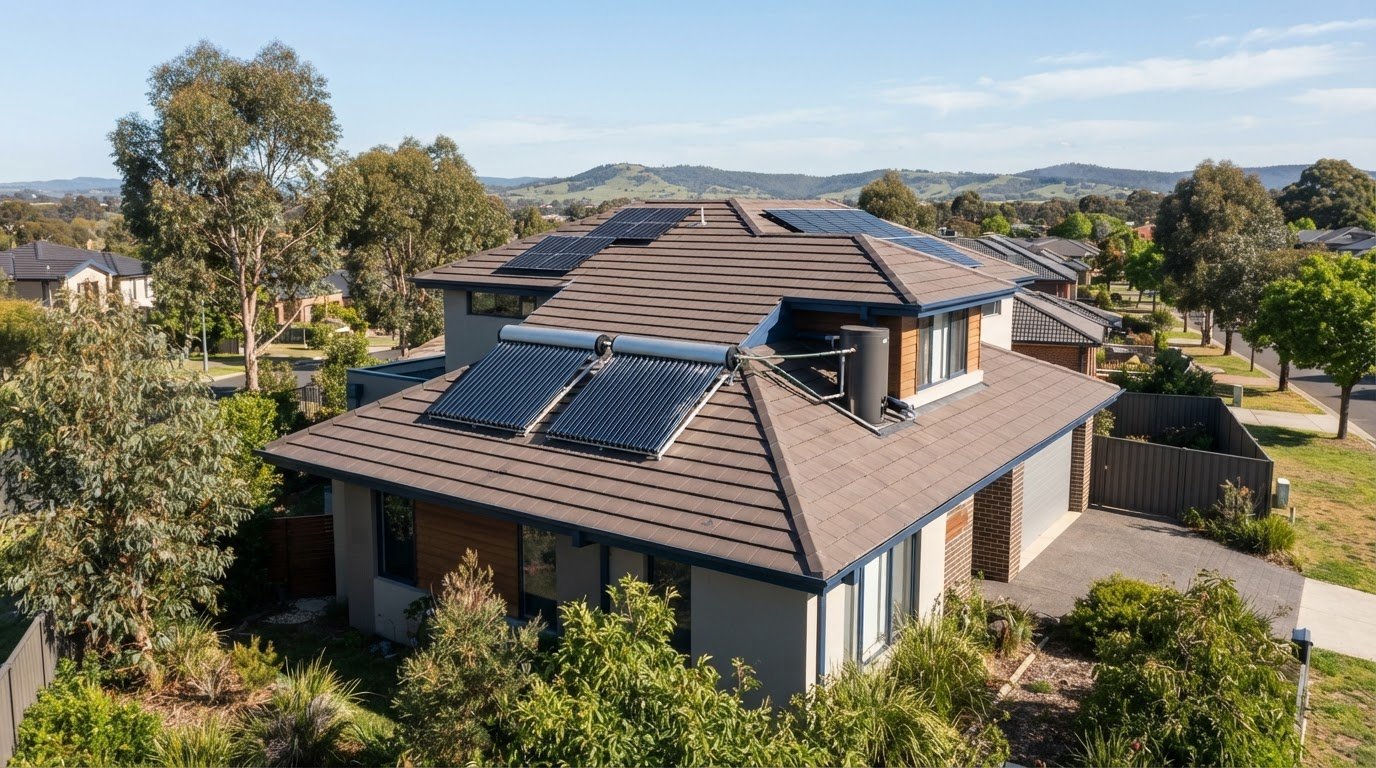
Planning solar hot water installation starts with checking whether solar thermal suits your roof, household hot water use and expectations for backup heating. Before choosing equipment, consider how much hot water you use, when you use it and what your property can accommodate.
This guide explains how to plan solar hot water installation, from comparing solar thermal with heat pumps to preparing for a system design. It also covers what to check about rebates and discounts, and why it’s important to understand application steps before installation begins.
You’ll learn what information to gather about your property and hot water use, how installation is planned, and how a booster can help when sunshine is limited. Redefining Solar is an Australian-owned and operated clean energy business, directed by a licensed electrician. The business designs, installs and services solar thermal systems. Use this guide as a practical starting point for deciding what may suit your home.
Key Takeaways
- Map your household’s hot water patterns and existing equipment before settling on a system design.
- Understand the main installation stages, from site assessment and system planning through to testing and operating guidance.
- Compare solar thermal, heat pump and conventional systems by their setup and household fit, rather than assuming one option suits every home.
- For solar hot water installation victoria, check current Solar Victoria and Victorian Energy Upgrades eligibility, approved products and application steps before work begins.
- Redefining Solar brings solar thermal design, supply, installation and ongoing servicing together.
Is solar hot water installation in Victoria right for your household?
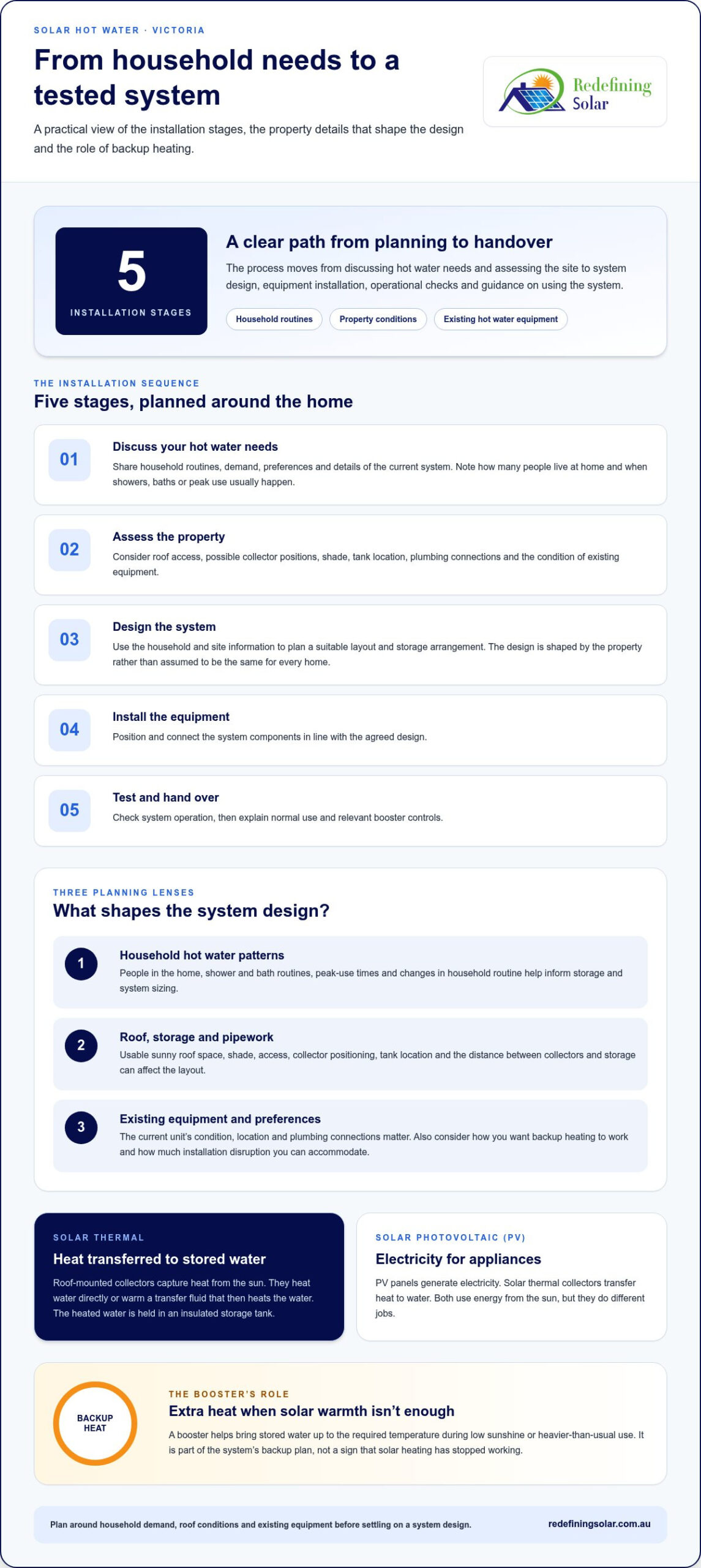
Solar thermal hot water uses roof-mounted collectors to heat water for storage, with a booster supplying extra heat when solar energy isn’t enough. This differs from rooftop solar photovoltaic (PV) panels, which generate electricity rather than directly heating stored hot water. When considering solar hot water installation in Victoria, start with the practical fit: your hot water use, available roof space and existing equipment.
A suitable system is designed around the home, not just the technology. A household that regularly uses hot water in the evening, for example, needs enough stored hot water for that routine. Limited sunny roof space or difficult access may also affect the design. Consider these factors before comparing system options or planning installation work.
What does a solar hot water system do?
Collectors capture heat from the sun. Depending on the system design, that heat warms water directly or heats a transfer fluid that then warms the water. The heated water moves into an insulated storage tank until someone turns on a hot tap. Collectors, tanks and pipework are arranged to work together, with the exact setup depending on the property and system.
A booster helps bring stored water up to the required temperature when solar heat hasn’t provided enough warmth, such as during low sunshine or heavier-than-usual use. It’s part of the system’s backup plan, not a sign that solar heating has stopped working. For a broader overview of configurations and uses, Solar water heating principles and applications explains the basic approaches behind solar thermal systems.
Solar thermal shouldn’t be confused with solar PV paired with an electric hot water unit. PV panels produce electricity that can be used by appliances; solar thermal collectors transfer heat to water. Both use energy from the sun, but they do different jobs.
Which household factors affect suitability?
Start with your hot water habits. Note how many people live in the home, when showers and baths usually happen, and whether use peaks at particular times. Changes to household size or routine can affect the amount of stored hot water you need and how the system should be planned. Your existing hot water unit matters too: its condition, location and plumbing connections influence the installation approach.
- Roof conditions: Consider usable space, shade, access and where collectors could be positioned to receive sunlight.
- Storage and pipework: The tank location and distance from collectors can shape the layout and installation work.
- Household preferences: Think about how you want backup heating to work and what level of disruption you can accommodate during installation.
A roof photo alone won’t answer every design question. A site assessment brings together household demand, roof conditions and existing equipment to inform a system suited to the property. Redefining Solar’s solar thermal design process takes these practical details into account so you can understand the proposed setup before installation begins.
How solar hot water installation in Victoria works, step by step
A well-planned solar hot water installation victoria project moves from understanding your household’s needs to testing the finished system. The details depend on your hot water use, existing equipment and property, so assessment and design come before decisions about the installation work.
The process typically moves from discussing hot water needs and assessing the site to designing the system, installing equipment, testing its operation and explaining how to use it. Each stage helps ensure the proposed setup suits the home and gives you a clear understanding of what to expect before work begins.
- Discuss your needs: Share household routines, hot water demand, preferences and details of the current system.
- Assess the property: Consider roof access, potential collector placement, the tank location, existing plumbing and other site conditions.
- Design the system: Use household and site information to plan a suitable layout and storage arrangement.
- Install the equipment: Position and connect the system components in line with the agreed design.
- Test and hand over: Check the system’s operation, then go through normal use and relevant booster controls.
What happens during assessment and system design?
Assessment turns your household’s needs into useful design information. The number of people in the home, when hot water is used and whether demand peaks at certain times can all inform system sizing and storage. A household that uses most of its hot water in the morning may have different requirements from one with more even use through the day.
The site assessment considers practical details too. Roof access and possible collector positions influence where the solar components can go. Available space and plumbing connections help determine the tank location and layout. The condition and arrangement of your existing hot water equipment also shape the plan. These factors are considered together rather than relying on a standard design for every home.
Solar thermal systems include collectors, storage and a way to boost heat when needed. Understanding how those parts work together can make the design easier to follow. The Victorian Solar Hot Water Rebates page also sets out program information to review as you plan. Redefining Solar uses the property assessment and your hot water needs to inform the system design.
What should you expect on installation and handover day?
The work may involve placing the collectors and storage tank, connecting them to the relevant plumbing and setting up the booster. The sequence and level of disruption depend on the property, access, existing equipment and final design. Clearing access to work areas and discussing household arrangements beforehand can help the day run smoothly.
Once the equipment is connected, the system is checked to confirm it operates as intended. At handover, you should be shown how to use it, what normal operation looks like and how to operate relevant booster controls. Ask about everyday settings and when the booster may be needed. Redefining Solar brings design, installation and ongoing servicing together. Explore Redefining Solar’s solar thermal services.
Solar thermal, heat pump or conventional hot water: compare the options
There isn’t one hot water system that suits every Victorian home. The practical choice depends on your energy source, available space, household routine and existing equipment. Use the comparison below to identify what’s worth exploring for your property, then base the final decision on a site-specific assessment.
| System | Energy source and setup | May suit households that… | Factors to investigate |
|---|---|---|---|
| Solar thermal | Roof collectors heat water for storage in a tank. A booster adds heat when solar input is insufficient. | Have a suitable location for collectors and want to use solar heat for hot water. | Collector position and shade, tank placement, hot water demand, existing plumbing and booster arrangements. |
| Heat pump | Uses electricity to draw heat from surrounding air and transfer it to stored water. | Can accommodate the unit and its operating needs as part of their property layout. | Unit location, household use, existing hot water connections and how the system will operate at the property. |
| Conventional electric | Uses electricity to heat water in a storage tank. | Prefer a familiar storage-based arrangement and have suitable space for the tank. | Tank condition and location, household demand and how electricity use fits the home. |
| Gas | Uses gas to heat water, with equipment and storage arrangements varying by system. | Already have gas hot water equipment and are considering its replacement or continued use. | Current system type and condition, fuel connection, household needs and applicable Victorian requirements. |
When might solar thermal suit a household?
Solar thermal may suit a home with an accessible roof area for collectors and a system designed around regular hot water demand. Household routines matter too: note when hot water is typically used and whether demand is concentrated at certain times. A booster supports hot water availability when the collectors haven’t supplied enough heat, such as during low solar input or higher demand. Its role is part of the system plan, not a promise of a fixed solar contribution or bill saving.
How does solar thermal differ from a heat pump?
Solar thermal collects the sun’s heat directly to warm stored water. A heat pump uses electricity to move heat from surrounding air into the water. Both need equipment space, but their layout and operating considerations differ. Collector positioning is central to solar thermal planning; for a heat pump, the unit’s location and the property’s existing hot water arrangement are important design inputs.
For solar hot water installation in Victoria, compare your actual site and usage rather than relying on a general performance claim. Consider where equipment could go, how the household uses hot water and what connections are already in place. Those answers help identify the questions a tailored assessment should address before you settle on a system.
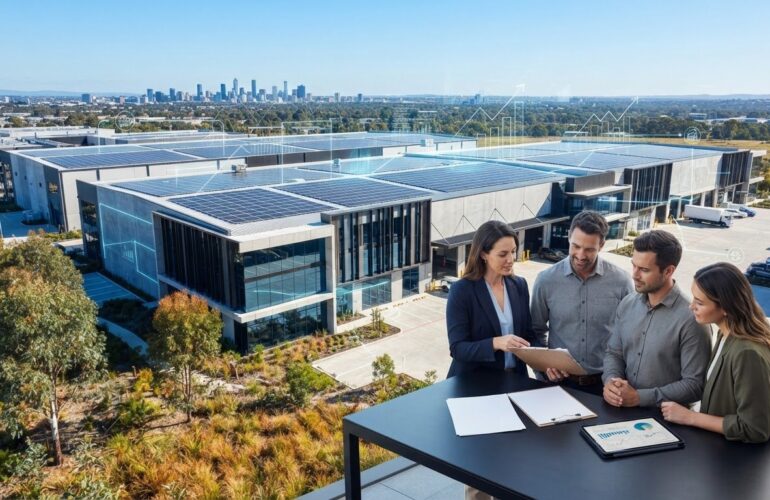
Plan your Victorian installation and check rebates before work begins
Preparation makes the design discussion more useful and helps you check incentive conditions before committing. Gather household and property information, then compare the proposed system and installation pathway with current program guidance. For solar hot water installation in Victoria, don’t treat a rebate or discount as automatic: eligibility, approved products and application steps can affect whether support applies.
What information should you gather before design?
Start with a clear picture of your household’s hot water use and the equipment already in place. Everyday observations are useful; you don’t need technical measurements.
- Household use: Note how many people live in the home, usual shower and laundry routines, peak-use times and any planned changes, such as a growing household.
- Current system: Record the heater type, its age if known, where it sits and any recurring issues with capacity or performance.
- Property access: Note roof access, visible shade, possible collector locations, the likely tank area and any access considerations around the home.
- Hot water preferences: Consider how you want backup heating to operate and whether household routines can accommodate the proposed system.
Photos and existing system documents can help explain the layout, but they don’t replace a site assessment. Redefining Solar uses household needs and property conditions to inform a tailored solar thermal design.
How should you approach Victorian rebates and discounts?
Check the current Solar Victoria rules before proceeding. As of October 2026, the Solar Homes hot water rebate is up to A$1,000 for eligible products, or up to A$1,400 for eligible locally made products. It covers 50% of the purchase price up to the applicable cap. Eligibility includes owner-occupiers of existing homes, a combined taxable income for all owners below A$150,000, a property value under A$3 million and a replaced hot water system at least three years old. The address must not have previously received a Solar Homes hot water or solar battery rebate. Conditions and amounts can change, so check the current Solar Victoria hot water rebate rules.
Also check whether the selected product and installation pathway qualify for a Victorian Energy Upgrades (VEU) discount. VEU discounts vary and may be combined with other incentives when applicable, but not every system or project qualifies. Understand how the relevant application steps fit around purchase and installation, and confirm current requirements in the official program information before work begins. Federal Small-scale Technology Certificates (STCs) are a separate incentive with a value that can fluctuate.
Installation requirements matter too. Victorian hot water work must comply with the Plumbing Regulations 2018, the National Construction Code and relevant Australian Standards, including AS/NZS 3500.4. Plumbing work must be carried out by a plumber licensed or registered with the Victorian Building Authority. Redefining Solar can plan a system around your household and property through its solar thermal design and installation service.
Arrange solar hot water installation in Victoria with Redefining Solar
Once you’ve compared system types and gathered details about your household and property, the next step is to turn that information into a practical plan. Redefining Solar provides solar thermal system design, supply, installation and ongoing servicing. You can discuss your needs and understand how they inform the proposed setup, with each stage connected to the next.
Redefining Solar is Australian-owned and operated, and directed by a licensed electrician. The design is tailored to the property and its hot water requirements, with site conditions and household routines guiding the choices made along the way.
What a tailored solar hot water project covers
A tailored project starts with the details that affect system fit: how hot water is used, what equipment is already installed and what the property can accommodate. Those details help shape the proposed collector and tank arrangement, as well as how the system connects with existing services. The aim is a design based on the home, not a one-size-fits-all layout.
Redefining Solar then brings supply and installation together. The planned equipment is supplied and installed as part of the same solar thermal project, with the work guided by the agreed design and site conditions. Ongoing servicing supports care of the system after installation. This connected approach gives you a clear path from early planning to looking after the installed equipment.
What happens when you enquire?
To begin, share a few useful details about the project. You don’t need every technical answer; a clear picture of your current system and household priorities is a practical starting point.
- Your existing heater: Tell us what type it is, where it’s located and any issues you’ve noticed.
- Household needs: Describe who uses hot water, typical routines and any expected changes in demand.
- Property details: Mention roof access, possible collector positions, shade or other site features that may affect the layout.
- Your goals: Explain what you want from a new system and what matters most in its day-to-day operation.
This first discussion helps clarify the design considerations and information needed to plan installation. If you’re still weighing solar thermal against other hot water options, bring those questions too. Household fit, existing equipment and property conditions can be considered together to give the next planning step a practical basis.
For solar hot water installation victoria, a considered design can make the process easier to understand before you commit. Redefining Solar can guide the project from system design through installation and ongoing servicing. Discuss your solar thermal installation.
Take the next step with a plan that fits your home
Turn what you’ve learned into a project plan based on your household and property. Start with practical questions: what needs to connect to your existing hot water setup, how will the system fit the site, and what should be resolved before installation is organised? Clear answers can make solar hot water installation in Victoria more manageable, without requiring you to settle every detail at once.
Redefining Solar is an Australian-owned and operated clean energy business, directed by a licensed electrician. Its solar thermal service connects design, supply, installation and ongoing servicing, with the system shaped around your home and hot water needs.
Share what you know about your current heater, household routines and project goals. Discuss your solar hot water installation with Redefining Solar and take the next step towards a system plan for your property.
Frequently Asked Questions
Can solar hot water work during winter in Victoria?
Yes, solar collectors can still contribute heat in winter when conditions allow, but their contribution varies with weather and season. A booster helps supply hot water when stored water hasn’t been heated sufficiently by the collectors. If your household uses more hot water during colder months, include that pattern in the design discussion. Redefining Solar can explain how the proposed system is expected to respond when solar input is lower.
Does solar hot water need a booster?
Many solar hot water systems use a booster to support hot water availability when solar energy hasn’t heated the stored water enough. The booster’s type and operation depend on the system design, so don’t assume every setup works the same way. At handover, ask for a demonstration of the controls and how they relate to your household’s routine. That way, you’ll know what to expect during periods of lower solar input.
Can solar hot water be installed on any roof?
No, a suitable layout depends on the individual property. Collector placement, roof access, usable space and the planned storage tank position can all affect what’s practical. For example, a shaded or difficult-to-reach roof area may influence the collector location or design. A site assessment helps identify workable options for your home, rather than relying on a general rule about roof direction or assuming one layout fits every property.
Are solar hot water rebates available in Victoria in 2026?
Victorian incentives may be available, but eligibility and conditions apply, and a rebate isn’t automatic. Before committing or budgeting around a discount, check current Solar Victoria guidance for household criteria, approved products and the required application sequence. Then check whether the chosen system and installation pathway meet Victorian Energy Upgrades requirements. Keep a note of the rules and steps that apply to your project, as program details can change.
Is solar hot water the same as solar panels connected to an electric water heater?
No. Solar thermal collectors capture sunlight as heat and use it to warm water stored in a tank. Photovoltaic panels generate electricity, which can power household appliances, including some electric water heaters. If you already have rooftop solar, consider how a water heater would use that electricity and how its controls fit your setup. The right comparison depends on your existing equipment, hot water habits and property conditions.
How should I prepare for a solar hot water installation assessment?
Write down your household size, usual hot water routines, current heater type and any performance issues you’ve noticed. If you know the heater’s age, include that too. Photos of the existing unit, its connections and roof access can help explain the property, while expected household changes provide useful context. Bring questions about booster operation and current incentives. This preparation can make a discussion about solar hot water installation in Victoria more specific to your home.
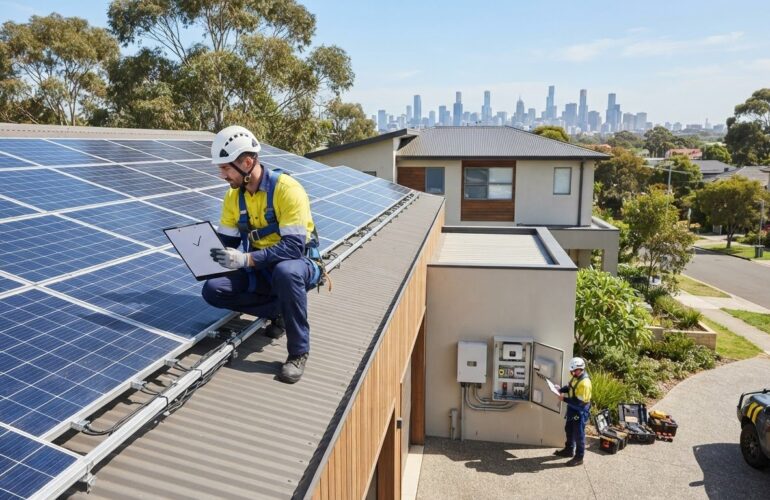
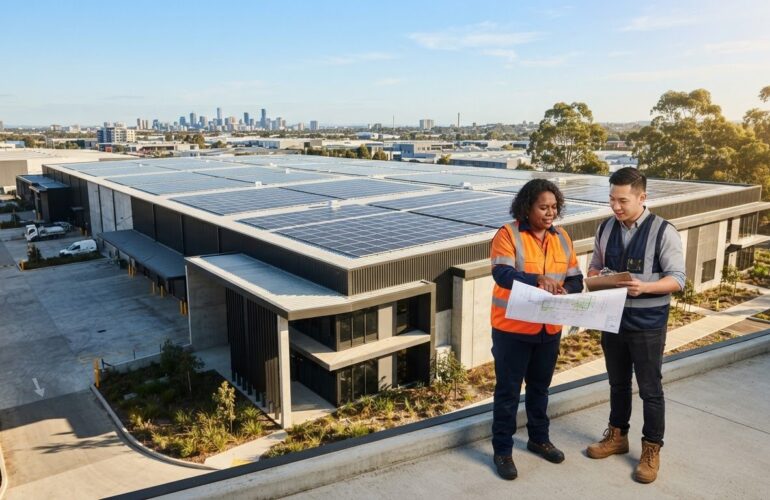
[…] factors together with household usage to establish a suitable configuration. Redefining Solar’s solar hot water installation in Victoria guide covers practical installation […]