Your solar system doesn’t automatically stop working when its installer closes. If you’re asking what happens if my solar installer goes out of business, manufacturer equipment warranties generally remain valid, while workmanship cover may be affected. A working system can keep generating energy, but faults may need attention from another solar technician.
It’s understandable to feel uncertain when the business that installed your system is no longer operating, especially if your inverter displays an error or you can’t find your warranty paperwork. Separate equipment cover from installation workmanship cover, then gather your system details and work out the right support pathway.
This guide explains what to do about inverter faults, how to review warranty documents and check a company’s insolvency status, and where to find ongoing solar support in Australia. These practical steps can help you organise your records and have your system assessed.
Key Takeaways
- If your inverter shows a fault, note the error and gather your system details so a technician can assess the issue and take over maintenance or repairs.
- Separate manufacturer equipment cover from installer workmanship cover, and keep invoices, serial numbers and installation records together for warranty claims.
- Use ASIC’s Insolvency Notices Database to look for notices about the installer’s business name and help establish its status.
- For ongoing support, identify who owns or finances the system and who is responsible for maintenance before arranging repairs.
1. What if my inverter stops working and my solar installer has gone into liquidation?
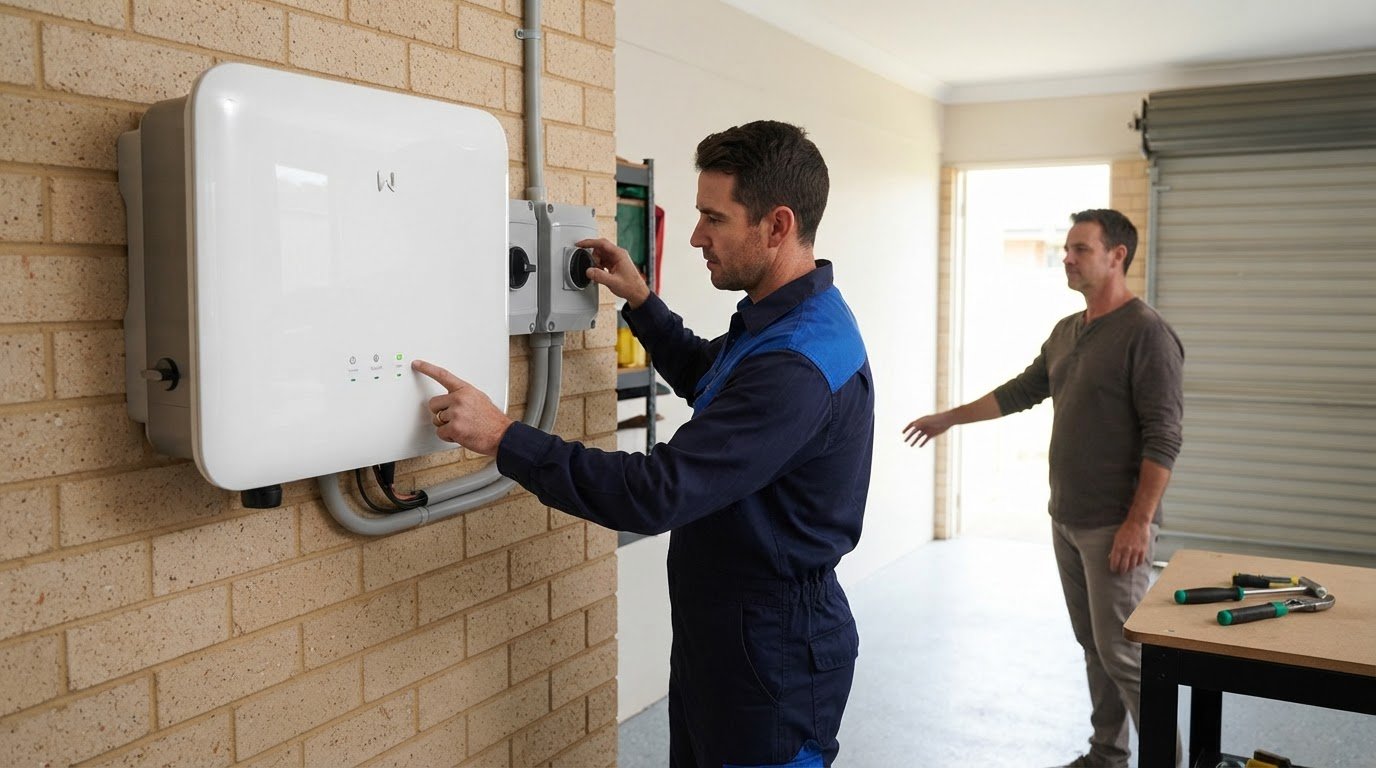
If your inverter stops working, the original installer isn’t your only source of support. A solar technician can inspect the system, diagnose the fault and carry out repairs where possible. If you’re wondering what happens if your solar installer goes out of business, document the fault and arrange an assessment.
Check whether the system is generating power during daylight, then note any inverter error message or flashing light. Don’t touch damaged cables or electrical equipment. Burning smells, smoke, sparking, scorch marks, water near the inverter or damaged cables need urgent attention. Switch off the system at its isolator and call an electrician immediately.
Gather the inverter make and model, serial number, installation records, monitoring details and any solar installation certificate. The certificate can help a replacement technician understand the system and confirm compliance. Share the information and fault details with a solar service provider to help them assess the equipment and plan the work.
In Australia, costs depend on the fault, site access, testing required and any parts needed. Request a written quote that sets out the proposed work and costs before proceeding. Diagnosis, maintenance and repair are separate from equipment replacement, so make sure the quote explains what is included.
There’s no single compensation route. Ask your card provider about a chargeback, discuss finance concerns with your finance provider, notify your insurer or raise the matter with your state consumer agency. Keep the contract, invoices, payment records and messages together to support your request.
Before engaging a replacement provider, request a written diagnosis, repair scope and itemised quote. Check that the technician is suitably qualified for the solar work and familiar with your inverter brand and monitoring system. Compare what each quote includes, such as testing, replacement parts and follow-up documentation.
For example, if monitoring shows no production but the inverter has no visible error, share that history with the technician. It can help narrow down the fault and establish whether the panels, inverter or another system component needs attention.
2. What happens to a warranty if a company goes out of business?
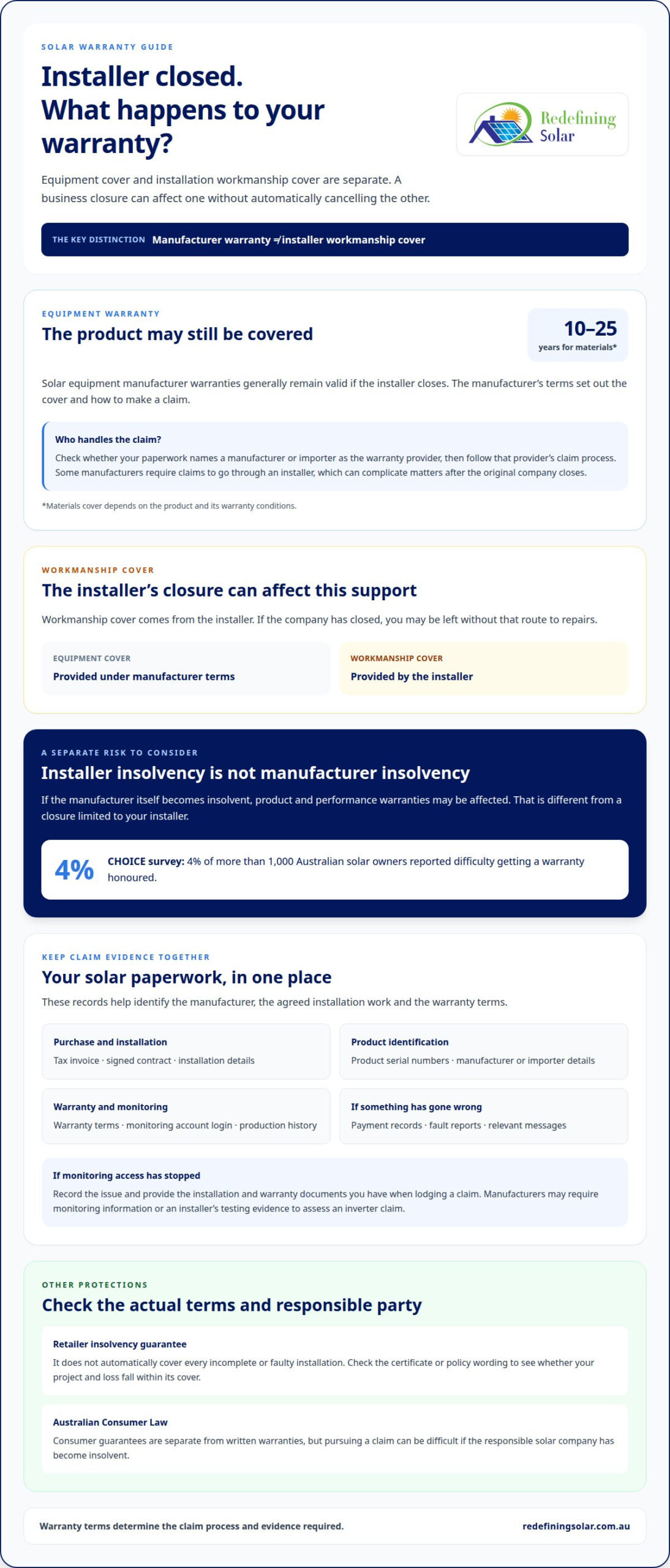
An installer’s closure affects workmanship support, but it doesn’t automatically cancel a separate equipment warranty. Solar equipment manufacturer warranties generally remain valid if the installer closes; the manufacturer’s terms explain how to make a claim. Equipment warranties commonly cover materials for 10 to 25 years, depending on the product and its warranty conditions.
Keep the tax invoice, product serial numbers, installation details and signed contract together. These records help identify the manufacturer, the installer’s agreed work and the warranty terms. Check whether the paperwork names a manufacturer or importer as the warranty provider, then follow its claim process. Workmanship cover is different: it comes from the installer, so a closed company may leave you without that route to repairs.
Monitoring access can matter. Keep your account login and production history, as manufacturers may require monitoring information or an installer’s testing evidence to assess an inverter claim. If access has stopped, record the issue and provide the installation and warranty documents you have when lodging a claim. Some manufacturers require claims to go through an installer, which can complicate matters after the original company closes.
Manufacturer insolvency is a separate risk. Product and performance warranties may be affected if the manufacturer itself becomes insolvent, unlike a closure limited to your installer. In a CHOICE survey of more than 1,000 Australian solar owners, four per cent reported difficulty getting a warranty honoured. Read the warranty issuer’s terms to understand who handles claims and what evidence is needed.
A retailer insolvency guarantee doesn’t automatically cover every incomplete or faulty installation. Check the certificate or policy wording to see whether your project and the loss fall within its cover. Australian Consumer Law consumer guarantees are separate from written warranties, but pursuing a claim can be difficult if the responsible solar company has become insolvent. Keep contracts, invoices, payment records and fault reports together to support any claim.
If the warranty requires a replacement inverter, confirm the replacement model and installation requirements with the manufacturer before arranging the work. You can also review solar inverter options as part of planning a compatible replacement.
3. Checking a solar company’s registration and insolvency status
Start with the legal company name on your solar contract, tax invoice or quote. A trading name may differ from the registered company, so use the Australian Company Number (ACN) on your paperwork where available. Search the exact company name in ASIC’s Insolvency Notices Database for notices of liquidation or proposed deregistration. A notice can show whether formal insolvency action has been recorded.
Don’t rely on a trading name or an old search result alone. Check the company’s website, social media or phone line for a closure announcement, then compare those details with your contract. If the company goes into liquidation, keep the notice details with your installation records. This gives you a clear reference when speaking with a manufacturer, finance company or replacement service provider.
For example, an ASIC notice may use the legal entity name rather than the solar brand shown on your panels or paperwork. Match the notice against the ACN or company name on your contract before treating it as the same business. A list compiled from ASIC notices contained 610 solar-named companies in liquidation or proposed deregistration since 2011, showing why precise identification matters.
Check your contract for a separate service agreement, lease or power purchase agreement. Some solar leases and power purchase agreements are managed by a third-party company and may continue uninterrupted after the installer closes. Identify the named system owner and the party responsible for maintenance before arranging work. Keep payment statements and agreement correspondence together.
If the inverter has failed, arrange an inverter health check with a solar technician. An inspection can identify the fault and whether repairs are possible. Give the technician the inverter model, error details, monitoring history and installation records. These details help assess the system without relying on the original solar company.
Confirm who will perform any agreed work and request a written scope before repairs begin. If your system is leased or covered by a service agreement, contact the named contract party first. This helps clarify who should arrange maintenance and avoids confusion about responsibility for the solar power system.
4. Support after a solar installer goes out of business
Your panels can keep producing energy after the original installer closes, provided the system remains operational. First, confirm the closure through the company’s website, social media or phone line. Save any closure notice and note when you received it. This gives you a clear record before contacting a manufacturer, lender or service provider.
Next, gather the solar contract, system details, invoices, monitoring records and recent finance statements. These documents help establish who owns the equipment and which agreements still apply. If the system is under a lease or power purchase agreement, check the agreement to see who is responsible for maintenance and repairs. Contact the named owner before arranging work.
A solar loan is different. Borrowers generally remain responsible for monthly repayments and the full amount borrowed, even if the installer goes bankrupt. Keep paying under the finance agreement and retain statements and correspondence. For example, if the installation is incomplete but repayments continue, keep the contract and evidence of the unfinished work with your finance records.
If your project is still in permitting, the replacement contractor’s details may need to be added. A homeowner may need to withdraw and resubmit the building permit with those details. Gather the original permit paperwork and installation documents first, so the new submission reflects the work still required.
For an operating system, keep monitoring access and record any changes in production. If a fault appears, share the error message and system records with a technician. For leased equipment, refer to the agreement before authorising repairs, since the system owner is responsible. Keep loan and repair records separate for a financed system.
If you need help maintaining or repairing a system after its installer closes, discuss solar system support.
Redefining Solar
Redefining Solar can help you plan the next step if your original installer has closed and you need a clear path forward. If you’re deciding whether to retain, upgrade or replace parts of your solar setup, its team can discuss residential or commercial solar systems and battery-ready upgrades in light of your needs.
You can also explore solar panel supply if you’re arranging a project independently. Bring together your system details, installation records and any fault information so the conversation can focus on your circumstances and practical options. This can help you make a considered decision, whether your existing system needs attention or you’re planning a new setup.
For guidance on your solar situation, contact Redefining Solar.
Make your next solar decision with confidence
Knowing what happens if your solar installer goes out of business can help you approach your next decision with a clearer view of your options. Your system records and its current condition provide a useful starting point, whether you’re considering a repair, an upgrade or a change to your solar setup.
Take time to decide what matters most: keeping the existing system operating, improving how it meets your energy needs or planning a new installation. A focused conversation about your priorities can help you find a practical way forward without rushing into a decision.
Contact Redefining Solar for support to discuss your next step. You can move forward at a pace that feels right for you.
Frequently Asked Questions
What do I do if my solar installer goes out of business?
Ask the equipment manufacturer for details of qualified service providers who can work on your system. When you contact the manufacturer, give the inverter or panel model and describe the support you need. For example, if you need a fault assessed, ask whether its provider list includes technicians who can diagnose that equipment, not just supply replacement parts.
What happens to a warranty if a company goes out of business?
Check whether the warranty covers equipment only or includes labour, as those costs may be treated differently. A replacement part supplied under a manufacturer’s warranty may not cover the technician’s time to inspect or install it. Before accepting a claim outcome, read the warranty wording for exclusions, evidence requirements and who pays for labour, so you understand what the claim covers.
What happens to my solar lease or Power Purchase Agreement if the company closes?
Contact the organisation named in your agreement and ask where to direct future service requests and account queries. Keep its response with your agreement and note any new contact details or instructions. This is useful if the original installer handled communications but another company now administers the system or agreement.
Are solar panel warranties transferable?
Warranties are usually transferable to a new homeowner, but the manufacturer’s process and conditions vary. If you’re selling, check the warranty documents for transfer steps, then give the buyer the relevant paperwork and equipment details. For instance, include the panel model and serial number with the handover documents so the new owner can identify the covered product.
Can I still receive maintenance and repair services from other providers?
Yes. After service, ask for a written report recording the technician’s diagnosis, work completed, parts replaced and test results. Keep it with the system documents. If the same fault returns, the next technician can see what was previously tested or changed instead of starting without a service history.
What if my inverter stops working and my solar installer has gone into liquidation?
If you think the inverter is covered by its manufacturer’s warranty, contact the manufacturer before authorising a replacement. Ask how to lodge the claim and what evidence it needs. Have the model, serial number, proof of purchase and inverter error code ready. Following the claim process first helps ensure the fault is assessed under the relevant warranty terms.