
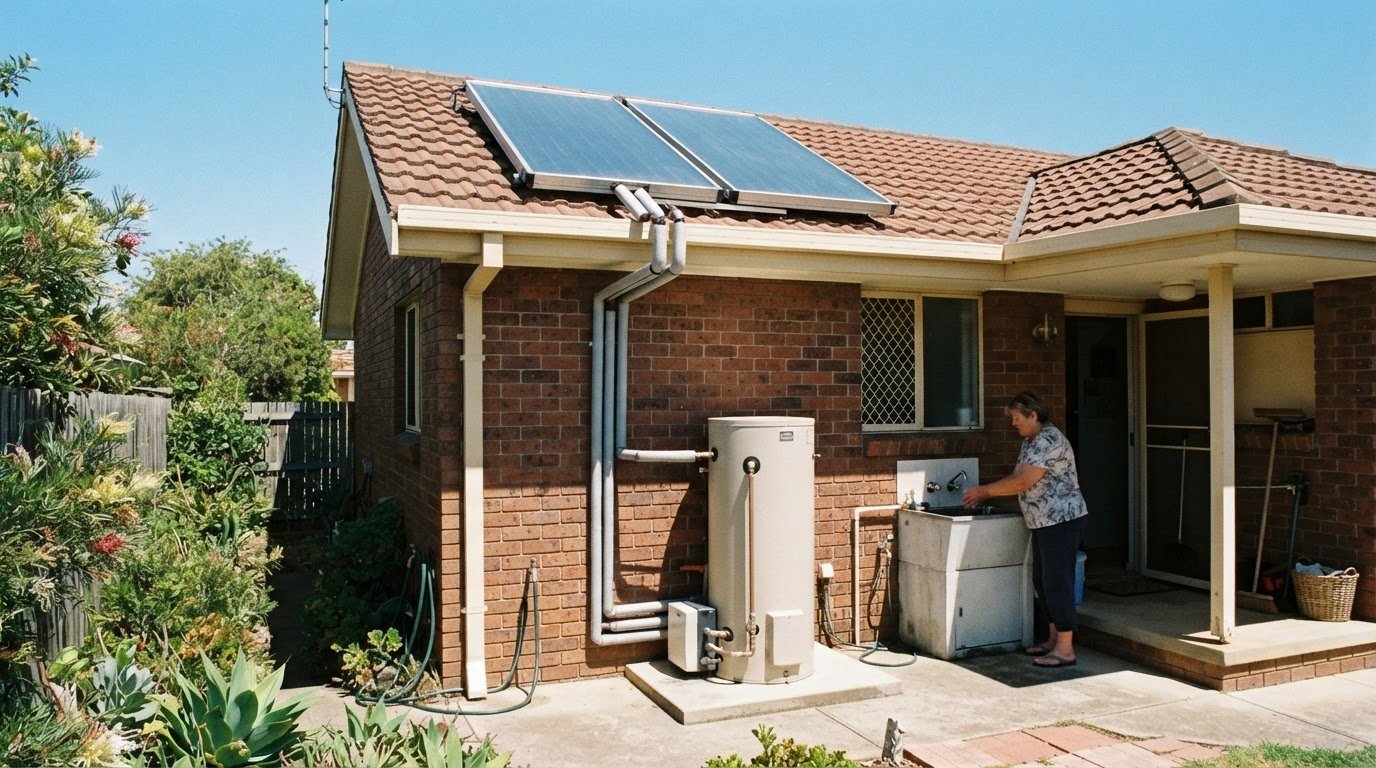
Solar thermal hot water can meet everyday household needs while reducing reliance on finite fossil fuels. The environmental benefits of solar thermal hot water come from using the sun’s heat to warm water, with a booster helping cover shortfalls when solar energy isn’t enough. Whether it’s worthwhile for your home depends on how the system suits your hot water use and conditions.
It’s sensible to look beyond the environmental case and consider how the system works in practice. You’ll learn how solar thermal hot water supports household needs, where its environmental benefits come from and what affects how much hot water it can provide. We’ll also explain the role of backup heating, so you can see how solar energy fits into a dependable home hot water system.
Key Takeaways
- Understand why household water heating can make a meaningful contribution to energy use and greenhouse gas emissions.
- See how using sunlight to heat water can reduce dependence on fossil fuels.
- Learn how solar thermal can help conserve finite fuel resources over time.
- Understand how solar heating and a booster can work together to meet your household’s hot water needs.
Section 1: What is an efficient hot water system and why should I install one?
An efficient hot water system uses less purchased energy to meet household demand. In Australia, this choice matters because water heating contributes to household energy use and greenhouse gas emissions.
Hot water’s share of household emissions
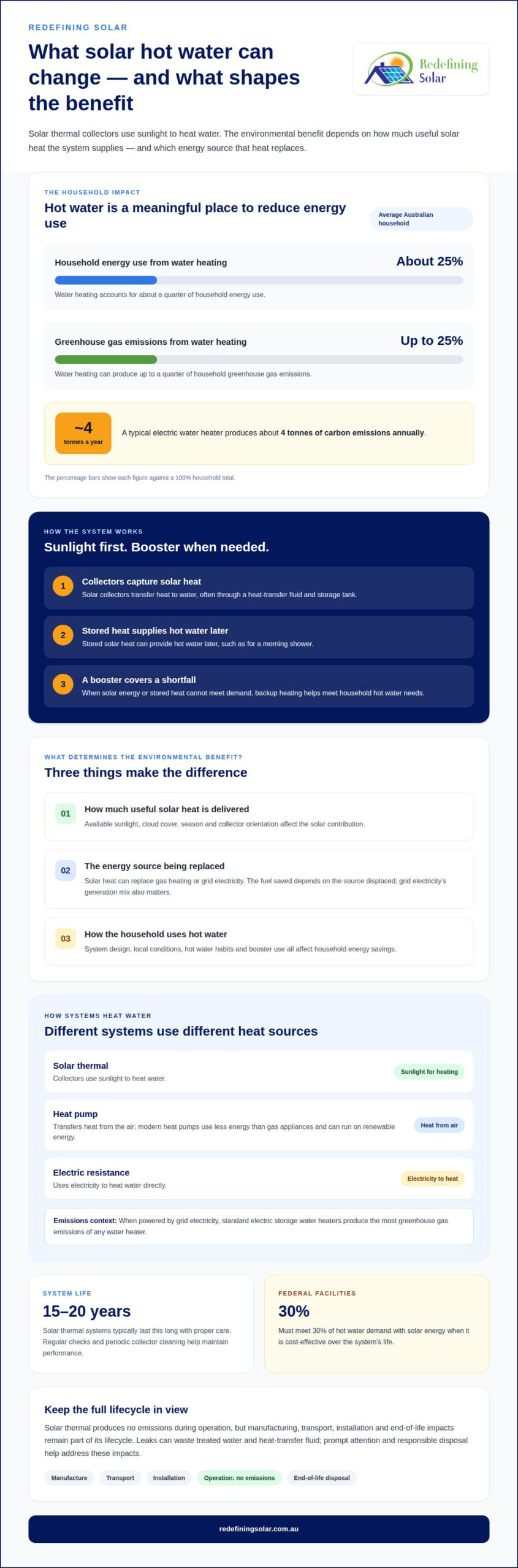
Water heating accounts for about 25% of energy use and produces up to 25% of greenhouse gas emissions in an average Australian household. That makes hot water a practical place to reduce household carbon emissions, rather than relying only on offsets. A typical electric water heater produces about 4 tonnes of carbon emissions annually. Solar thermal collectors use sunlight to heat water, and the system produces no emissions during operation.
Emissions, air quality and carbon offsets
Greenhouse gas emissions contribute to climate change, while burning fuels can also release pollutants that affect air quality. Solar thermal heating uses the sun rather than burning fuel during operation, reducing emissions associated with the energy it replaces. Carbon offsets fund emissions reductions elsewhere, but they do not reduce the energy your water heater uses. Reducing household demand and using offsets are different actions, so the distinction matters when assessing environmental savings.
Comparing hot water system emissions and energy use
Solar thermal uses sunlight for heating; a heat pump transfers heat from the air, while electric resistance systems use electricity to heat water directly. Modern heat pumps use less energy than gas appliances and can run on renewable energy. When powered by grid electricity, standard electric storage water heaters produce the most greenhouse gas emissions of any water heater. Australian minimum energy performance standards apply to electric and gas storage heaters and gas instantaneous heaters; solar water heaters have no minimum energy performance standards in place. Federal facilities must meet 30% of hot water demand with solar energy when cost-effective over the system’s life. Small-scale technology certificates and other rebates may reduce system costs.
Lifecycle impacts, upkeep and environmental risks
Lifecycle emissions include those from making, transporting and installing a system, its operation, and its eventual disposal. Solar thermal produces no emissions during operation, but manufacturing and end-of-life impacts remain part of the full lifecycle. Systems typically last 15-20 years with proper care. Regular checks for leaks, damage and malfunctioning components, plus periodic collector cleaning, help maintain performance. Leaks can waste treated water and heat-transfer fluid, so prompt attention matters; responsible disposal at end of life keeps system components out of general waste where appropriate.
Reduced reliance on fossil fuels
Solar water heating uses sunlight to supply heat that might otherwise come from gas or grid electricity. The environmental benefits of solar thermal hot water include using less finite fuel for a routine household need, although the amount displaced depends on how much solar heat the system delivers.
Lower fossil fuel use and air pollution
When solar heat replaces gas heating, the home burns less natural gas to meet that share of hot water demand. When it replaces grid electricity, the fuel saved depends partly on how the electricity is generated. Reduced fossil fuel use can lower associated greenhouse gas emissions and air pollution, but it does not eliminate the impacts of manufacturing, transport or installation.
The source of the displaced energy matters. For example, a gas-heated household reduces direct gas use when its solar collectors provide useful heat. A home relying on grid electricity instead reduces its electricity demand. The environmental benefits of solar thermal hot water therefore depend on the energy source replaced, not simply on having collectors on the roof.
Reduced demand on the electricity grid
Solar thermal can reduce grid demand when it supplies heat that an electric water heater would otherwise produce. Household electricity or gas savings depend on system design, local conditions, hot water habits and booster use. The solar contribution varies with available sunlight, so a booster remains important when stored heat cannot meet demand.
Solar thermal and a heat pump work in different ways. Collectors capture solar heat directly, while a heat pump transfers heat from the air; electric resistance heaters use electricity to generate heat. Comparing their energy use means considering household demand and the energy source each system replaces, rather than treating all hot water systems as equivalent.
Across homes, reducing the electricity used for water heating can lessen the generation required from the grid. This supports renewable energy use when solar heat replaces electricity. For a household, the practical benefit is less reliance on grid supply for water heating when collectors and storage provide enough heat.
Conserving finite fossil fuel resources
Coal, oil and natural gas are finite fuels: using them for water heating draws on resources that cannot be replenished on a human timescale. Solar heat offers a renewable input instead. For an Australian household, the conservation benefit comes from using less gas or fossil-fuel-generated electricity to meet the same hot water demand. Each unit of solar heat used in place of those sources reduces the fuel needed for that part of the household’s routine.
Solar collectors capture sunlight and transfer heat to water, often through a heat-transfer fluid and storage tank. The stored heat can provide hot water later, such as for a morning shower, rather than relying entirely on gas or grid electricity at that time. A booster supplies additional heat when stored solar energy does not meet demand, allowing the system to conserve fuel without requiring the household to use less hot water.
The resource benefit builds through repeated daily use. A household that uses solar-heated water for washing, cooking and cleaning relies less on fuel for those activities whenever the collectors provide useful heat. Cloud cover, season, collector orientation and household demand affect how much fuel is displaced. These practical factors matter because solar thermal conserves resources through the heat it actually supplies, not simply through having equipment installed.
Small-scale Technology Certificates (STCs) are an Australian incentive associated with eligible renewable energy systems. An STC represents renewable energy and can be traded for cash or a discount on a system’s purchase price. This mechanism can support uptake, while the resource benefit comes from solar heat used over time. Incentives and fuel conservation are related but describe different outcomes: one affects the purchase arrangement, while the other reduces reliance on finite energy sources.
For a household, the useful question is how solar heat fits its regular hot water pattern. A household with consistent daytime demand may use stored solar heat later, while evening-heavy demand depends more on tank capacity and the booster. Matching collectors and storage to that pattern helps make renewable heat practical and limits avoidable use of gas or fossil-fuel-generated electricity.
Household hot water needs met by solar
Solar thermal systems are designed to cover a substantial share of household water heating, with a booster supplying heat when solar energy falls short. Solar hot water systems can meet 60-80% of a household’s hot water needs annually, while the actual contribution depends on climate, system design and household use.
Collectors, storage tanks and heat-transfer fluids have environmental impacts throughout their lifecycle. Manufacturing and transporting equipment use materials and energy, while disposal creates further impacts at the end of its working life. Some systems use antifreeze in a heat-transfer circuit; any leak needs prompt attention and appropriate handling to limit environmental harm. The operating benefit comes from solar heat replacing energy from another source.
Local conditions shape a system’s contribution. Collector orientation and tilt affect sunlight exposure, while tank size influences how much heated water is available later. Household routines matter too: daytime demand and evening use of stored heat create a different pattern from a home using most hot water early in the morning. A booster fills the gap when collected heat and storage do not meet demand.
Solar water heating can still work in cloudy conditions, though seasonal weather and available sunlight affect its output. Across Australia, climate, roof orientation, storage capacity and backup heating all influence how much hot water solar energy supplies. Government incentives may apply to eligible products, but they do not change the system’s heat output or environmental performance.
For a system suited to your household’s demand and site conditions, discuss solar thermal system options as part of your hot water planning.
In Perth, solar hot water systems can provide 60-70% of hot water needs year-round, and up to 90% during summer months.
Redefining Solar: Solar Thermal Water Heating System
Redefining Solar supplies and installs solar thermal water heating systems for homes and businesses. If you’re considering a system, the next step is matching its collectors and storage to your hot water demand, roof conditions and local climate. These details help determine how much solar heat can contribute and how much backup heating may be needed.
Redefining Solar can help you understand how a solar thermal system fits your property and hot water use. It’s a practical option to explore if you want to draw more of your water-heating energy from the sun while retaining a backup source for periods with less available solar heat.
To discuss a solar thermal water heating system for your property, contact Redefining Solar.
Make your next step a practical one
The environmental benefits of solar thermal hot water are best considered alongside your household’s water use. Think about when demand is highest, how much sunlight your property receives and how a solar hot water system could fit your wider energy plans. This gives you a clearer starting point for discussing a design suited to your home, rather than focusing on equipment in isolation.
You don’t need to have every detail worked out before starting the conversation. A practical discussion can connect your household’s needs with the system’s collectors, storage and backup heating, helping you assess whether solar thermal suits your property.
Talk with Redefining Solar about your solar hot water plans and take the next step with a clear understanding of your options.
Frequently Asked Questions
Is solar hot water worth it?
Solar hot water may be worthwhile if your property can accommodate suitable collectors and storage, and your household’s hot water use makes the solar contribution useful. Consider your roof’s orientation, local climate, daily demand and backup heating together. This gives you a more realistic basis for judging environmental and practical value than looking at the equipment alone.
How much greenhouse gas can solar hot water systems save in Australia?
A solar hot water system can prevent approximately 3,000 kg of greenhouse gases from entering the atmosphere each year. It can also cut carbon emissions by up to 75% compared with a typical electric water heater. These are comparative estimates; actual reductions depend on location, household demand and how much solar heat replaces conventional water heating.