
Could an inverter that looks right on paper be the wrong fit for your solar system? Searching “buy solar inverters Australia” is only the starting point. The right choice depends on your panels, electrical setup, site conditions and plans for battery storage.
Specifications can be difficult to compare, particularly if you’re buying equipment separately and need to coordinate installation and future support. An inverter has to work with the rest of the system, and current product approval and applicable connection requirements matter for grid-connected solar. Checking those details before you buy can help you avoid a costly mismatch.
This guide explains the main inverter types, the compatibility details to gather and the trade-offs between buying an inverter on its own and choosing a broader solar solution. Redefining Solar supplies inverters and provides residential and commercial solar design and installation, as well as maintenance and repairs. As an Australian-owned and operated business directed by a licensed electrician, we take a practical approach: understand the project, then choose equipment that fits.
Key Takeaways
- To buy solar inverters Australia with confidence, start with the details of your existing or planned system, not just product listings.
- Compare string, hybrid and microinverter options against your roof layout, solar goals and future battery plans.
- Use capacity, phase, MPPT inputs, efficiency and monitoring to guide compatibility decisions, rather than comparing specifications in isolation.
- Check current product approval and applicable grid connection requirements for an Australian project.
- Decide whether supply-only or an inverter included in a designed and installed solar solution better suits your ability to coordinate compatibility, installation and ongoing support.
Buying a solar inverter in Australia: start with your system, not the catalogue
It’s difficult to compare inverter listings when you don’t know how each specification relates to your panels, wiring and plans. A product filter may show capacity or connection type, but it can’t confirm whether an inverter suits your property. Before you buy solar inverters Australia, gather the key details of the whole project.
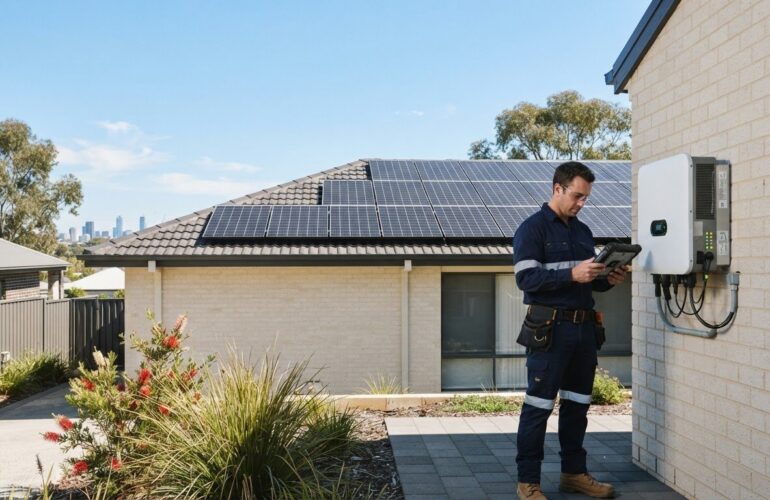
An inverter converts the direct current (DC) electricity generated by solar panels into alternating current (AC), which standard household appliances use. It sits between the panels and the home’s electrical system, helping solar power supply household loads and, where the system is designed for it, interact with the grid.
Choose an inverter for the system it needs to serve, not as a standalone item on a product page.
Use this four-point checklist before comparing models:
- System details: Note the panel capacity, panel layout and any existing solar equipment. These details affect how the inverter can be matched to the array.
- Connection type: Find out whether the property has a single-phase or three-phase electrical connection, if you can. The electrical setup helps narrow the inverter options.
- Future plans: Consider whether you may add a battery, expand the solar system or change how you use electricity. These plans can influence which inverter type makes sense.
- Buying route: Decide whether you’re sourcing an inverter on its own or having it included in a designed and installed solar solution. This determines how the wider system decisions will be coordinated.
What information to gather before you buy
For an upgrade or replacement, collect the existing inverter’s make and model, available technical details, panel information and any system documents. Include the property’s connection details and other solar equipment, such as a battery, if you have them. If a label or document is missing, record what you can identify rather than guessing. Also be clear whether the job is a new system, an upgrade or a replacement, because each involves different site and equipment requirements.
What an inverter does in a solar system
Solar panels generate electricity in a form household appliances can’t use directly. The inverter changes that DC supply into AC, so it can power everyday loads such as lights or a kettle. It also manages the system’s connection with the grid in line with the design and applicable requirements. For a plain-language overview of inverter types and functions, see Types of Solar Inverters.
Efficiency is useful when comparing equipment, but it isn’t the whole picture. Panel capacity, electrical setup, array layout and how you intend to use the system matter too. Assess these factors together rather than choosing on the basis of a single specification.
String, hybrid or microinverter: match the inverter type to your plans
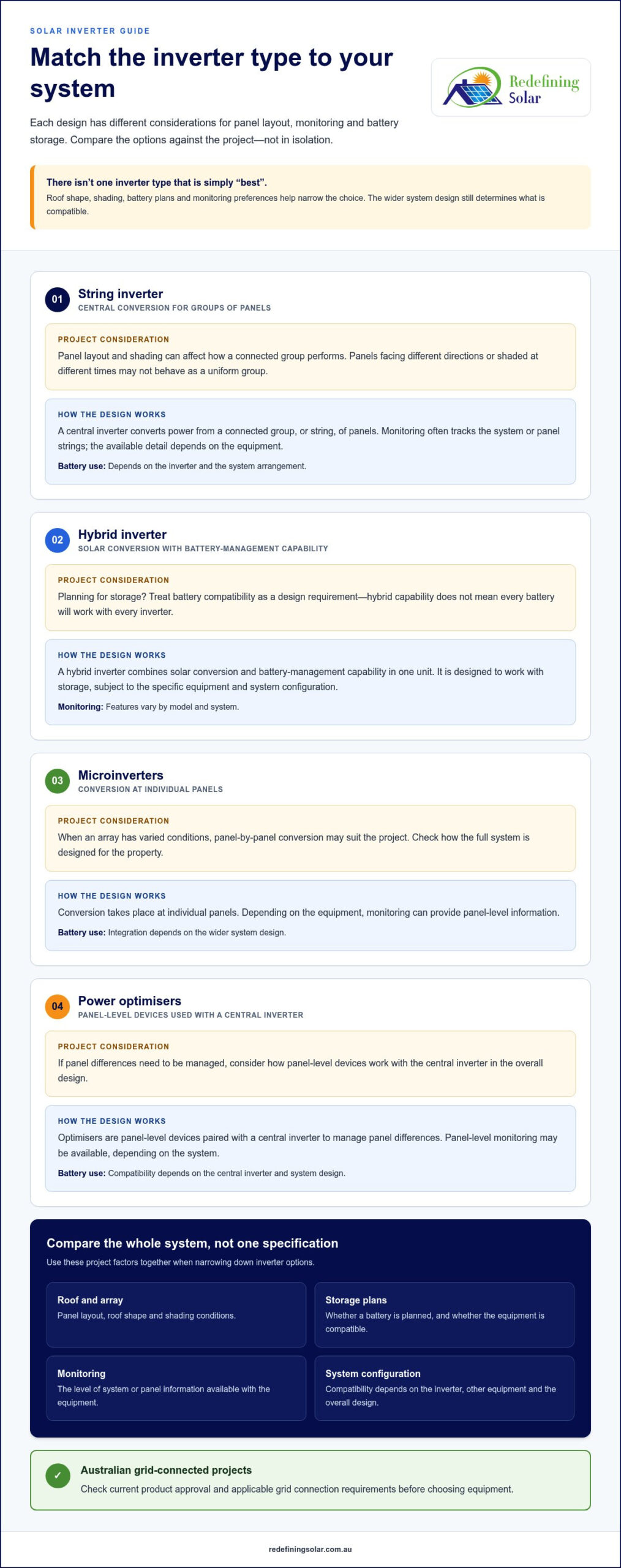
Inverter types aren’t simply better or worse; each suits different system layouts and priorities. Your roof shape, shading, battery plans and preferred approach to monitoring can help narrow the options. Use the comparison below as a starting point, then assess how each type fits the project as a whole.
| Type | System fit and design | Monitoring approach | Battery considerations |
|---|---|---|---|
| String inverter | Central unit connected to groups of panels; layout and shading can affect design. | Often tracks the system or panel strings; available detail depends on the equipment. | Battery use depends on the inverter and system arrangement. |
| Hybrid inverter | Combines solar conversion and battery-management capability in one inverter. | Monitoring features vary by model and system. | Designed to work with storage, but not automatically compatible with every battery. |
| Microinverters | Conversion takes place at individual panels; may suit arrays with varied conditions. | Can provide panel-level information, depending on the equipment. | Battery integration depends on the wider system design. |
| Power optimisers | Panel-level devices used with a central inverter to manage panel differences. | Panel-level monitoring may be available, depending on the system. | Battery compatibility remains dependent on the central inverter and system design. |
A standard grid-connected inverter converts solar power for household use and grid interaction; a hybrid inverter also has capability to manage battery storage. That capability doesn’t guarantee compatibility with a particular battery. Compatibility depends on the equipment and system configuration, so treat battery plans as a design requirement rather than an assumption.
When a string inverter may suit the project
A string inverter converts power from a connected group, or string, of panels at a central point. This is a common rooftop solar arrangement, but the array layout matters. Panels facing different directions or receiving shade at different times may not perform as a uniform group. The system design needs to account for those conditions rather than assuming one central inverter suits every roof.
When to consider hybrid or panel-level options
If battery storage is part of your plans, consider a hybrid inverter alongside the battery and the rest of the system. Microinverters convert power at individual panels, while optimisers manage panel-level conditions but work with a central inverter. These are different approaches, not interchangeable labels. For solar battery upgrade planning, consider the existing equipment and intended system together.
To buy solar inverters Australia with a sound basis for comparison, match the inverter type to your property, array layout and goals, then assess compatibility. Redefining Solar supplies inverters and provides solar design, installation, upgrades, maintenance and repairs. Explore solar inverter supply and system support as part of planning a complete solution.
Compare solar inverter specifications, compatibility and Australian requirements
Specifications are most useful when you relate them to the panels, electrical supply and site the inverter will serve. A higher capacity or efficiency rating doesn’t automatically make an inverter the right choice. If you’re comparing options after searching “buy solar inverters australia”, use these details to assess fit rather than treating product-page figures as a complete recommendation.
Which inverter specifications matter most?
Start with these points and consider the answers together. A suitable inverter needs to work with both the solar array and the property’s electrical setup.
- Rated output: This is the inverter’s rated power output, commonly stated in kilowatts. How does it relate to the planned panel array and the power the system is intended to supply?
- Phase: Inverters are designed for particular electrical connections. Is the property single-phase or three-phase, and does the proposed unit suit that supply?
- MPPT inputs: Maximum power point tracking (MPPT) helps the inverter manage the panel array’s electrical output. How many separate panel strings or different array conditions need to be managed?
- Efficiency: An efficiency rating indicates how effectively the inverter converts power under stated test conditions. How does it compare with other suitable options, and what does the full system design indicate?
- Monitoring: Monitoring can show information about system operation, but the level of detail varies. What information do you want to view, and what does the proposed setup provide?
Don’t choose capacity from the panel figure alone. The inverter’s rated output, panel design and electrical supply all need to be considered together. For example, an array split across roof sections can raise different design questions from a single, consistently oriented group of panels, even if their total panel capacity is similar.
Compatibility matters beyond headline efficiency: an efficient inverter still needs to suit the panels, electrical supply, system design and connection requirements.
Check product approval and system compatibility
Before settling on a model, check its current entry in the Clean Energy Council (CEC) approved product information. Approval status can change, so don’t rely on an old product sheet or a past listing. The CEC list is also relevant to Small-scale Technology Certificate eligibility, where applicable.
For new low-voltage grid-connected inverters, the current applicable standard is AS/NZS 4777.2:2020 Amendment 2:2024. The amendment became mandatory for these inverters on 23 August 2025. Confirm the exact product and project requirements against current information. A standard reference alone doesn’t establish that every installation detail is suitable.
Grid connection conditions can depend on the system and its location, including requirements set by the relevant distribution network service provider (DNSP). Export settings and connection approvals are project-specific, so consider the proposed inverter and system design against the applicable requirements. The model specifications need to line up with the installation, not just look strong in a catalogue.
Supply-only or installed: choose the buying route that fits your project
Choosing an inverter is only part of the purchase decision. You’ll also need a plan for how it fits the rest of the system, how it will be installed and how applicable connection requirements will be handled. The right buying route depends on how much coordination you’ve already completed and whether you’re upgrading existing equipment or planning a complete solar system.
With supply-only purchasing, you source the inverter and organise the project details around it. With an installed solution, the inverter is selected as part of a broader design alongside the panels, electrical setup and installation work. Neither route is automatically right for every buyer. Be clear about who is responsible for each part of the process.
When supply-only inverter buying may fit
Supply-only can suit you if you already have an installation plan and the technical information needed to select compatible equipment. Before ordering, gather details about your panel arrangement, existing system components, property connection and intended use. This helps you assess the inverter as part of the system, not just from its product description.
Plan the next steps as carefully as the product choice. Consider compatibility alongside the installation method and applicable grid connection requirements. If the inverter is for a replacement or upgrade, check how it relates to the existing panels and equipment. Redefining Solar supplies solar inverters and solar equipment, helping you source what you need while keeping system fit central to the decision.
When a complete solar solution may be more practical
If you’re planning a new system or want one team to coordinate the main components, a designed and installed solution may be a more straightforward route. Inverter selection can then be considered alongside panel capacity and layout, the property’s electrical setup and any future battery plans. This joined-up view makes responsibilities clearer than treating each item as a separate purchase.
Redefining Solar brings solar design, equipment supply and installation together for residential and commercial projects. The business is Australian-owned and operated, and directed by a licensed electrician. This approach also connects the inverter choice to the wider system and to ongoing maintenance and repairs.
For a residential project, the residential solar installation guide can help you think through the broader system decision. If you’re weighing an inverter purchase against a complete solution, explore Redefining Solar’s solar solutions and consider which route best matches your project, preparation and support needs.
Buy your solar inverter with a clear plan for installation and support
A good purchase decision involves more than choosing a unit. Before you buy solar inverters Australia, map out how the inverter will fit your existing equipment or planned system, who will coordinate the work and what support may be useful afterwards.
Use this four-step action plan to move from comparing options to a practical next step:
- Gather system details. Collect available panel information, system documents and the existing inverter’s make and model if you’re upgrading or replacing equipment.
- Clarify future needs. Note whether you’re considering battery storage, more panels or another system upgrade, so these plans can inform the equipment decision.
- Choose your buying route. Decide whether supply-only suits your preparation or whether you’d prefer the inverter to be part of a designed and installed solar solution.
- Arrange the next steps. Plan how installation, system checks and grid connection requirements will be handled. These depend on the project and the rules that apply at the time.
What to prepare before discussing an inverter purchase
Bring together the information you already have; you don’t need to delay because one detail is missing. Useful items include system documents, inverter details, panel specifications and notes about existing solar equipment. Add relevant site and electrical information, such as the property’s connection type if known. Be ready to explain whether this is a new system, a replacement or an upgrade, and whether battery storage is part of your plans.
How Redefining Solar supports your next step
Redefining Solar supplies solar inverters and provides solar system design and installation. If your plans include storage or ongoing system care, battery-ready upgrades, solar batteries, maintenance and repairs are also available. The business is Australian-owned and operated, and directed by a licensed electrician. This practical experience supports a considered approach to matching equipment with the wider project.
Installation and grid connection requirements can vary with the system and its location, so include them in your planning from the start. Whether you’re replacing an inverter or developing a new solar system, clear information helps shape the discussion and next steps.
Ready to talk through your plans? Discuss your solar project with Redefining Solar and take the next step with your system details and future needs in hand.
Take the next step with confidence
Your shortlist is more useful when assessed against how you want your solar system to serve you over time. If you’re ready to buy solar inverters Australia, use your project details to start a practical discussion about equipment, installation and ongoing care instead of deciding from a product listing alone.
Redefining Solar is an Australian-owned and operated business directed by a licensed electrician. From inverter supply to solar installation, upgrades, maintenance and repairs, the focus is on helping you move forward with support that fits your project.
Discuss your solar inverter requirements with Redefining Solar and take the next step with a clearer plan. Start with a straightforward conversation about what you need now and what you may want from your system in the future.
Frequently Asked Questions
Can I buy a solar inverter without buying solar panels?
Yes. You can buy an inverter separately, including for a replacement or upgrade, but it still needs to suit the panels and other equipment already in place. Before ordering, record the existing inverter model and gather available panel and system information. If you’re planning a new array, choose the inverter as part of its design. Redefining Solar supplies inverters and solar equipment, with installation and system support also available.
How do I know what size solar inverter I need?
There isn’t one inverter size that suits every property. Selection depends on the planned panel array, electrical connection and intended system use, so avoid choosing from panel capacity alone. For example, an existing system with panels arranged across different roof faces may need a different design assessment from a new, uniform array. Gather panel specifications and property connection details so the system can be assessed as a whole.
Are hybrid inverters compatible with every solar battery?
No. A hybrid inverter’s battery capability doesn’t mean it will work with every battery. Compatibility depends on the particular inverter and battery, their supported operating arrangements and the system design. If you already own a battery, have its make and model available when planning an inverter change. If you’re buying both, consider them together rather than assuming products labelled “hybrid” and “battery” will automatically pair.
Can a solar inverter power my home during a grid outage?
Not necessarily. A standard grid-connected system generally stops supplying power during an outage, even if sunlight is reaching the panels, to avoid sending electricity into a grid that may be under repair. Backup power requires a system designed and configured for that purpose, and may depend on a compatible battery and specific backup equipment. Check which circuits the design would support, as backup capability doesn’t always mean the whole home can run.
Do solar inverters need to meet Australian approval requirements?
Yes. New low-voltage grid-connected inverters in Australia must meet the applicable requirements, including AS/NZS 4777.2:2020 Amendment 2:2024, mandatory for these inverters from 23 August 2025. Check the current Clean Energy Council approved product information for the exact model, as approval status can change. Grid connection requirements can also depend on the project and relevant distribution network service provider, so approval alone doesn’t cover every connection detail.
What should I do if my solar inverter is showing a fault?
Record the fault message or code and note when it appeared, then consult the inverter’s user information for safe guidance. Don’t remove covers or handle internal wiring. If there’s visible damage, a burning smell or unusual heat, keep clear of the equipment and arrange professional attention. A fault may relate to the inverter or another part of the system, so provide the model, code and any recent changes when arranging solar maintenance or repairs.
[…] the guide Solar Inverter Replacement: An Australian Buyer’s Guide can help you explore the questions involved in buying a solar inverter in Australia. Replacement and repair are different considerations, and a warning by itself doesn’t determine […]