A high-efficiency panel isn’t automatically the best solar choice for your roof. Monocrystalline silicon solar panels are widely used in Australia, but the headline efficiency figure only tells part of the story. Your system’s performance also depends on roof space, shading, the inverter and when you use electricity.
If panel specifications feel full of unfamiliar terms, you’re not alone. Marketing can make small differences sound decisive, while Australian conditions such as heat and changing household usage raise practical questions about how a system will work day to day.
This guide explains how monocrystalline cells turn sunlight into electricity and what can affect their real-world output. You’ll learn how to compare panel technologies, assess specifications and consider how the inverter and any future battery fit into a complete solar system. The aim is to help you look beyond a single efficiency number and judge whether a system suits your property.
Key Takeaways
- Understand how monocrystalline silicon solar panels use photovoltaic cells to turn sunlight into electricity, and how cells differ from a finished panel.
- See why the way cells are made is only part of the story, with cell architecture and panel design also shaping the final module.
- Compare monocrystalline, polycrystalline and thin-film panels by their structure, form and practical trade-offs.
- Assess panel options against your energy use and roof conditions, then consider whether limited roof space makes efficiency more important.
- Look beyond the panels to see how the inverter, mounting, electrical design and any battery work together in a complete solar system.
What are monocrystalline silicon solar panels, and how do they work?
Monocrystalline silicon solar panels use cells made from silicon formed into a single crystal structure. Silicon can conduct electricity under the right conditions. In each photovoltaic cell, sunlight triggers an electrical response that produces direct-current (DC) electricity. Multiple cells are connected and protected within a finished panel, also called a module.
In plain English, a monocrystalline solar panel is a group of single-crystal silicon cells that converts sunlight into DC electricity, ready for an inverter to convert into electricity used around your property.
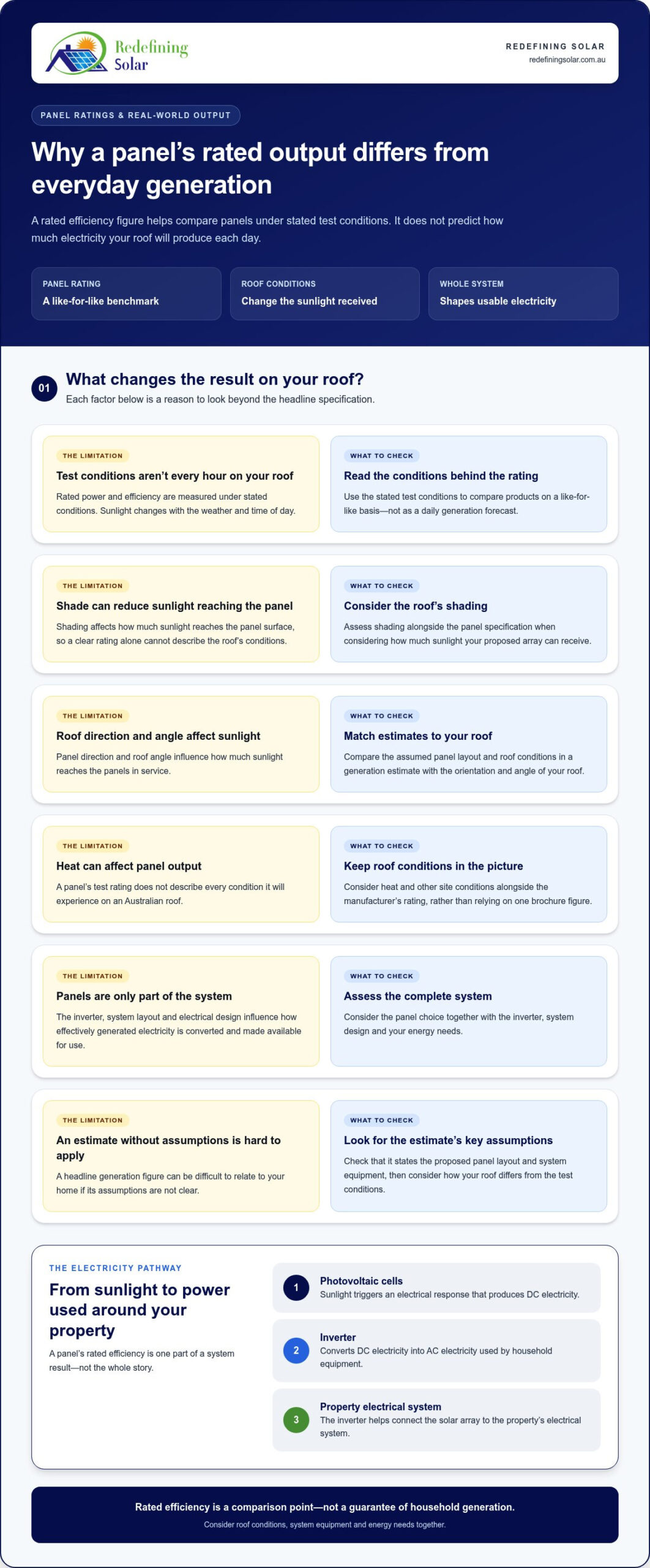
Panel efficiency describes the share of sunlight converted into electricity under stated test conditions. It helps compare panels on a like-for-like basis, but it doesn’t predict how much electricity your roof will produce each day. Actual output also depends on sunlight, temperature, shading, roof direction and the rest of the system.
What does monocrystalline silicon mean?
“Monocrystalline” refers to the structure of the silicon inside the cell: its atoms form one continuous crystal rather than many small crystal grains. This describes the cell material, not a guarantee of a particular panel’s quality. The Monocrystalline silicon overview explains the material and its use in solar cells.
The term also doesn’t simply mean “black panel”. Monocrystalline cells often appear dark, but a panel’s colour or finish alone can’t tell you how it’s made or how it will perform. Check the product specifications and consider how the complete system suits your property.
How does sunlight become usable electricity?
When sunlight reaches a photovoltaic cell, its energy causes an electrical response in the silicon. The cell’s internal structure helps direct the resulting flow of electrons, creating DC electricity. Cells are wired together inside the module so their output can be gathered and connected to the rest of a solar system.
The panel generates DC electricity, but it doesn’t make that electricity suitable for the usual appliances and circuits in your home. An inverter converts DC into alternating-current (AC) electricity, the form typically used by household equipment. The inverter also helps connect the solar array to the property’s electrical system.
Keep the terms distinct when reading specifications: cells are the individual electricity-producing units, while the module is the completed panel containing connected cells. A system brings panels together with an inverter, mounting and electrical components. A panel’s rated efficiency describes performance under stated test conditions, not the whole system’s real-world result. Consider it alongside roof conditions, inverter choice and your energy needs.
How monocrystalline solar cells are made and what affects their output
The silicon crystal is only the starting point. How manufacturers shape it into cells, build those cells into a panel and connect the finished equipment all influence the product’s specifications and the electricity a system produces.
From silicon crystal to finished solar panel
Manufacturing generally begins with purified silicon, which is melted and formed into a crystal. For monocrystalline cells, the material is grown as a single crystal structure, then cut into thin wafers. Those wafers are processed to create working solar cells, with electrical contacts that collect the current generated by sunlight. The precise steps can differ between manufacturers and cell designs.
Cells are then joined together and built into a module. Protective layers help shield them from the elements, electrical connections carry their output, and a frame supports the assembled panel. Cell architecture, materials and construction all matter, so two panels made from monocrystalline silicon can have different specifications and design features. The silicon type alone doesn’t describe the whole product.
Why rated output differs from everyday generation
A panel’s rated power and efficiency are measured under stated test conditions, which allow products to be compared consistently. Those conditions aren’t the same as every hour on an Australian roof. In service, available sunlight changes with the weather and time of day. Panel direction, roof angle and shading also affect how much sunlight reaches the surface.
Heat can affect a panel’s output too. The inverter, system layout and electrical design influence how effectively the generated electricity is converted and made available for use. Assess the panel and the conditions on your roof together, rather than relying on a single brochure figure.
A panel’s rated efficiency is not a guarantee of how much energy your household will generate.
For a practical comparison, read the manufacturer’s rating alongside the conditions it’s based on. Then consider how your roof’s orientation, angle and shading differ from those test conditions. A generation estimate should also state its assumptions, such as the proposed panel layout and system equipment. Without those details, a headline figure can be hard to apply to your home.
This is where system design brings the specifications back to your property. Redefining Solar’s solar system design and installation considers panel choice alongside roof conditions, inverter selection and energy needs, translating product ratings into a system planned for the site.
Monocrystalline vs polycrystalline vs thin-film: what is the difference?
These terms describe how photovoltaic cells are made, not a simple ranking from best to worst. Monocrystalline and polycrystalline panels both use silicon, but their crystal structures differ. Thin-film panels use another approach, with photovoltaic material applied in thin layers. The practical choice depends on the specific product and the property it needs to serve.
Compare the main panel technologies
| Technology | Material structure | Typical form | Efficiency and trade-offs |
|---|---|---|---|
| Monocrystalline silicon | Cells use silicon formed as a single continuous crystal structure. | Usually supplied as rigid, framed panels. | Often offers higher efficiency than conventional polycrystalline panels, which can make it useful where roof space is limited. Specifications still vary between products. |
| Polycrystalline silicon | Cells are made from silicon containing many crystal grains rather than one continuous crystal. | Commonly supplied as rigid, framed panels. | Efficiency depends on the particular panel. Compare rated output and dimensions with current monocrystalline options rather than assuming the cell type alone determines value. |
| Thin-film | Photovoltaic material is formed in thin layers on a supporting surface. The material and construction vary between products. | May be rigid or, in some product designs, flexible or lightweight. | Performance, weight and installation requirements are product-specific. A different form factor may suit some applications, but it doesn’t automatically make thin-film a better roof choice. |
What the differences mean for your property
Monocrystalline cells have a consistent single-crystal structure. Polycrystalline cells contain multiple crystal grains, so their internal structure differs. The label doesn’t tell you everything you need to know, though. Cell design, panel dimensions and electrical characteristics also affect how much capacity can fit on a roof and how a panel works as part of a system.
Where usable roof area is restricted, a panel with higher rated output for its physical size may help make better use of the space. If roof area is less constrained, layout, shading and expected system output may matter more. Compare product specifications on the same basis, including rated power, dimensions and efficiency, rather than relying on the technology label alone.
Thin-film is a distinct photovoltaic technology, not one uniform category of panel. Some products are designed for applications where a lighter or more flexible format is useful, while others have different construction and installation needs. Check the actual product’s dimensions, rated output, mounting requirements and suitability for the proposed location.
There’s no universal winner. When weighing up monocrystalline silicon solar panels against other options, consider available roof space, budget, product quality and the design of the complete system. Cell type is a useful starting point, but the meaningful comparison is between products that suit your property and energy needs.
How to assess monocrystalline panels for your Australian property
Start with your household’s needs and the roof you have, not a brand name or headline efficiency rating. A suitable panel choice depends on how much electricity you use, when you use it and what the site can accommodate. Australian conditions vary widely, so a design suited to one property may not suit another.
- Review your energy use. Look at your electricity bills and note when your household uses the most power. Daytime demand, evening use and plans to add major appliances can all affect system size and whether a battery may be useful later.
- Assess usable roof space. Consider which roof areas could take panels, including their orientation, tilt and any obstacles. Where space is tight, panel efficiency and dimensions become more relevant because they affect how much rated capacity may fit. Efficiency is still only one part of the comparison.
- Account for shade and local conditions. Trees, nearby buildings and roof features may cast shadows at different times of day. A site-specific assessment can consider how these affect the proposed layout, along with sunlight and temperature conditions. Don’t assume a panel type alone tells you how well it will suit your roof.
- Compare specifications on equal terms. Read manufacturer datasheets for rated power, efficiency, physical dimensions and temperature characteristics. These figures describe different things: rated power indicates output under stated test conditions, dimensions show the space required, and temperature characteristics help explain how output responds to heat. Compare like-for-like products and note the test conditions behind each rating.
- Check the inverter and future plans. The inverter must suit the panel array and the property’s electrical design. If you may add a battery, consider how the inverter setup and system design can accommodate that plan. Explore solar system options for your property with panel choice, roof conditions and future requirements considered together.
This sequence puts monocrystalline silicon solar panels in context. A high-rated panel may be a sensible option where roof area is limited, but its value depends on the layout, shading, inverter and how closely the system matches your energy use. Manufacturer figures help compare equipment; a site-specific design assesses how it could work on your property.
For more background as you plan, use a residential solar system installation guide to understand wider homeowner decisions, and consider battery-ready solar system planning if storage may be a future requirement. These topics help frame the questions to resolve before settling on panel specifications.
What monocrystalline panels mean for a complete solar system
Choosing monocrystalline panels is one part of planning solar for your property. The panels generate electricity, but the inverter, mounting, electrical design and any battery all influence how the system operates. Match these components to your energy use and site rather than selecting panels in isolation.
Panels, inverters and future battery options
Panels produce direct-current (DC) electricity. The inverter converts that output into alternating-current (AC) electricity, which household appliances typically use and which connects to your property’s electrical system. Its capacity and compatibility need to suit the panel array and the system design.
A battery can store surplus solar electricity for use at another time, but battery readiness isn’t an automatic feature of monocrystalline silicon solar panels. It depends on the inverter, system configuration and equipment selected. If you’re considering storage now or later, include that requirement in the design process so the system components can be selected with that future use in mind.
Design, installation and ongoing system care
A suitable design accounts for your roof’s usable areas, orientation and shading, along with household electricity use and plans that could change demand. Mounting and electrical design also need to work with the roof and selected equipment. These considerations turn panel specifications into a layout and system suited to the property, rather than relying on rated output alone.
Professional installation brings the planned components together on site. Panel positioning, connections and compatibility with the inverter affect how the system is configured to operate. A clear design also helps you understand what equipment is included and how it relates to your needs.
Once installed, a solar system may need maintenance or repairs over time. Redefining Solar provides maintenance and repair services for residential and commercial solar systems. No panel type can guarantee a particular bill reduction, generation level or payback period; those outcomes depend on the property, energy use, system design and operating conditions.
For businesses planning a larger installation, system requirements and energy use may differ from a household project, so commercial system design deserves its own assessment. Whether residential or commercial, consider the panels as part of a complete system, with equipment and design shaped around the site and your plans.
To discuss a system designed around your property and energy needs, explore solar system design and installation with Redefining Solar.
Take the next step towards a solar plan that fits
Your next move doesn’t have to be choosing a panel straight away. Start by thinking about what you want your solar system to do for your household or business, now and as your needs change. That gives the design process a useful focus and keeps specifications in perspective. Monocrystalline silicon solar panels may suit your property, but the right system begins with your priorities and the site itself.
Redefining Solar is Australian-owned and operated, and directed by a licensed electrician. The team provides residential and commercial solar design, equipment supply and installation nationally, as well as solar panel supply, maintenance and repairs. Its services bring the technical choices together in a system plan suited to the property.
Ready to explore a solar system for your property? Discuss solar system design and installation with Redefining Solar.
Frequently Asked Questions
What are monocrystalline silicon solar panels?
Monocrystalline silicon solar panels use photovoltaic cells made from silicon arranged in a single-crystal structure. The cells generate direct-current electricity from sunlight, which an inverter converts for typical property use. To identify a specific panel, find its model number on the product label and match it to the manufacturer’s datasheet. Confirm the listed cell technology and compare specifications for the same model, rather than relying on a general product description.
Are monocrystalline solar panels more efficient than polycrystalline panels?
Monocrystalline panels are often associated with higher module efficiency, but there’s no universal result across every product. Compare manufacturer datasheets using the same test conditions, and look at rated power alongside each panel’s dimensions. If available roof area is limited, output relative to panel size may matter more to your layout. Shading, roof space and system design still affect which option is suitable.
Do monocrystalline solar panels work on cloudy days?
Yes, they can generate electricity in diffuse daylight, though output is generally lower than in strong direct sunlight. A cloudy afternoon won’t tell you how much your system can produce over a longer period, because cloud cover changes and other site factors affect output too. Assess a proposed system using a generation estimate based on your roof and stated assumptions, not a single day’s weather or a broad rule of thumb.
Are black solar panels always monocrystalline?
No. A dark appearance may be common in monocrystalline panels, but colour alone can’t confirm cell technology or product quality. Frame colour, backing and overall panel design can change how a product looks, so panels with similar appearances may have different specifications. Check the model details and manufacturer’s datasheet, which should identify the cell technology and provide information such as rated power and panel dimensions.
Do monocrystalline panels work in hot Australian weather?
Yes, they can operate in hot conditions, but temperature can affect a panel’s output. The size of that effect depends on the product’s temperature characteristics and the conditions at the installation site. Check the manufacturer’s datasheet for temperature-related specifications and consider how the panels will be installed and ventilated. Rated output isn’t a promise of continuous generation in every season or temperature, so use site-specific system planning.
Can monocrystalline solar panels be recycled in Australia?
Some panel materials may be recovered or processed through suitable recycling pathways, but options depend on the panel and services available where you live. Don’t place old panels in ordinary household recycling or dismantle them yourself. Before replacing or disposing of a system, check current guidance from your state or territory waste authority or local council. Follow their directions for handling and transport, particularly if panels are damaged.
How can I tell whether a solar panel is monocrystalline?
Check the panel’s model information and manufacturer’s datasheet for its cell technology. Appearance may offer a clue, but it isn’t conclusive because finishes and designs vary. The datasheet can also help you compare rated power, efficiency and dimensions under stated test conditions. If you’re looking at a quote or product listing, match the model number to the documentation so you’re comparing the exact panel, not just a broad category.