Electricity accounts for almost two-thirds of the average Australian household’s emissions, so switching some of your power use to rooftop solar can make a meaningful difference. If you want to reduce your carbon footprint with solar energy, the key is how much solar electricity your home uses instead of drawing power from the grid.
It’s also worth weighing the environmental benefits against the cost and practicalities of installation. Solar can reduce emissions from household electricity, but it won’t erase the impact of transport, food or other parts of your lifestyle.
This guide explains how solar generation and battery storage affect your household footprint, what installation costs depend on, and how solar adoption in Australia fits into the wider picture of ecological footprints. You’ll also see why using more of your system’s electricity at home matters when considering both emissions and energy costs.
Key Takeaways
- Solar can lower emissions from household electricity by replacing some grid power with renewable energy, especially when you use electricity while your system is generating.
- Installation costs depend on the system design and whether you add a battery; storage can help you use more of your own solar electricity later.
- Solar adoption is growing across Australia, while fossil fuels still supply around three-quarters of the country’s total energy.
- Your ecological footprint includes more than electricity, so consider how solar fits alongside the energy used for transport, food and travel.
1. How much can solar panels reduce your carbon footprint?
Rooftop solar can help reduce household emissions when the electricity it generates is used at home instead of electricity from the grid. A green electricity plan can support renewable sources through your electricity supply, while rooftop panels generate power directly at home. Which option makes the bigger difference depends on your household’s usage, solar generation and plan. Solar is especially useful when you can use electricity during daylight hours.
How much can rooftop solar reduce a household’s carbon footprint in Australia? It depends on the electricity your system generates and how much your home uses. A typical 6.6 kW system can produce around 25 kWh per day. A 10 kW system in the example produces about 40 kWh daily, which could avoid around 47.2 kilograms of carbon dioxide per day when replacing coal-fired electricity. That example equates to an estimated 17 tonnes per year.
There isn’t one fixed emissions figure for every kilowatt hour on Australia’s grid, because electricity sources and generation vary. The research estimate for a coal-fired power station is 1.18 kilograms of carbon dioxide per kilowatt hour. It’s a useful illustration of how replacing coal-fired electricity with solar can avoid emissions, not a universal grid average.
A solar professional sizes a system by assessing your electricity use, roof conditions and when you use power. An average four-person Australian home uses around 20 kWh daily, while a home running a pool pump, split systems or an electric vehicle can reach 40 kWh. These examples help frame the assessment, rather than dictate the right system for every home.
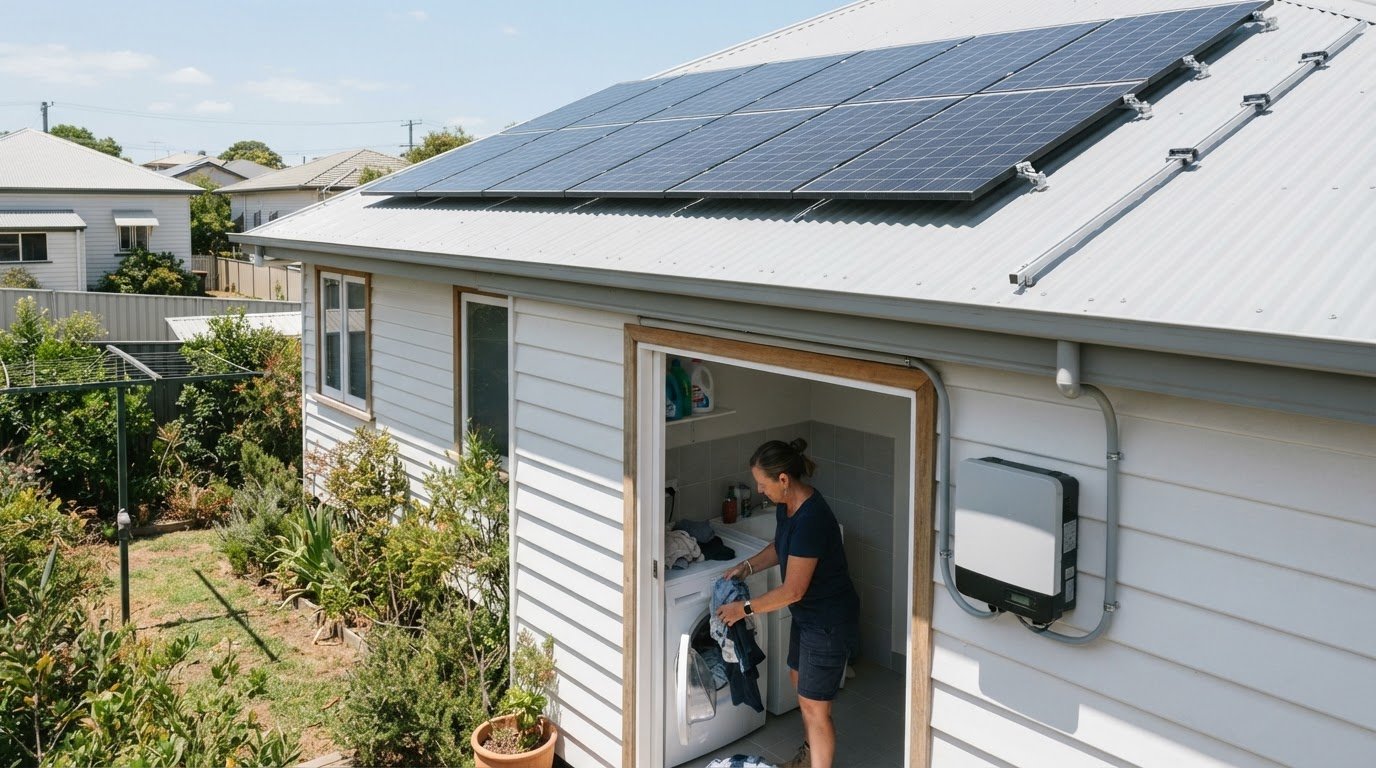
Solar generation can supply daytime appliances, helping you use more of your own electricity and buy less from the grid. Your household’s electricity matters: it accounts for almost two-thirds of average household emissions. Australia’s per-person emissions are 16.31 tonnes. Transport also contributes; electric vehicles have much lower emissions than conventional cars, even on grids not fully powered by renewable sources, and can save 3-4 tonnes per year depending on charging energy.
2. Solar energy installation costs and economic viability
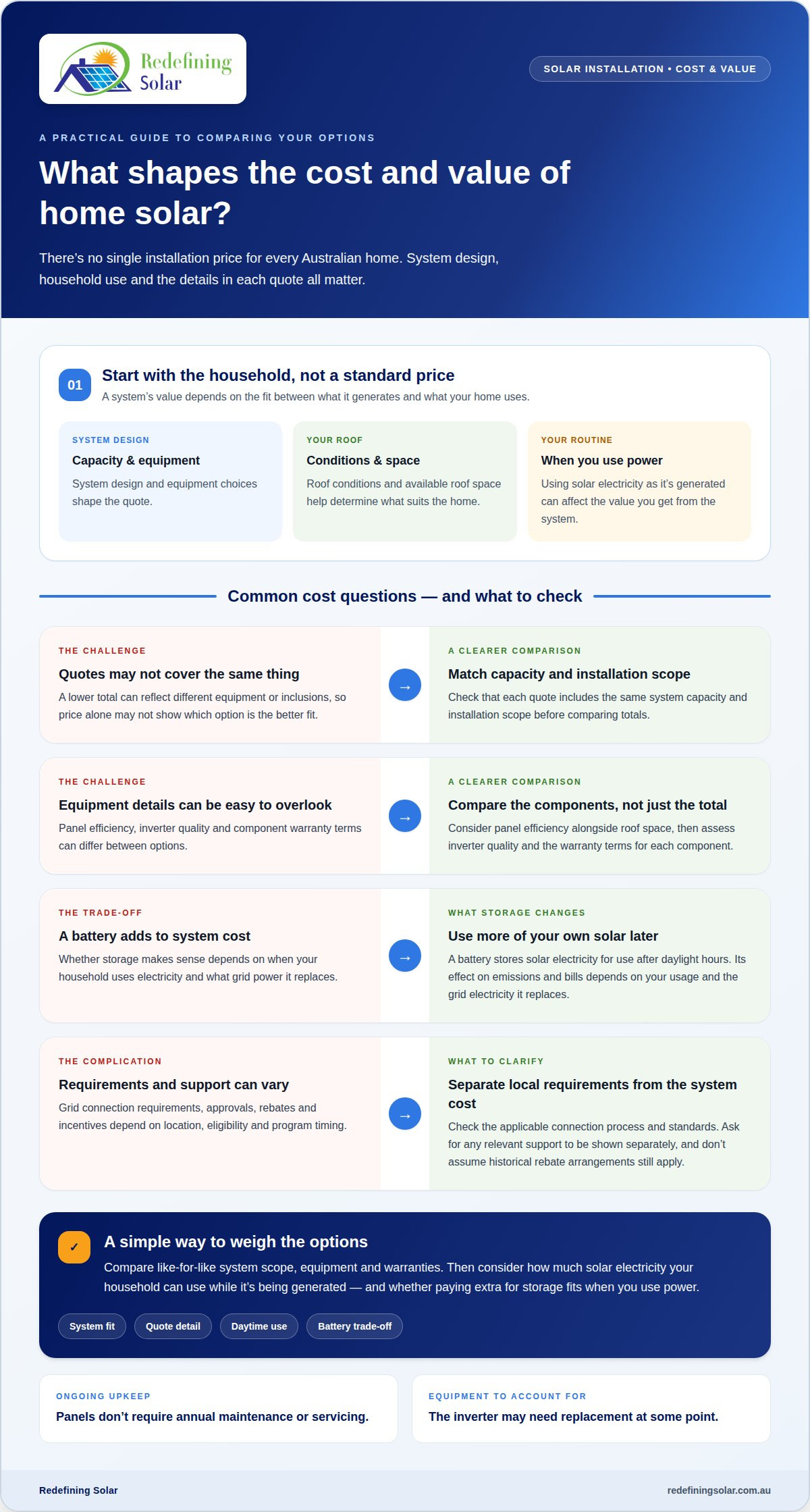
There’s no single installation price that suits every Australian home. System design, roof conditions, equipment and battery choice all shape the quote. The value also depends on your electricity consumption and how much solar power you use as it’s generated. A system suited to your household’s routines can help you use more of its renewable energy.
Compare quotes by checking that each covers the same system capacity and installation scope. Consider panel efficiency alongside available roof space, then assess inverter quality and the warranty terms for each component. A lower total may reflect different equipment or inclusions, so compare the details rather than price alone. This gives you a clearer basis for weighing environmental goals against household costs.
For residential solar in Australia, the relevant approvals and grid-connection process depend on your location and system. Installation must account for the local electricity network’s connection requirements and applicable standards. Redefining Solar handles grid-connection approvals and required permits as part of its solar installations.
Rebates, certificates and state incentives can change with location, eligibility and program timing. Ask for any applicable support to be shown separately from the system cost, so you can understand how it affects your outlay. An older rebate schedule noted reductions for systems installed from 1 January 2022, so historical incentives shouldn’t be assumed to reflect current arrangements.
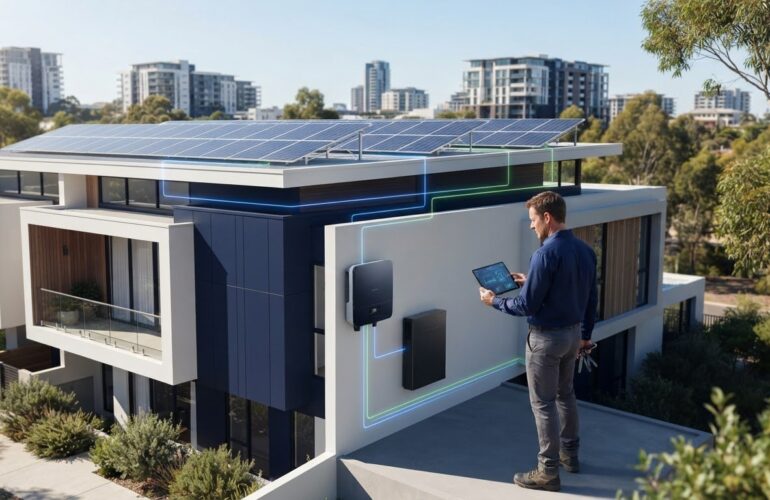
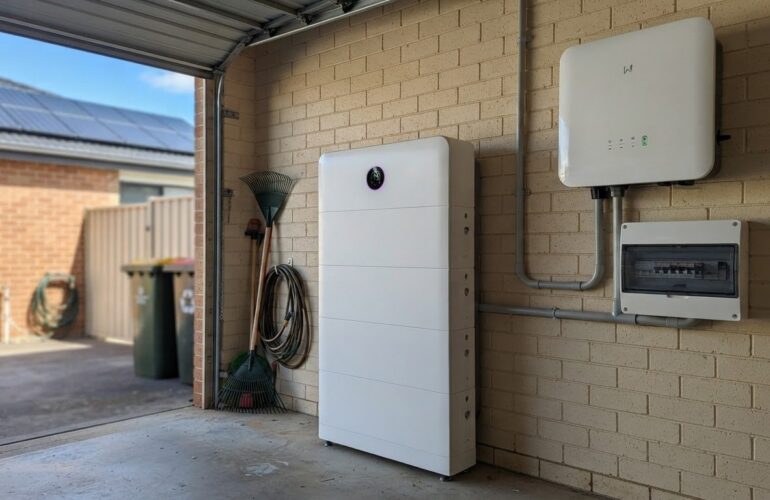
A battery adds to the system cost but stores solar electricity for later, helping you use more of your own generation after daylight hours. Its effect on emissions and bills depends on when you consume power and what grid electricity it replaces. Solar panels don’t require annual maintenance or servicing, though the inverter may need replacement at some point. For a tailored system, explore residential solar system options.
3. Green energy adoption in Australia
Australia’s energy transition is a practical part of responding to climate change and reducing greenhouse gas emissions. Around three-quarters of the country’s total energy still comes from fossil fuels, so expanding renewable sources matters across electricity, transport and industry. Solar gives homes and businesses another energy source, while wider adoption also depends on changes to the grid and how energy is used.
Victoria has set a target of reaching net zero emissions by 2045, and more than 700,000 Victorian households already have solar. Those figures show how household systems contribute to a wider shift, rather than acting as a complete answer on their own. Rooftop generation can supply power where it’s used, while grid-scale changes and lower-emissions transport address other parts of Australia’s energy use.
Household batteries can extend the benefits of solar beyond the hours of generation. A battery stores surplus electricity for later, and connecting it to a virtual power plant can allow stored power to be shared with the community during periods of high demand. This can help support grid stability as renewable generation becomes a larger part of Australia’s electricity mix.
Some locations also offer energy plans that let customers choose renewable sources such as wind and solar. These plans provide another way for households to support cleaner electricity generation. The practical choice depends on your location, available plans and how your household uses power. Solar and renewable plans can complement each other.
Manufacturing contributes to solar’s environmental footprint because making panels requires energy before they generate electricity. Solar panels typically take two years after installation to recover the energy used to make them. Considering both this initial impact and the electricity generated over time gives a fuller view of solar’s contribution to sustainability and Australia’s climate goals.
4. Solar energy and ecological footprints
An ecological footprint covers more than household electricity. It also reflects the resources and energy used for transport, food, manufacturing and the products we buy. Switching to renewable energy can reduce emissions from electricity, but it won’t remove these other impacts. Solar is one practical part of a broader effort to rely less on fossil fuels.
Solar panels have a manufacturing footprint before they generate power. Their lifecycle emissions are stated to be 95% lower than coal’s, and panels may perform effectively for 30 years or longer. The useful comparison is therefore not only the materials used upfront, but also the emissions avoided as solar electricity replaces fossil-fuel generation over the system’s working life.
Installation also involves transporting equipment and fitting it to a suitable property. A well-sized system can make effective use of your roof and the electricity your household consumes. Using more solar power while it’s being generated helps reduce grid demand; a battery can store surplus generation for later, including at night.
End-of-life handling matters too. In Australia, solar panels can currently be disposed of with standard e-waste. This gives households a disposal route, while the broader ecological picture still depends on how equipment is managed and recovered. Consider the system’s expected working life and end-of-life arrangements when planning, rather than judging its impact by panel production alone.
Transport choices can further reduce a household footprint. An electric vehicle has much lower emissions than a conventional car, even on a grid that isn’t fully renewable, and charging it with solar can link cleaner household electricity with lower-emissions travel. The clearest takeaway is to consider both the source of your power and how you use it. To plan a solar system around your household’s energy use, talk with Redefining Solar.
Redefining Solar
Redefining Solar can help you turn lower-emissions energy goals into a solar plan that fits your property and electricity use. For a home or business, the right system depends on factors such as when you use power and how much you want to generate onsite. Options include residential and commercial solar systems, battery-ready upgrades, and solar panel supply only. If you’re planning ahead, battery readiness can help shape a system around future storage needs. A clear discussion of your priorities can help narrow the practical choices without losing sight of the environmental aim: using more renewable electricity and relying less on fossil-fuel generation. For guidance on the next step, contact Redefining Solar.
Make your next energy decision with confidence
Your next step is to decide what you want a solar system to do for your property. Consider whether your priority is planning for future battery storage, supplying daytime electricity or supporting a business’s energy needs. That gives your solar designer a practical starting point for shaping a suitable system.
If you’re looking to reduce your carbon footprint with solar energy, Redefining Solar can help you plan a suitable system for your home or business. Services include residential and commercial solar systems, battery-ready upgrades and solar panel supply only. The right fit depends on your property, electricity use and plans for using solar power.
You don’t need to have every detail worked out before starting a conversation. Contact Redefining Solar today to discuss your solar plans and take a considered next step towards using more renewable energy.
Frequently Asked Questions
How much can solar panels reduce your carbon footprint?
The reduction depends on how much solar electricity replaces grid power in your home. If you’re asking, “How can I reduce my carbon footprint with solar energy?”, start by considering your daytime electricity use and whether solar generation can meet it. Roof conditions, system design and household habits also affect the result. Solar reduces electricity-related emissions, not emissions from every part of your lifestyle.
Can you monitor how much electricity you use vs how much you export?
Suitable solar monitoring can show generation, household consumption and electricity exported to the grid as separate figures. This can help you spot patterns, such as exporting surplus power during the day while using more electricity in the evening. The information available depends on the monitoring equipment and system setup. Reviewing these figures can help you understand when your home uses solar directly.
Have a question about solar + battery?
A battery stores surplus solar electricity for use later, such as after sunset. Redefining Solar supplies solar batteries and battery-ready upgrades to suit different stages of a solar plan. A battery-ready system lets you plan for storage without adding a battery straight away. Your household’s evening and overnight electricity use can help show how stored energy might fit your routine.
Is solar power CO2 free?
Solar panels don’t produce carbon dioxide while generating electricity, but solar power isn’t emissions-free across its full lifecycle. Manufacturing, transport, installation and end-of-life handling all have environmental effects. A fuller assessment considers the system’s overall impact alongside the emissions from other electricity sources it displaces. Panel operation is only one part of that comparison.
What are the CO2 savings for a family home?
There isn’t one fixed saving for every family home, because household use and solar generation vary. A typical household breakdown puts energy consumption at 7 tonnes of carbon dioxide, within an estimated 24 tonnes of household emissions overall. Solar can reduce the electricity portion when its output replaces grid power. Transport, food and other activities contribute separately to a household’s footprint.
What’s the main benefit of owning solar panels?
The main benefit is generating electricity at your property, giving you the opportunity to use some of your own power rather than relying entirely on grid supply. If you’re thinking, “I want to reduce my carbon footprint with solar energy,” using solar-generated electricity at home is a practical starting point. Your system’s output and household habits shape how much power you use directly.