A grid-connected solar system switches off when the electricity network fails, even if its panels are still producing power. Blackout proofing your home with solar and a battery requires backup capability that safely disconnects your home from the grid and supplies selected circuits.
Adding a battery alone doesn’t guarantee power during an outage. The inverter, backup switching and circuits must work together, while the battery’s available energy determines how long essential appliances can run. Once the outage ends, the battery may need recharging before it can provide backup again.
This guide explains why solar shuts down, how to plan backup around your electricity needs and what affects battery runtime. It also covers compatibility with existing panels, so you can understand which parts of your current system may work with backup and what to consider for reliable essential power.
Key Takeaways
- Backup changeover varies by system, from a few milliseconds to up to 30 seconds. Include the changeover behaviour and backed-up circuits in your planning.
- List the essential appliances you need during an outage and prioritise them, so battery capacity is matched to likely use.
- Battery runtime depends on its usable charge, appliance demand and whether solar can recharge it during daylight. Reducing non-essential use can help conserve stored power.
- Existing panels may be compatible, but the inverter and backup hardware matter too. A system assessment can clarify what can be retained and what may need upgrading.
WHY DO SOLAR SYSTEMS SWITCH OFF DURING A BLACKOUT?
During a power outage, a standard grid-connected inverter shuts down, even in sunlight. This prevents electricity flowing from your home into a failed network, where it could endanger utility workers. Solar panels alone therefore can’t keep household lights on when the grid goes down.
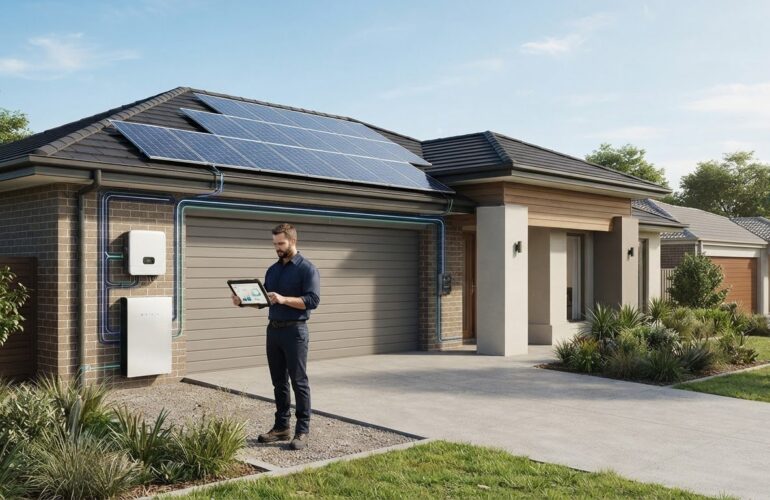
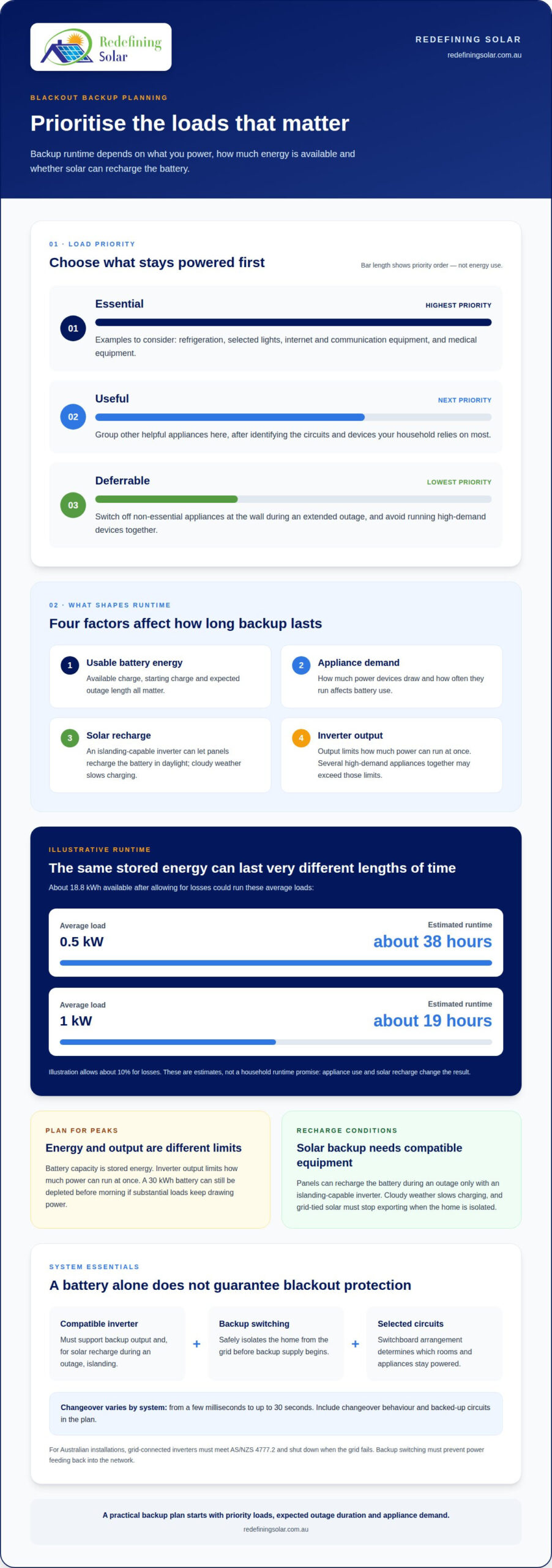
Backup needs more than a battery connected to existing solar. An inverter with backup output and switching hardware must isolate the home from the grid, then supply power to designated circuits. Depending on the system, changeover may take up to 30 seconds or a few milliseconds. Backup can cover selected circuits or all phases, so the switchboard arrangement affects which rooms and appliances stay powered.
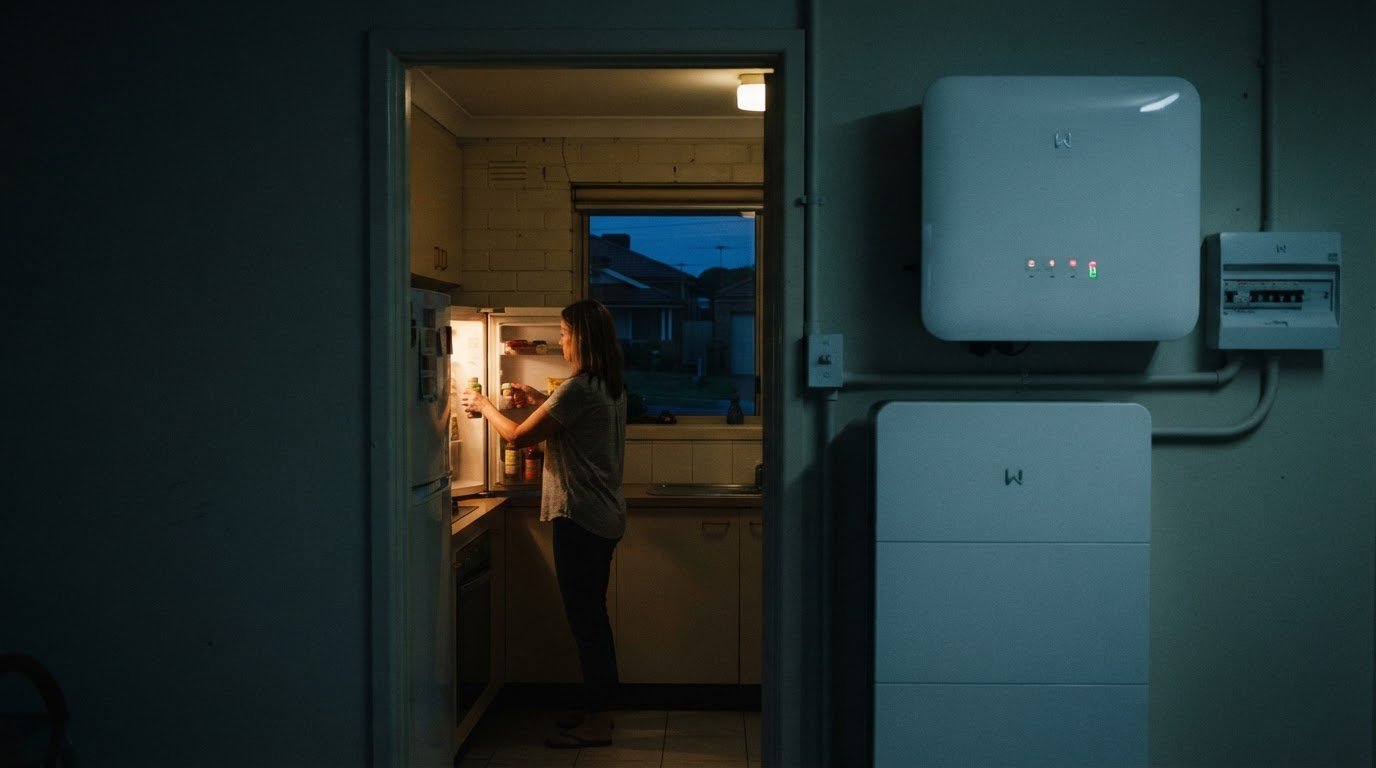
Essential-circuit backup might supply a fridge, selected lights, internet equipment and some power points. Whole-home backup can cover more circuits, but it still has output limits. Running an oven, kettle and ducted air conditioning together may exceed those limits and trip the backup. The inverter’s capacity, backed-up circuits and appliance demand determine what can run during an outage.
Adding a battery to an existing system doesn’t automatically provide blackout protection. A retrofit may need new hardware and switchboard changes, and some batteries lack backup output. With an islanding-capable inverter, solar can recharge the battery during an outage, although cloudy weather slows charging.
For Australian installations, grid-connected inverters must meet AS/NZS 4777.2, and AS/NZS 4777 requires shutdown when the grid fails. Backup switching must prevent power feeding back into the network.
Key risks include losing backup when the battery runs low and exceeding inverter output when several appliances run at once. Monitoring can show battery charge, household use and system faults. Keeping panels clear helps maintain solar generation.
Australian rebates or government incentives depend on current programme rules and eligibility. They aren’t automatic, so any support available depends on your circumstances and location.
Assessing essential electricity needs and outage duration
A useful backup plan starts with the appliances you need and how long they must run. A professional sizes the battery and inverter around essential loads, expected outage duration and each appliance’s power draw.
Assessing essential electricity needs
Essential electricity needs are the devices and circuits your household relies on during an outage. Listing them matters because each load affects battery use and backup output. You might prioritise refrigeration, selected lights, internet equipment, communication devices and medical equipment. Heating or cooling may also be essential, but can draw substantial power. An assessment considers how often each appliance runs, not just its nameplate demand. This helps distinguish continuous loads, such as a fridge, from devices used briefly.
Battery capacity for outage needs
Battery capacity is the stored energy available to run those loads, while inverter output limits how much power can run at once. Professional sizing considers both, alongside the battery’s starting charge and expected outage length. For illustration, about 18.8 kWh available after allowing for losses could run an average 0.5 kW load for about 38 hours, or a 1 kW load for about 19 hours. The illustration allows about 10% for losses. These are estimates, not a household runtime promise: appliance use and solar recharge affect the result. A 30 kWh battery can still be depleted before morning if substantial loads keep drawing power.
Managing energy during extended outages
Energy management means reserving stored power for priority needs as an outage continues. Group appliances into three load-priority categories: essential, useful and deferrable. During an extended outage, switch off non-essential appliances at the wall and avoid running high-demand devices together. If the grid goes down, the system isolates the home; grid-tied solar must stop exporting. With an islanding-capable inverter, panels can recharge the battery during daylight, though cloudy weather slows charging. When grid supply returns, the battery’s charge level and household demand influence how quickly it can build reserves again. For professional battery-ready system planning, load priorities and expected outage duration provide a practical starting point.
Blackout protection and safe disconnection from the grid
During an Australian blackout, solar generation alone can’t safely power a grid-connected home. Blackout protection isolates the household from the network, then lets compatible equipment supply selected appliances.
Grid-connected solar shutdown during blackouts
A grid-connected inverter follows the electricity network’s voltage and frequency, so it shuts down when the grid fails. This anti-islanding response prevents household solar from energising network lines while workers may be attending a fault. Under AS/NZS 4777, grid-connected solar inverters must shut down when the grid fails. The result is that panels can be in sunlight but provide no household power until a suitable backup system establishes a safe, separate supply.
Blackout protection uses switching equipment to disconnect the home from the grid before backup power is supplied. This separation also prevents excess electricity flowing back into the network. Without isolation, a battery or solar inverter can’t safely create a private supply for household appliances.
Grid-forming inverters and blackout protection
A grid-forming inverter can establish a local electricity supply after the system isolates the home from the grid. This matters because ordinary grid-tied solar equipment relies on the network’s electrical reference and switches off when that reference disappears. A compatible battery and backup arrangement can then supply circuits connected to its backup output.
During an outage, a hybrid system can generally use solar to recharge its battery if the inverter supports islanding. Cloudy weather can slow recharging, so stored energy and household demand still matter. Backup may serve selected circuits rather than every appliance. For a three-phase property, whole-home backup planning needs to account for all three phases, not just circuits connected to one phase.
Before a forecast storm, charge the battery and test its blackout function using the system’s normal controls. A successful test shows whether backup starts and which household circuits receive power. It can also reveal whether essential appliances, such as refrigeration or heating, are connected to backed-up circuits.
Compatibility with existing solar panels
Existing solar panels may work with a battery, but panel compatibility alone doesn’t provide blackout backup. Blackout proofing your home with solar and a battery means making sure the inverter, battery connection and switching arrangement suit your needs. A professional assessment considers how your current equipment handles generation and household demand, and which circuits you want powered, such as a fridge, selected lights or internet equipment.
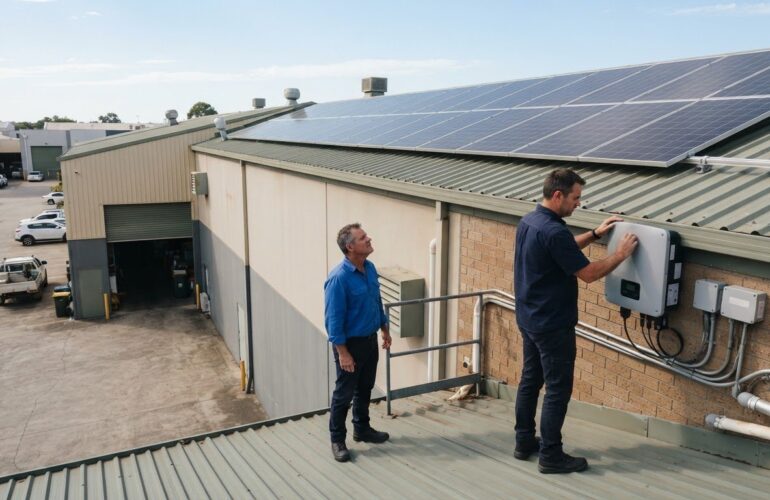
The inverter is central to the assessment. A grid-connected inverter that shuts down during an outage can’t supply backup power on its own. Some existing systems need additional hardware or switchboard changes, while some batteries lack backup output. The assessment considers the complete setup, rather than treating the panels as the only compatibility question.
System design affects how solar panels and a battery work together. A professional considers the existing inverter configuration, battery compatibility, backup output and the circuits connected to backup. In a three-phase home, the electrical layout matters if you want backup across all phases. Battery capacity and output must also suit essential loads, rather than being judged by panel generation alone.
A practical assessment gives you a clear picture of what can stay and what may need to change. Panels might continue generating electricity, while the inverter or switching arrangement needs upgrading before that power can supply backed-up circuits. The assessment can also consider whether the system can use solar to recharge the battery during an outage. The overall equipment configuration, not just the panels, is central to blackout proofing your home with solar and a battery.
For an assessment of your existing solar system and battery options, discuss solar and battery compatibility with a professional.
Redefining Solar: Battery Ready & Upgrades
Redefining Solar can help plan battery-ready upgrades around your household’s backup needs. If you already have panels, an assessment considers how your solar system, inverter and proposed battery can work together, and what changes may be needed to support backup power.
Battery Ready & Upgrades can prepare an existing system for battery storage or improve its backup capability. For a new setup, Residential Solar Systems can be designed around your essential circuits and expected electricity use. The right approach depends on your equipment and the loads you want to keep running during an outage.
Contact Redefining Solar to discuss battery-ready upgrades for your home.
Make your backup plan fit your property
Blackout proofing your home with solar and a battery is a planning decision, not simply a matter of adding storage. Start by outlining your priorities: which circuits matter, how your existing equipment fits, and whether you need backup for a home or business. Clear priorities help shape a design around how you use electricity.
Redefining Solar offers Battery Ready & Upgrades, Residential Solar Systems and Commercial Solar Systems. These options support different starting points, from preparing an existing property for battery storage to planning a solar system for a home or commercial site.
If you’re ready to discuss a backup plan for your property, contact Redefining Solar about backup. A considered design is a steady step towards greater confidence during an outage.
Frequently Asked Questions
What happens to the battery after a blackout?
When grid supply returns, the battery can return to its normal operating mode and rebuild its charge. What happens next depends on its settings and household energy use. For example, a system may prioritise supplying the home or keeping stored energy for later. Monitoring the battery’s charge after an outage helps you understand its readiness for another disruption.
Does a battery work in a power outage?
A battery can supply electricity during an outage only if the system has suitable backup capability and isolation from the grid. A battery without backup output won’t necessarily keep appliances running. For example, a household might have stored energy but still lose power to its fridge if that circuit isn’t connected to the backup supply. The system design determines what remains available.
What is a backup or EPS circuit?
An EPS, or Emergency Power Supply, circuit is connected to receive electricity from a system’s backup output during an outage. It can serve chosen household loads rather than every circuit in the property. For example, a dedicated circuit might keep a bedroom light and phone charger powered while other rooms remain without backup. The circuit arrangement determines which outlets work.
Can solar recharge the battery during an outage?
Yes, solar can recharge a battery during an outage if the system can operate independently of the grid. Solar electricity may first supply active household loads, with surplus generation available to charge the battery. The balance between panel output and appliance use therefore matters. Running several appliances, for example, can leave less solar energy available to recharge the battery.
Is blackout protection worth it?
Blackout protection is useful if keeping selected household services operating during a network outage matters to you. Consider the impact of losing refrigeration, communications or medical equipment, and whether backed-up circuits would meet that need. It may be less useful if outages have little effect on your household or you don’t need essential appliances powered. The decision is about practical resilience, not simply owning a battery.
What will a home backup battery run, and for how long?
A home backup battery can run appliances connected to its backed-up circuits, such as a fridge, lights or communications equipment. Runtime depends on usable battery energy, the charge available when an outage starts, appliance consumption and inverter output. A fridge that cycles on and off uses power differently from a device drawing continuously. System monitoring can help you see actual household demand.