
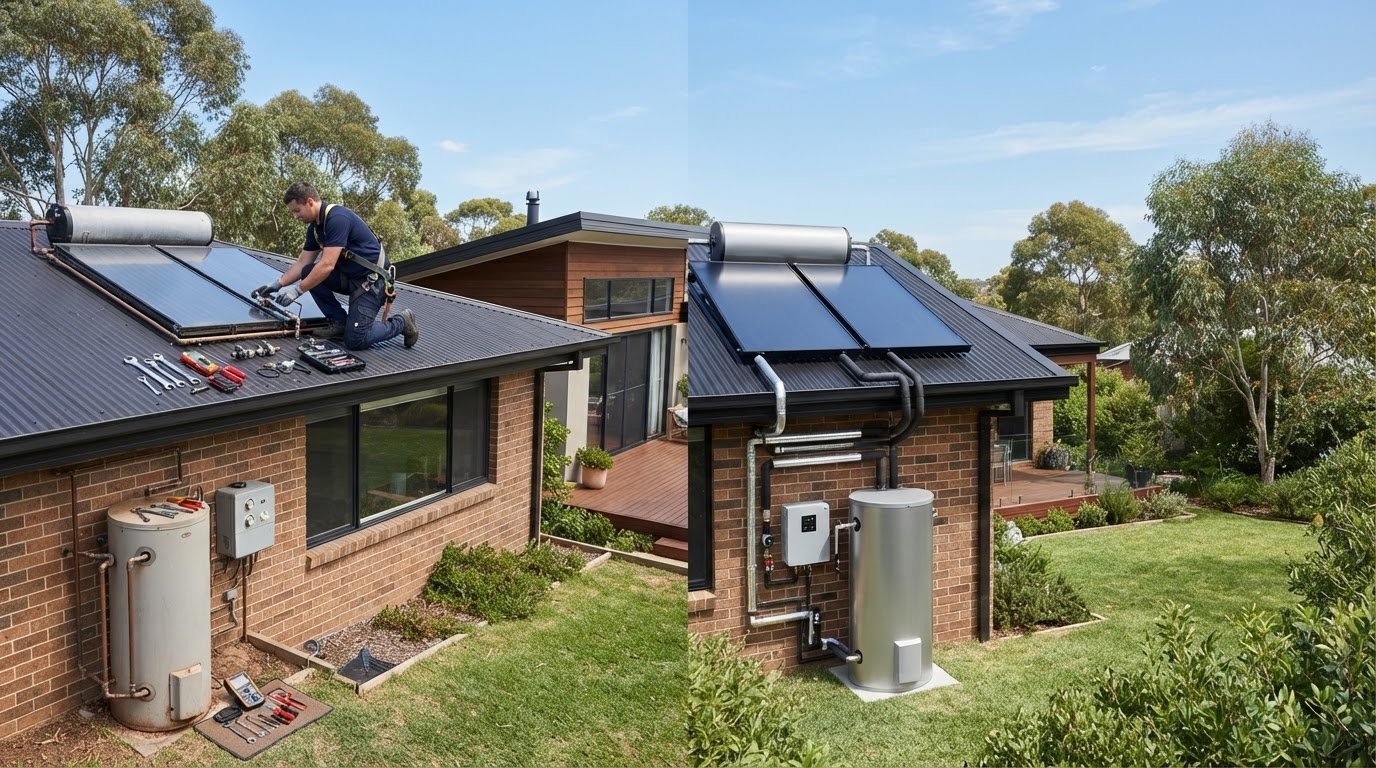
A fault in your solar hot water system doesn’t always mean the whole system needs replacing. A leak, reduced hot water or increased reliance on a booster are reasons to investigate, but the right solar hot water system replacement decision starts with the condition of the existing setup and your household’s needs.
It can be difficult to know whether a repair will be enough or whether an ageing or poorly matched system needs a different solution. This guide explains how to weigh up repair against replacement, compare solar thermal with other hot water options, and assess what to consider before choosing a system for your home.
You’ll find practical steps for recognising warning signs, accounting for household demand, roof space and shading, and preparing for a replacement. Redefining Solar supplies, installs, maintains and repairs solar thermal water heating systems, so your existing setup can inform a practical replacement plan.
Key Takeaways
- A fault doesn’t automatically mean your system needs replacing. An assessment can distinguish an isolated, repairable issue from wider system deterioration.
- A solar hot water system replacement should account for the existing layout, connected components and how your household uses hot water.
- Compare solar thermal, electric, gas and heat pump options by their energy source, reliance on solar conditions and fit with your home.
- Before planning a replacement, note your current system details, household routines, hot water use and access to the installation area.
- Redefining Solar supplies, installs, maintains and repairs solar thermal water heating systems, supporting a considered path from assessment to replacement planning.
When does a solar hot water system need replacement rather than repair?
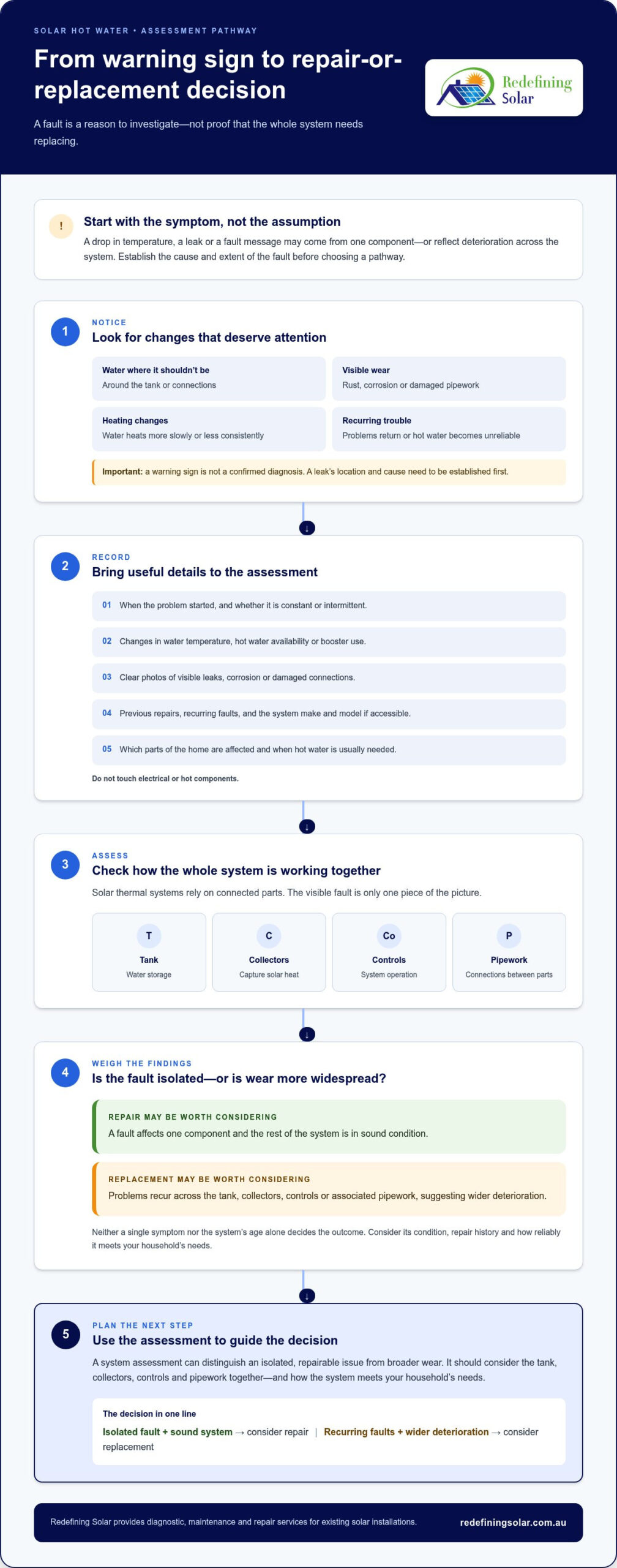
Unreliable hot water can make a decision feel urgent, especially when the problem keeps returning. But a symptom isn’t a diagnosis. A drop in temperature, a leak or a fault message may come from one component, or it may point to deterioration across the system. Before deciding on a solar hot water system replacement, have the setup assessed to establish the cause and extent of the fault.
Solar thermal systems use collectors to transfer heat to stored water, with connected parts working together to supply your home. The Solar water heating systems overview explains common configurations and how the technology works. For a repair-versus-replacement decision, consider the tank, collectors, controls and pipework as a whole, rather than judging by one symptom.
Which warning signs deserve prompt attention?
Look for water around the tank or connections, visible rust or corrosion, damaged pipework, and changes in how quickly or consistently the water heats. A leaking tank can indicate a more significant replacement issue, but the leak’s location and cause need to be established first. A performance change may also relate to controls or another component, so treat warning signs as reasons to investigate, not as a confirmed diagnosis.
When is repair still worth considering?
A fault affecting one component may be repairable, particularly if the rest of the system is in sound condition. Repeated problems across the tank, collectors, controls or associated pipework may point to wider deterioration and make replacement worth considering. An assessment should look at how these parts work together, not just the most visible fault. If you’re dealing with a leak, the guide to solar hot water leaking repairs can help with leak-specific next steps.
Gather these details before arranging an assessment:
- Note when the problem started and whether it is constant or intermittent.
- Record changes in water temperature, hot water availability or booster use.
- Take clear photos of visible leaks, corrosion or damaged connections. Don’t touch electrical or hot components.
- Write down previous repairs or recurring faults, and find the system’s make and model if accessible.
- Describe which parts of the home are affected and when hot water is usually needed.
These details help build a clearer picture, but they can’t replace a system assessment. Redefining Solar provides diagnostic, maintenance and repair services for existing solar installations. An assessment can inspect the tank, collectors, controls and pipework to distinguish an isolated repair from broader wear. There’s no single age-based rule that decides the outcome. The system’s condition, repair history and how reliably it meets your household’s needs all inform the next step.
What changes when replacing an existing solar hot water system?
A solar thermal system uses solar collectors to capture heat and transfer it to water held in a storage tank. Replacing one isn’t simply a matter of choosing a new tank or collector. The system’s layout, condition and connections help determine what will suit the property and household.
Some homes have a close-coupled arrangement, with the tank positioned beside or above the collectors, often on the roof. Others use a split arrangement, with collectors on the roof and the storage tank elsewhere. A pump moves heat between parts of a split system, while a close-coupled setup can circulate heated water without the same separate pump arrangement. Neither layout is automatically the right choice for every replacement.
How collectors, storage and boosters work together
Collectors absorb solar energy and pass heat to the water, either directly or through a heat-transfer arrangement. The heated water is stored for household use. An electric or gas booster can provide additional heat when solar input hasn’t brought the stored water to the required temperature. Configurations vary, so a replacement assessment needs to establish how your collectors, tank, booster and controls work together.
For example, a home with a split system may have its tank in a utility area, while another property may have the tank and collectors together on the roof. The difference affects access, existing pipework and the connections to consider. It doesn’t, by itself, determine the replacement design.
What an existing system can tell you about replacement
Start with the overall arrangement: where the tank and collectors sit, how they connect, and whether the installation area is accessible. Then consider the collectors, storage tank, controls and connection points together. A component that looks sound may still be affected by a fault elsewhere, while the existing layout may create practical constraints for a new design.
Knowing how solar thermal systems work can make these details easier to follow. A solar thermal systems guide can explain common configurations, while an on-site assessment relates that information to your property. Replacement suitability depends on system condition, household demand and site constraints. First understand the existing setup, then plan a configuration that fits your hot water use and what the site can accommodate.
Before an assessment, note where the tank and collectors are, whether there’s clear access to them, and any visible changes to the connections or controls. Keep system documents or service records handy. These details help Redefining Solar consider the existing arrangement as part of a planned solar hot water system replacement, rather than treating each component as a separate decision.
Redefining Solar supplies, installs, maintains and repairs solar thermal water heating systems. Learn more about solar thermal system support as you plan the next step.
Solar hot water replacement options: how to compare the right pathway
A replacement gives you a chance to reconsider the type of hot water system, not just swap like for like. Compare how each option gets its energy, what it needs on site and how it fits your household routine. Use the table as a starting point, not a recommendation: the right pathway depends on your existing setup, hot water demand and property constraints.
| Pathway | Main energy source | Reliance on solar conditions | Existing setup and broad suitability |
|---|---|---|---|
| Solar thermal | Solar collectors heat water, with a booster available in some systems | Solar contribution varies with available sunlight; a booster can support hot water supply | May suit a home with a suitable location for collectors and storage, subject to the property layout and household demand |
| Electric storage | Electricity heats water in a storage tank | Doesn’t depend directly on sunlight | May be considered where an electric supply and appropriate space for storage are available |
| Gas storage or instantaneous | Gas heats stored water or heats water as it is used | Doesn’t depend directly on sunlight | May suit a home with a compatible gas supply and a layout that accommodates the chosen system |
| Heat pump | Electricity powers a system that draws heat from the surrounding air to heat water | Doesn’t rely on roof-mounted solar collectors, though operation depends on the system and its site conditions | Requires a suitable location for the unit and storage, with household demand considered in the design |
When does another solar thermal system make sense?
Solar thermal may be worth considering if your property can accommodate collectors and storage, and your household’s routines still suit this approach. Think about when hot water is used, how consistently the current system has met demand and whether a replacement can work with the site layout. Match the design to daily use rather than assuming the old configuration should simply be copied.
When should you compare a different hot water technology?
Compare other technologies if the existing solar layout no longer fits the property, household needs have changed, or you want to consider different energy inputs. Electric, gas and heat pump systems have different supply and space requirements, so weigh those alongside how hot water is used at home. No option is a universal fit for Australian homes.
For a specific change from an electric hot water system to solar thermal, the guide to replacing electric hot water with solar thermal covers that pathway. Redefining Solar supplies and installs solar thermal water heating systems. For this option, the existing setup and household requirements guide replacement planning. A considered solar hot water system replacement starts with a clear comparison, then narrows the options to what suits your property.
Explore solar thermal system support if you’re considering a solar thermal replacement.
How to prepare for a solar hot water system replacement
A little preparation can make an assessment more useful. Your hot water demand and household routines help inform system sizing, while details about the existing setup can clarify what needs attention. You don’t need to diagnose a fault yourself. Gather what you can safely access and leave checks of equipment and connections to the specialist.
What information helps shape the replacement design?
Think about who lives in the home, when hot water is usually used and whether demand rises at particular times, such as busy mornings or when visitors stay. Note your existing system type and the location of its tank, collectors and controls. Property layout, safe access to equipment, visible condition and previous repairs also matter.
Use this checklist to organise the information before the assessment:
- Describe household use. Record household size, typical hot water routines and periods when demand is higher than usual.
- Gather system details. Find the make, model or paperwork you have, and note where the tank, collectors and controls are located.
- Keep service history handy. List earlier repairs, recurring faults and changes in hot water performance, including when they happen.
- Take photographs. Capture visible parts of the system and any accessible labels or problem areas from a safe position. Don’t climb onto the roof or touch hot or electrical components to get a photo.
- Note site access. Describe where the equipment is and any practical access constraints, such as a narrow side path or limited room around the tank.
These details help connect system requirements with real household use. For example, a home where several people shower in the morning may have a different demand pattern from one where hot water is used more evenly throughout the day. Clear notes inform the design discussion, but the assessment should establish the system scope rather than relying on household size alone.
What should you expect from an assessment?
An assessment brings together the existing solar thermal setup, its condition, your household requirements and site access. The proposed pathway should make clear what work is in scope and what the next steps are, so you can understand how the replacement plan addresses your needs. Redefining Solar supplies, installs, maintains and repairs solar thermal water heating systems, linking system assessment with replacement planning.
For a broader view of the work after planning, the solar hot water installation guide covers the installation process. Incentives can change, and eligibility depends on the relevant programme, so don’t assume a rebate applies when preparing your plans.
Having your household notes and system details ready can make the discussion more focused. Discuss your solar hot water replacement in the context of your existing system and household requirements.
Plan your solar hot water replacement with Redefining Solar
A considered replacement plan starts with understanding what’s already there. Redefining Solar supplies, installs, maintains and repairs solar thermal water heating systems, bringing assessment and practical system support together. The business is Australian-owned and operated, and directed by a licensed electrician.
You don’t need to arrive with a decision already made. The condition of the existing installation, household hot water requirements and property constraints all help shape the next step. A fault may call for repair, while broader system concerns may point towards replacement. First understand the situation, then settle on a plan.
From existing system assessment to replacement planning
An assessment considers how the current solar thermal system is arranged and how well it meets your household’s needs. Tank and collector condition, connections, controls, access and hot water routines can all affect the project scope. The replacement plan is shaped by your property and existing installation, rather than assuming the same design will suit every home.
Once the requirements are understood, the next step is to plan the work and make the proposed scope and sequence clear. Supply and installation are part of that pathway, with maintenance and repairs also available for solar thermal systems over time. After replacement, a solar hot water servicing checklist can help you keep track of ongoing care and note changes in system performance.
Clear communication matters. You should understand what the assessment has found, how your household needs have informed the proposed approach, and what happens next. If repair remains a sensible option, it should be part of the discussion. If replacement is the right pathway, the plan should reflect the actual system and site.
Take a practical next step
Before discussing your project, gather the system details you have, a brief history of faults or repairs, and an outline of when your household uses hot water. These details provide useful context without requiring you to diagnose the equipment. Photos of safely accessible labels or visible issues can also help explain what you’ve noticed.
A solar hot water system replacement should be a considered decision, with the scope and next steps suited to the property rather than driven by guesswork. Redefining Solar can help assess your existing solar thermal setup and plan a suitable replacement pathway. Bring your questions, even if you’re still weighing repair against replacement.
Talk with Redefining Solar about your replacement and discuss your current system and household needs.
Make your next step a considered one
A replacement decision doesn’t need to be made in a rush or based on one symptom alone. Take time to consider what you want the system to do for your household, what the property can accommodate and which questions still need answering. That clarity can make the discussion more useful and help you move forward with confidence.
A solar hot water system replacement is an opportunity to choose a setup that fits your home today, rather than making assumptions based on the previous installation. Bring your priorities to the conversation, whether you’re still weighing repair against replacement or ready to discuss a new solar thermal system.
Redefining Solar can help you consider the next step for your existing system. Discuss your solar hot water replacement with Redefining Solar and start a clear conversation about your needs.
Frequently Asked Questions
Is it better to repair or replace a solar hot water system?
Neither repair nor replacement is automatically better. The right choice depends on the fault, the system’s overall condition, whether problems keep returning and your household’s hot water needs. A faulty control or connection may be an isolated issue, while problems affecting several parts could point to broader deterioration. Note when faults occur and what’s been repaired. An assessment can establish the cause before you decide on a solar hot water system replacement.
Can I replace an old solar hot water system with a different type?
Yes. You can compare solar thermal with electric, gas or heat pump options, but suitability depends on the property, household hot water use and available energy setup. For example, changing from gas may involve different supply and installation considerations than replacing an electric system. The replacement-options comparison in this guide outlines the main pathways, while Redefining Solar supplies and installs solar thermal water heating systems.
How much does solar hot water system replacement cost?
The cost depends on the work required at your property, so a unit price alone won’t show the full replacement scope. Existing equipment, system layout, access, connected components and design requirements can all affect the project. A tailored assessment helps clarify what work is needed and what the plan includes. For a project-specific discussion, talk with Redefining Solar about your replacement.
How long does a solar hot water system replacement take?
There isn’t one timeframe that applies to every replacement. The system configuration, access to the equipment and work required at the property all affect the schedule. For instance, the practical requirements of a roof-mounted arrangement may differ from those of a system with components in separate locations. Project timing should be discussed during planning, alongside the work included and any site-specific requirements, so you know what to expect before proceeding.
Can an existing solar hot water collector be reused in a replacement?
It may be possible, but reuse depends on the collector’s condition, its compatibility with the proposed system and the findings of an overall assessment. A collector that appears intact isn’t, by itself, proof that it’s suitable to retain. Consider the tank, collectors and connected parts together, so the proposed design works as a complete system rather than relying on an assumption that an existing component can be reused.
Are solar hot water rebates available in Australia in 2026?
Incentives may be available, but eligibility can depend on where you live, the system type, programme rules and current settings. These details can change, so don’t rely on an old offer or assume a rebate applies to your project. Before naming a specific incentive or making plans around it, check current information from authoritative Australian Government sources and the relevant state or territory government, including eligibility criteria.
Will solar hot water still work during cloudy weather?
Cloudy conditions can reduce the solar energy reaching collectors, so the amount of heat gathered may vary. Some systems have an electric or gas booster that can add heat when solar input is insufficient, but the arrangement differs between installations. Check whether your existing system has a booster and how it’s configured before drawing conclusions about performance. The system design and conditions at the property both matter, so uninterrupted hot water shouldn’t be assumed.


[…] you’re weighing up replacement, consider that separately from arranging an assessment. A guide to solar hot water system replacement can help you understand the factors involved, while a service enquiry can focus on the system you […]