
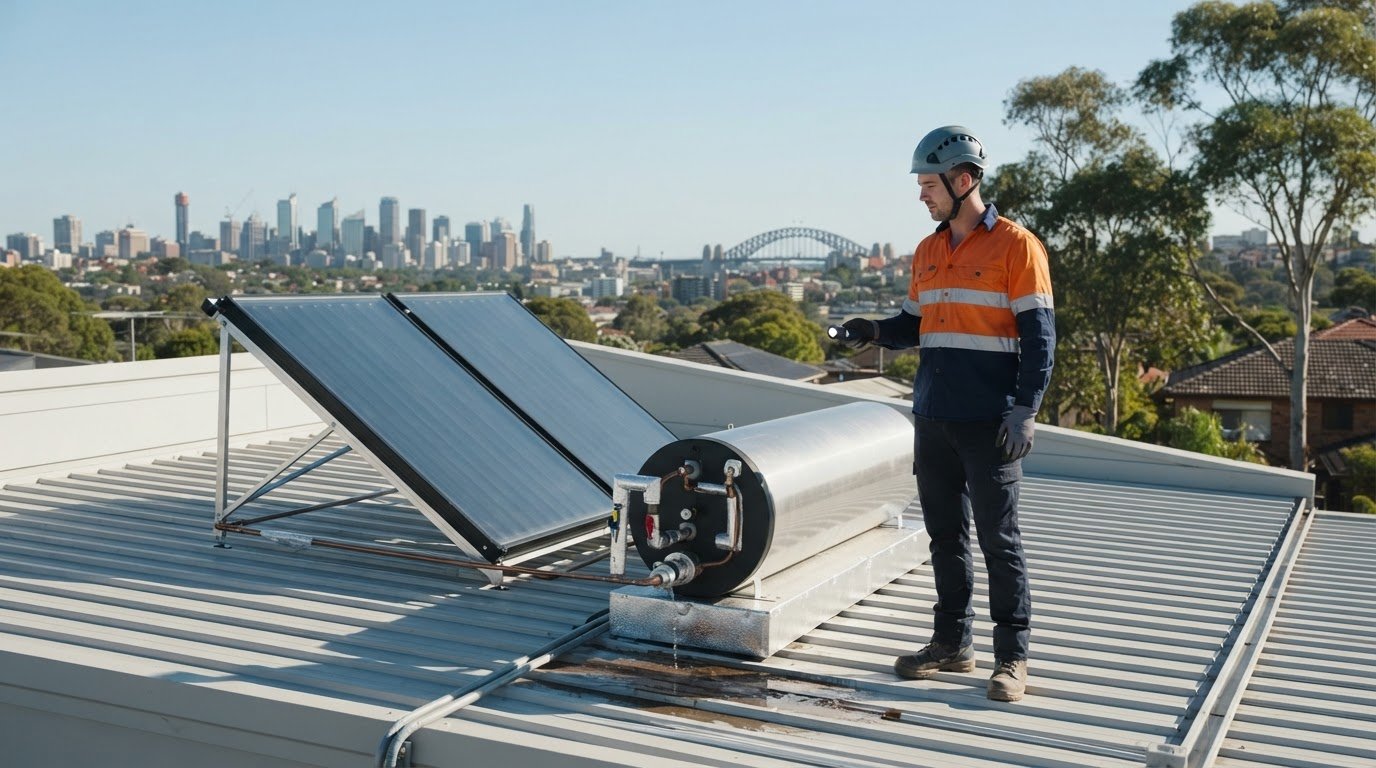
If you’ve spotted water around your system, the safest first step is to observe it from a safe distance, not try to fix it. It’s understandable to worry about damage, danger or a fault that’s getting worse. Some discharge may be part of normal operation, but you shouldn’t assume that’s the cause. A solar hot water leaking repair starts with noting where and when water appears, not opening the system.
This guide explains what to do first, what to leave untouched and which signs can help distinguish normal discharge from a possible leak. You’ll also learn about common sources, from pipe connections and seals to collectors or the storage tank, without having to diagnose the fault yourself.
We’ll outline what a professional assessment may involve and which details can help, such as where you noticed water and whether it continues. Redefining Solar provides solar thermal system repairs and maintenance across Australia, with the business directed by a licensed electrician. The aim is to help you take a calm, safe next step and understand the practical options.
Key Takeaways
- Water around a system doesn’t reveal the fault by itself. System layouts vary, so don’t guess from the visible location alone.
- Note where and when water appears, and whether it continues or changes. These observations help make a repair assessment more useful.
- Discharge may be part of normal operation, but its location and pattern can help distinguish it from a possible leak.
- A solar hot water leaking repair assessment considers the system, the visible signs and safe access before explaining the findings and next steps.
- Redefining Solar provides solar thermal system maintenance and repairs across Australia, helping you move from uncertain signs towards a professional assessment.
Solar hot water leak repair: what to do first
If you notice water around your solar hot water system, put personal safety first. Stay well clear, especially if water is near wiring or electrical components, and observe from a safe position. Don’t climb onto the roof, open covers, touch wet equipment or try to tighten fittings. A safe solar hot water leaking repair starts with useful observations, not hands-on troubleshooting.
System designs and component layouts vary. The overview of solar water heating systems explains that systems can use different arrangements, so the spot where water appears doesn’t confirm which part has a fault. Treat this guide as triage, not a remote diagnosis or instructions to repair the system yourself.
- Keep clear. Avoid the wet area and any part of the system that looks hot, damaged or electrically unsafe. Keep children and pets away too.
- Note the location. From ground level, record where you see water, such as near the storage tank, pipework or beneath roof-mounted equipment. Don’t approach a hazard to get a closer look.
- Contain water only if safe. Move belongings out of the way if you can do so without entering a wet or unsafe area. Don’t place a container beneath equipment if doing so means reaching near hot surfaces or electrical parts.
- Arrange an assessment. Share what you observed and whether the water is continuing. A professional can assess the system and its likely leak source safely.
What to do when you first notice water
Make a note of when you first saw the water and whether it has stopped, continued or increased. From a safe position, note where it is collecting without touching pipes, fittings or wet surfaces. If belongings are at risk, move them only when the route is dry and clear. A photo taken from a safe distance may help you describe what you saw.
Don’t climb up to inspect roof equipment, remove a cover or test a component. Solar hot water systems may include hot water and electrical parts, and a leak’s appearance alone can’t establish its cause. Leave inspection and repair work to a professional with the right system information and safe access.
When a solar hot water leak needs urgent attention
Seek prompt professional advice if water is increasing quickly, entering the home or causing visible damage. Take unusual system behaviour seriously too, and describe what has changed rather than trying to interpret it. Water near wiring or electrical equipment calls for extra caution: keep people clear and don’t touch the equipment or operate nearby controls.
Some systems release water as part of their operation, but don’t assume a particular discharge is harmless or attempt to stop it. Note where it appears, whether it is steady or intermittent, and any changes you can see from a safe distance. These details help a repair professional assess the situation without putting you in the position of diagnosing or opening the system.
Where solar hot water leaks can start, and why
A leak means water is escaping from a system component or connection. It describes what you can see, not what has failed. Water beneath a tank, for example, doesn’t prove the tank itself is leaking. It could have travelled from a nearby connection or another part of the system.
Solar thermal systems don’t all share the same layout. Depending on the design, components may include a storage tank, pipework, valves and roof-mounted collectors, with connections between them. A technician can consider these areas during an inspection, but the visible location alone can’t confirm the source or the repair required.
Common areas a technician may assess
A professional assessment may include the tank and visible pipe connections, along with valves and, where present, collectors and roof pipework. Loose fittings, damaged seals or faulty connections are possible sources, but they can’t be confirmed from a ground-level observation. Valves may release or pass water during operation too, so seeing water near one doesn’t establish whether it’s behaving normally or has a fault.
Collectors and pipework on a roof need safe, professional inspection. Water can run along a surface before dripping, so the point where it reaches the ground or roof isn’t necessarily where it began. The system’s arrangement and the path water takes both matter when tracing a leak.
How age, weather and wear may affect a system
Over time, external components may be exposed to changing weather, while ordinary movement or wear may affect connections and seals. These are possibilities, not a diagnosis. A system’s age or recent weather conditions can give a technician useful context, but neither proves why water is escaping. The inspection needs to account for the individual system and what can be safely accessed.
Water shows where a symptom appears, not which component has failed. That distinction helps prevent a common mistake: assuming that a damp patch beneath the tank means the tank needs replacing. The water could have come from a connection, pipe or another component, and different causes may produce similar signs.
When arranging solar hot water leaking repair, share the system type or model if you know it, where water appears and whether the amount or pattern changes. Don’t dismantle anything to gather more detail. This information can help a technician plan an assessment, while an inspection helps distinguish a repairable fault from a broader system issue.
Redefining Solar provides solar thermal system repairs and maintenance across Australia. If water around your system has you concerned, arrange a professional system assessment to help identify the cause and understand the next steps.
Solar hot water leak symptoms: what the location may indicate
Where water appears can help guide an inspection, but it can’t identify a failed part by itself. Water may travel along a pipe, surface or roof before it drips, and similar signs can have different causes. Use the table to organise what you can observe safely, not to diagnose the system or decide which component needs repair.
| Where you notice water | What to record safely | When to seek assessment |
|---|---|---|
| Near the storage tank | Note the visible wet area, whether it is growing and whether water appears continuously or from time to time. | Arrange assessment if water continues, increases or appears to be affecting nearby surfaces or belongings. |
| Below pipework or a connection | Record which section seems wet and whether you can see water tracking from above. Don’t touch or tighten anything. | Have it assessed if the area stays wet or the leak returns after appearing to stop. |
| Near a valve or discharge point | Note when water appears and whether it is steady or occasional, without trying to block or test the outlet. | Seek advice if the pattern changes, water increases or you’re unsure whether the discharge is normal. |
| On the roof or around a collector | Observe from the ground and note the visible area and any water reaching the ground or building. | Arrange professional assessment, especially if water is entering the home or causing damage. |
Leak location can guide inspection, but it can’t confirm the failed component. A technician may need to assess the system’s layout, nearby fittings and surfaces, and how the system is behaving. Checks that involve opening covers, testing equipment or reaching roof-level components should be left to a professional.
Water near the tank, pipework or a connection
From a safe position, note the exact visible location and whether the water is continuous, occasional or changing. A technician may assess nearby fittings, surfaces and system behaviour to trace where it originates. Don’t tighten a fitting, remove a cover or dismantle a component. What looks like a simple connection leak may have another source.
Water on the roof or around a collector
Stay on the ground. Roof-level water may call for assessment of collectors, pipework and surrounding solar components, but the visible wet patch may not mark the source. Don’t climb up to investigate. Note whether water is reaching the building or appearing indoors, and share those observations during the assessment.
For a solar hot water leaking repair, share your observations and let a professional assess the system rather than matching a symptom to a presumed fix. Photos can help if taken from a safe position, but they don’t replace an inspection.
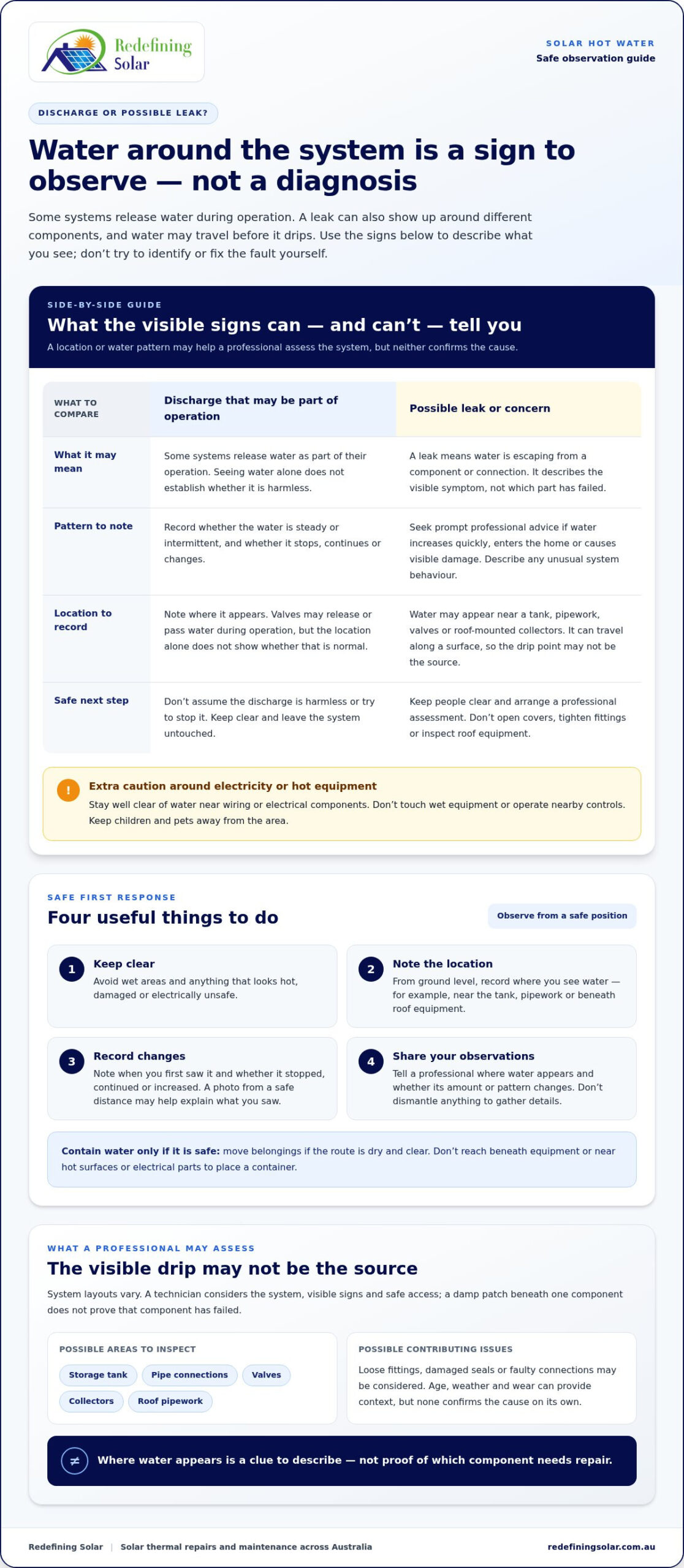
What happens during a solar hot water repair assessment
A repair assessment helps a technician move from visible signs to a clearer understanding of the system. The process depends on the system design, where water appears and what can be accessed safely. A photo or brief description can help explain the issue, but it can’t confirm the cause or establish whether repair, further investigation or replacement is appropriate.
The assessment generally follows a practical sequence: gather details about the system and symptoms, inspect relevant components where safe, consider the likely source, then explain the findings and possible next steps. You should be able to understand what has been observed and why a particular course of action is being considered.
Information to have ready before arranging an assessment
Gather what you can without approaching wet, hot or roof-mounted equipment. If the brand or model is visible from a safe place, note it. Record when the leak began, where you see water, whether it continues or changes, and whether hot water performance has changed. Ground-level photos can also help, provided you can take them safely.
You don’t need to identify the failed component. A useful description might be that water appears beneath the storage tank after a particular period, or that a damp area has grown since you first noticed it. Avoid removing covers, climbing onto the roof or operating nearby controls to collect extra information.
How diagnosis guides the repair decision
During an inspection, the technician considers the observed leak alongside relevant components and the system’s layout. Findings may point towards a repair, the need for further investigation or broader system work. The recommendation depends on what the assessment establishes, so a repair outcome can’t be determined from a symptom or image alone.
For background on system components and operation, see Solar Thermal Water Heating Systems: How They Work in Australian Homes. If the assessment raises questions about installation context, Solar Hot Water Installation: A Practical 2026 Guide offers related information.
- Share the details. Provide the make or model if safely visible, when the issue began and how the system is performing.
- Describe the signs. Explain where water appears and whether the amount or pattern has changed.
- Allow a safe inspection. The technician assesses the relevant system components and access conditions rather than relying on a guess from a photo.
- Discuss the findings. You can then understand the likely source and whether repair or further work is recommended.
This measured approach helps distinguish a fault that may be repairable from a wider system issue. If you need solar hot water leaking repair, arrange a solar hot water repair assessment with Redefining Solar, which provides solar thermal system repairs and maintenance across Australia.
Arrange solar hot water leaking repair with clear next steps
Once you’ve noted what you can see safely, the next step is to arrange a professional assessment. Redefining Solar provides solar thermal system maintenance and repairs, with diagnosis based on the system and the findings on site. A clear enquiry helps explain what’s happening, but it won’t determine the cause or establish whether a particular repair is suitable.
What to include in a repair enquiry
Keep your description brief and factual. Say where water appears, when you first noticed it and whether the leak is changing. Mention any difference in hot water supply, and share the system brand or model only if you can see it safely. Photos from ground level may help, but don’t climb, remove covers or approach wet equipment to take them.
Include safety concerns early. If water is near electrical components, entering the home or affecting belongings, say so clearly. That helps communicate the situation without requiring you to diagnose it.
A useful enquiry can cover:
- The visible location of the water and whether it appears continuously or from time to time.
- When you noticed it and whether the amount or pattern has changed.
- Any change in hot water performance or other unusual system behaviour.
- Visible water near electrical components, or signs of water damage indoors.
- System details or photos you can provide without unsafe access.
When the issue may involve more than a simple repair
An assessment may find that the leak is linked to a component, connection or wider system condition. The findings guide what happens next: repair may be appropriate, further investigation may be needed, or broader options may warrant discussion. None of these outcomes can be assumed before the system has been assessed.
If the system’s overall condition raises questions about replacement or other home hot water options, discuss those choices in light of the professional findings. A repair-versus-replacement decision depends on the specific system and what the assessment reveals, not just the visible leak or its location.
For solar hot water leaking repair, stay clear of hazards, record what you observe safely and include those details in your enquiry. Redefining Solar can assess solar thermal water heating systems and explain the findings and practical next steps.
Arrange a solar hot water system repair assessment with Redefining Solar.
Move from concern to a clear decision
A leak can leave you wondering whether to monitor the system, repair a component or consider broader changes. You don’t need to settle that question before seeking advice. A professional assessment gives you a clearer basis for deciding what suits the system and your household, without assuming the leak has one obvious cause.
As you prepare, keep a short record of what you’ve noticed and any changes in hot water performance. That context can make the discussion more focused. If the findings point beyond a straightforward repair, you can consider the options before deciding how to proceed.
For solar hot water leaking repair, take the next step towards understanding what’s happening. Arrange a solar hot water system repair assessment with Redefining Solar. A clear decision starts with a proper assessment, and you can move forward with a better understanding of the findings.
Frequently Asked Questions
Can I keep using my solar hot water system if it is leaking?
It depends on the leak and the condition of the system, so don’t assume continued operation is safe. A small-looking amount of water doesn’t show whether the source is harmless or worsening. Keep clear if water is near electrical components, and seek professional guidance before deciding what to do. If the leak is increasing or affecting the home, explain that clearly when arranging an assessment.
Is water coming from a solar hot water system always a leak?
No. Visible water may have different explanations, including discharge from a system component, and appearance alone can’t confirm a fault. From a safe spot, note where the water appears and whether it happens at a particular time or continues throughout the day. Don’t touch the equipment to investigate. Arrange an assessment if the water persists, increases or causes concern, particularly if you can’t tell where it is coming from.
Can I repair a leaking solar hot water system myself?
It’s safest not to attempt a repair yourself. Roof access, hot water, pressure and electrical components can all create hazards, even if the visible issue seems minor. Don’t climb onto the roof, open covers, tighten fittings or attempt electrical work. A qualified professional can assess the system, identify the likely cause and explain a suitable repair. That’s the safer starting point for solar hot water leaking repair.
What information should I give a solar hot water repairer?
Describe when you first noticed the water, where it appears and whether it is continuous or intermittent. Mention any change in hot water performance, such as the supply becoming inconsistent. If the brand or model is easy to read from a safe place, include it, but don’t remove covers or approach unsafe equipment. Flag water near electrical components or indoor damage promptly, and don’t delay urgent safety concerns while gathering details.
Can rain cause a solar hot water system to appear to be leaking?
Yes, rainwater and water from a system can be difficult to distinguish from the ground, especially around roof-mounted equipment. The timing alone doesn’t establish the source, so don’t assume a wet patch after rain is either harmless or a system fault. Observe whether water remains or returns after the weather clears, and note any change in system operation. Seek professional assessment if it persists or you’re concerned.
Does a leaking solar hot water tank always need replacing?
No. A leak doesn’t automatically mean the tank or the whole system needs replacing. The right option depends on what has failed and the condition of the system, which can only be understood through assessment. A professional can explain whether repair, further investigation or replacement should be considered, and why. Ask for the findings and next steps in plain language so you can make an informed decision without assuming the outcome in advance.


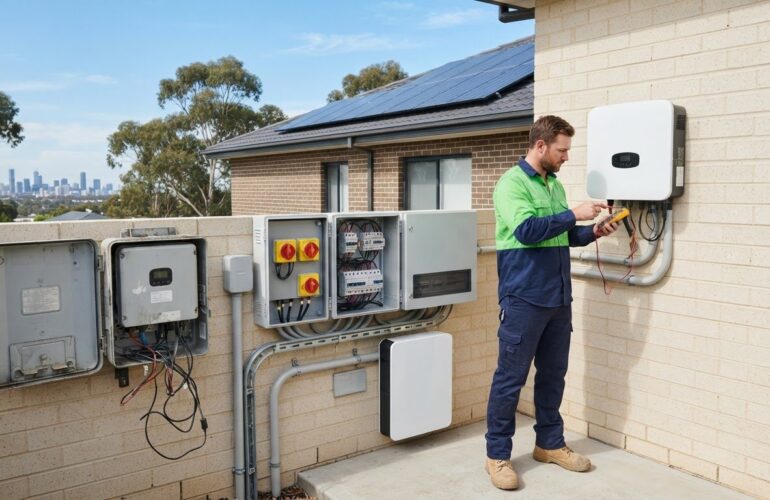
[…] Australian owned and operated, and directed by a licensed electrician. The business also provides ongoing maintenance and repairs for solar heating installations, supporting the system beyond the initial installation. Project details are shaped around the […]