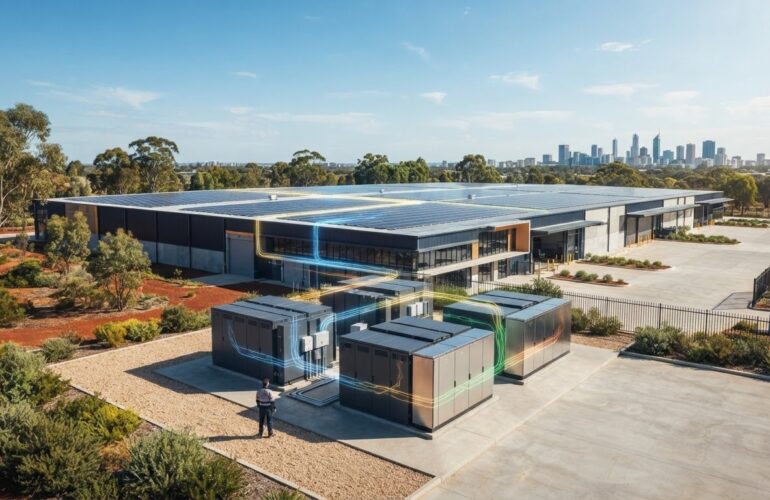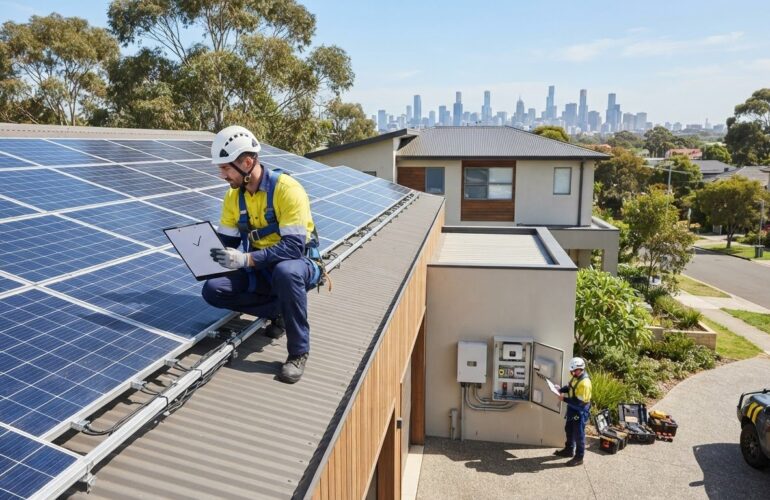
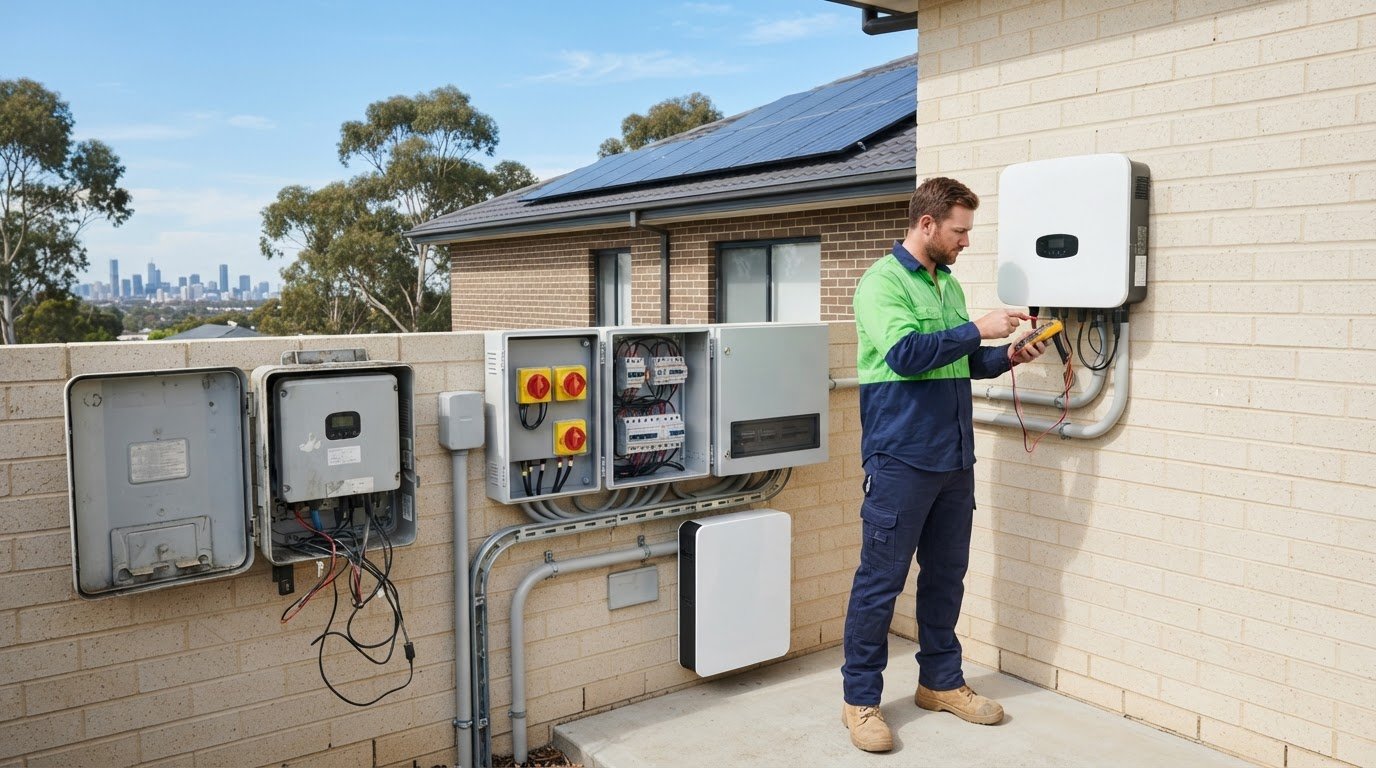
Could an inverter that fits where your old one sat still be the wrong choice for your solar system? A solar inverter replacement isn’t always a simple swap. The replacement needs to suit your existing panels, wiring and any battery, as well as your plans for the system.
If your inverter has stopped working or is nearing the end of its life, you may be weighing up a repair, a like-for-like replacement or a broader upgrade. The right option depends on what has caused the problem, the condition of the rest of the system and whether your energy needs have changed. Checking these details first can help avoid compatibility surprises.
This guide explains how to compare repair and replacement options, check compatibility and plan an inverter upgrade around your current setup and future needs. You’ll also learn what to expect during assessment, installation and commissioning, including how applicable Australian safety standards and grid requirements are addressed. At Redefining Solar, an Australian-owned and operated business directed by a licensed electrician, inverter replacement is considered in the context of your whole system, not just the old unit.
Key Takeaways
- Use the inverter fault as a starting point to weigh repair against replacement, rather than assuming a new unit is automatically needed.
- For a solar inverter replacement, gather details about your panels, electrical setup and battery plans before comparing equipment.
- Compare a like-for-like change with options that adjust system requirements or upgrade more of your solar setup.
- Know what to expect from assessment through installation and commissioning, including professional handling of electrical work and isolation.
- Redefining Solar supplies and installs inverters and provides maintenance and repairs, with the business directed by a licensed electrician.
Solar inverter replacement: when a new unit makes sense
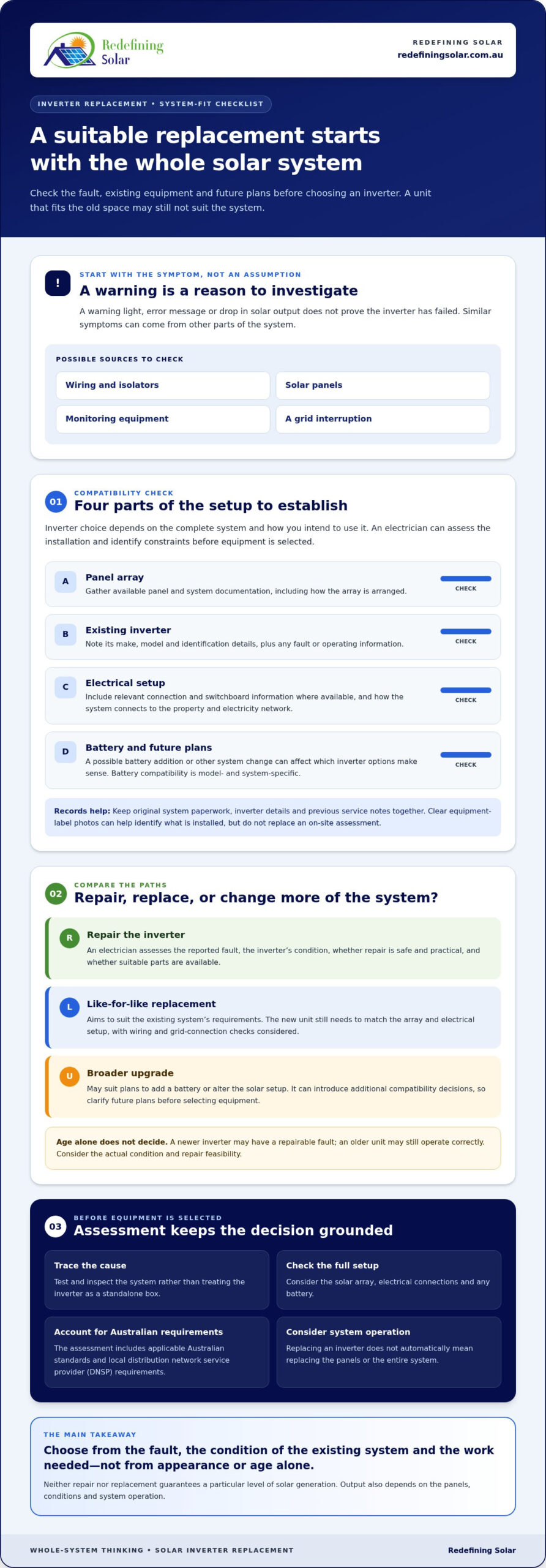
An inverter fault can leave you wondering whether a repair will be enough or whether it’s time for a new unit. Start by identifying the problem. A warning light, error message or drop in solar output is a reason to investigate, but it doesn’t prove the inverter itself has failed.
Similar symptoms can come from wiring, isolators, panels, monitoring equipment or a grid interruption. An electrician can test the equipment and trace the cause before recommending a repair or solar inverter replacement. The assessment should consider the full setup, including the solar array, electrical connections and any battery, rather than treating the inverter as a standalone box.
Replacing an inverter changes one part of your solar system; it doesn’t automatically mean replacing the panels or the entire system. For background on the inverter’s role and common types, see What is a Solar Inverter?
Repair or replace a solar inverter?
An electrician will assess the reported fault, inspect the inverter’s condition and determine whether a repair is safe and practical. They may consider what caused the fault, the condition of related components and whether suitable replacement parts are available. These findings help establish whether repair makes sense or replacing the unit is more appropriate.
Age can inform the discussion, but it doesn’t settle it. A newer inverter may have a fault that can be repaired, while an older unit may still be operating correctly. Base the decision on the actual condition and repair feasibility, not age alone. Neither option guarantees a particular level of solar generation, since output also depends on the panels, conditions and system operation.
What can change when an inverter is replaced?
A like-for-like replacement aims to suit the existing system’s requirements. Even then, the replacement unit must be compatible with the solar array and electrical setup, and the installation may involve wiring and grid-connection checks. An assessment helps identify what can remain and what needs attention before equipment is selected.
A broader upgrade may change the system’s requirements, for example if you’re planning for a battery or want to alter the existing solar setup. That can bring additional compatibility decisions, so clarify your plans before choosing a unit. Your inverter troubleshooting guide can also help you understand common faults and what to record before an assessment, such as error messages or changes in monitoring data.
Redefining Solar approaches replacement as an assessment-led job, not simply a swap. The business supplies and installs solar inverters and provides maintenance and repairs, with a licensed electrician directing the company. The decision can then focus on the fault, the condition of the existing system and the work needed for a suitable replacement.
How to check a replacement inverter will suit your solar system
Compatibility means the inverter suits your solar panel array, electrical setup and intended use of the system. A unit that appears suitable on its own may not match the panels or existing connections. Inverter selection depends on the complete system, because every component and future use affects what will work safely and appropriately.
Before choosing equipment, gather the records you have, such as the original system paperwork, inverter details and previous service notes. Clear photos of equipment labels can help identify what’s installed, but they don’t replace an on-site assessment. If documents are missing, an electrician can inspect the installation and establish the details needed to assess solar inverter replacement options.
Which existing system details affect inverter choice?
The assessment should establish the panel-array configuration, the existing inverter’s make and model, and relevant details of the electrical setup. It should also account for how the system connects to the property and the electricity network. These details help narrow the options and identify constraints before equipment is selected.
- Panel array: Gather available panel and system documentation, including how the array is arranged.
- Existing inverter: Note its identification details and any fault or operating information.
- Electrical setup: Gather relevant connection and switchboard information, where available.
- System records: Keep installation documents and previous repair notes together for the assessment.
Specifications matter because replacement equipment needs to suit the existing system, not just fit the space or look similar to the old unit. A qualified assessment can identify system limits or changes that may affect equipment selection. This is more reliable than choosing based on the old inverter’s size or appearance alone.
How do batteries and future plans affect the decision?
Consider whether you may add battery storage or make other changes to your solar setup. Battery compatibility is model- and system-specific, so a battery plan can influence which inverter options make sense. If you’re weighing storage alongside replacement, the battery storage upgrade guide can help you think through the broader decision.
Grid connection requirements also form part of the assessment in Australia. The installer needs to establish which current Australian standards and local distribution network service provider (DNSP) requirements apply to your installation. Requirements can depend on the system and network, so don’t assume they’re identical everywhere. For example, relevant inverter and installation standards include AS/NZS 4777.2:2020 and AS/NZS 4777.1:2024, but the applicable requirements need to be considered for the specific job.
Thinking ahead is useful, but you don’t need to settle every future upgrade before the assessment. Redefining Solar supplies and installs inverters and batteries, and considers replacement in the context of your existing setup and plans. For practical guidance on your options, talk with Redefining Solar.
Compare solar inverter replacement options before choosing
Once the system has been assessed, compare the scope of each option, not just the inverter itself. A straightforward replacement may suit a system that will keep its current design. If your energy needs or plans have changed, a wider assessment may be more useful. The right choice depends on the assessment findings and what you want your solar system to do.
Like-for-like replacement or a broader upgrade?
A like-for-like replacement is worth considering when you want to retain the existing system arrangement and the assessment shows a suitable match is available. It can keep the work focused on the inverter. If you’re planning to add a battery, change how the system is used or replace other equipment, compare that option with a broader upgrade. Replacing the inverter alone doesn’t automatically improve the system’s overall performance.
What should you compare between replacement options?
Ask for a clear explanation of what each option includes and how it suits your system. Compare documented compatibility, the inverter’s intended role, monitoring arrangements and the support that applies to the specific equipment. Warranty terms vary by product, so review the actual terms for the proposed unit rather than relying on a general expectation.
| Option | Scope | Compare and clarify |
|---|---|---|
| Like-for-like replacement | Replace the inverter while keeping the system’s existing design where suitable. | How has compatibility with the array and electrical setup been established? What monitoring and support arrangements apply to the replacement? |
| Replacement for changed requirements | Select an inverter around a revised system role, such as plans to include battery storage. | Does the proposed equipment suit the intended use and the existing system? What additional work or equipment is part of the option? |
| Wider solar upgrade | Assess changes to more of the solar system alongside the inverter. | Which components are included in the upgrade? How will the complete design, monitoring and support arrangements be documented? |
Use the comparison to separate what’s known from what still needs explaining. A proposal should make the scope clear: which equipment is being replaced or retained, how compatibility has been assessed, and what commissioning and monitoring involve. Keep the relevant product documentation, including warranty terms, with your system records.
There’s no single option that suits every property. An assessment can show whether a like-for-like change meets your needs or whether planned changes make a broader upgrade worth considering. Redefining Solar supplies and installs solar inverters, and can help compare the replacement scope with your system and plans. Explore solar inverter supply and installation as a practical next step.
What happens during solar inverter replacement and commissioning?
A well-managed solar inverter replacement follows a clear sequence, from checking the existing system to testing the new unit. The exact work depends on the property, the fault and whether the job is a straightforward replacement or part of a wider upgrade. Your solar system may need to be isolated during the work, so expect a temporary interruption. The duration and final steps depend on the scope.
- Assess the system. Review available system records, inspect the inverter and check relevant electrical components and connections.
- Select suitable equipment. Use the assessment findings to confirm compatibility and define what the replacement work includes.
- Install the inverter. Appropriately qualified professionals manage electrical work and isolation, following the requirements that apply to the installation.
- Commission the system. Check the installed unit’s operation and relevant settings, then explain practical monitoring steps to you.
What is checked before installation?
Before work begins, the installer reviews the information available about your panels, existing inverter and electrical setup. They assess the unit’s condition and inspect relevant components so the proposed equipment and work scope reflect what’s actually on site. If the inspection reveals an issue beyond the inverter, that finding can change the work required.
Requirements can depend on the system and its network connection. Before finalising the equipment and installation approach, the installer should check current Australian standards and the relevant distribution network service provider (DNSP) guidance for your property. This avoids treating one network’s settings or requirements as universal.
What should happen after the new inverter is installed?
Commissioning is the set of checks made after installation to confirm the inverter and relevant system settings are operating as intended. Checks may include confirming the unit starts and runs, reviewing its connection and settings, and checking that monitoring is available where it forms part of the setup. If something needs attention, it should be identified and explained rather than assumed to be resolved.
Ask for a plain-language handover. You should know how to view the system’s monitoring information, where to find any relevant fault messages and what details to note if an issue appears later. Monitoring can help you understand system activity, but it doesn’t guarantee a particular generation level or uninterrupted operation. Solar output can vary, and a commissioning check reflects the system at the time of testing.
Before the work is complete, make sure you understand what was replaced, what checks were carried out and whether any follow-up steps apply to your installation. Clear records can also help with future maintenance or troubleshooting. If you’re ready to discuss your system and the work involved, arrange an inverter replacement assessment with Redefining Solar.
Arrange solar inverter replacement with Redefining Solar
Choosing a replacement is easier when the decision starts with the system you already have. Redefining Solar supplies and installs solar inverters and provides solar maintenance and repairs. The next step can be based on the condition of your equipment and the issue you’re experiencing, not assumptions about what needs replacing.
The business is Australian owned and operated, and directed by a licensed electrician. That technical oversight supports an assessment-led approach: first understand the fault and existing setup, then identify the replacement scope and equipment that suit your system. A solar inverter replacement may be straightforward, or it may call for further work depending on what the assessment finds.
What information helps start a replacement assessment?
Share whatever system information you already have. You don’t need to know the technical answer yourself. Details and records help build a clearer picture of the installation and make the assessment more focused.
- Inverter details: Provide the make and model from its label, if visible, and note any warning lights or displayed error messages.
- Panel information: Share panel details or system paperwork that identifies the array and its original configuration.
- Fault description: Explain what changed, when you noticed it and whether the monitoring display shows any change or message.
- Available records: Include installation documents and notes from previous maintenance or repairs.
- Future plans: Mention any battery plans or other changes you’re considering for the solar system.
If some information is missing, that’s all right. An on-site assessment can help establish the system details and identify whether the issue points to the inverter or another part of the setup. The findings guide equipment selection and clarify the work required, including whether the job is limited to replacement or needs a broader scope.
How Redefining Solar supports the replacement process
Redefining Solar’s work covers inverter supply and installation alongside maintenance and repairs. This makes it practical to consider the fault, the inverter’s condition and your plans for the system as part of the same conversation. If a battery or other change is in your plans, share that early so it can be considered during the assessment rather than treated as an afterthought.
Once the system has been assessed, the findings inform which replacement options suit the installation and what the work involves. The details can vary with the existing equipment and property, so the scope is based on those findings rather than a promised model, timeline or performance outcome. You can also discuss what information will be provided about commissioning and using the system’s monitoring after installation.
You don’t need to resolve every technical question before getting started. Gather the details you have, describe the issue in your own words and outline any plans for the system. Discuss your solar inverter replacement with Redefining Solar and take the next step with a clearer picture of what your system needs.
Take the next step with confidence
A replacement decision can also be a chance to make sure your solar setup still suits the way you use energy. Before arranging work, gather any system documents and note what you’d like your solar to support next, including possible battery plans. These details give the assessment a practical starting point and help shape a replacement scope around your needs.
Redefining Solar is Australian owned and operated, with the business directed by a licensed electrician. Its work includes solar inverter supply and installation, maintenance and repairs, so you can discuss the fault and the next step in the context of your existing system. The aim is to make your solar inverter replacement decision clear, without assuming a particular unit or outcome before the system has been assessed.
When you’re ready, discuss your solar inverter replacement with Redefining Solar. A clear conversation about your system is a sensible place to start, and you can move forward with confidence once the scope is understood.
Frequently Asked Questions
Can you replace a solar inverter without replacing the solar panels?
Yes, an inverter can often be replaced while keeping the existing panels. The panels may remain suitable if they’re in serviceable condition and their electrical characteristics match the proposed inverter. For example, an older array may still be usable, but its wiring arrangement or panel specifications could limit the replacement choices. An inspection helps establish whether the panels and associated components can remain as they are.
Can a solar inverter be repaired instead of replaced?
Yes, some inverter faults can be repaired, depending on the cause, the unit’s condition and whether a practical repair is possible. An error message alone doesn’t show whether the inverter has failed or another component is involved. Record the message and note when the issue occurs, then have the system assessed. The findings can help compare repair with solar inverter replacement without assuming either option will restore a particular output.
Do you need approval to replace a grid-connected solar inverter in Australia?
It depends on the installation and the relevant electricity network requirements. A replacement may need network notification or approval, particularly if the inverter type or system settings change. Requirements can differ between distribution network service providers (DNSPs), so there isn’t one answer that applies to every Australian property. The installer should check the current requirements for your connection and account for any required steps before the system is returned to service.
Will solar panels generate electricity while the inverter is being replaced?
Panels can produce direct-current (DC) electricity in daylight, but they can’t supply usable household alternating-current (AC) solar power through the system while the inverter is disconnected. The installer isolates the system for the work, so expect solar generation to be unavailable during that period. Don’t touch panels, cables or electrical equipment yourself. The installer can explain when the system is isolated and when checks are complete.
Can you replace a solar inverter with a different type?
Possibly, but a different type must suit the existing panels, electrical arrangement and intended use. A change may be considered if you’re planning to add battery storage, for example, but battery compatibility depends on the specific inverter and system. The change can also affect wiring, monitoring and network requirements. Have the proposed setup assessed before selecting equipment, rather than choosing by inverter type alone.
Will replacing a solar inverter affect my solar monitoring data?
It can. Your historical readings may be stored in the old inverter’s monitoring platform and may not automatically appear in a new system or account. Before replacement, save or export available reports if you want to keep a record of past production. After installation, monitoring may need to be set up again, depending on the replacement equipment. Keep login details and system records somewhere you can access them.
How long does a solar inverter replacement take?
There isn’t a fixed duration for every job. A straightforward replacement can differ from work that involves extra wiring, access challenges, fault investigation or changes to the system. Solar generation will be interrupted while the equipment is isolated, and commissioning checks are needed before the system is considered ready to operate. Once the site and scope have been assessed, the installer can explain the expected work period and any likely interruption.