
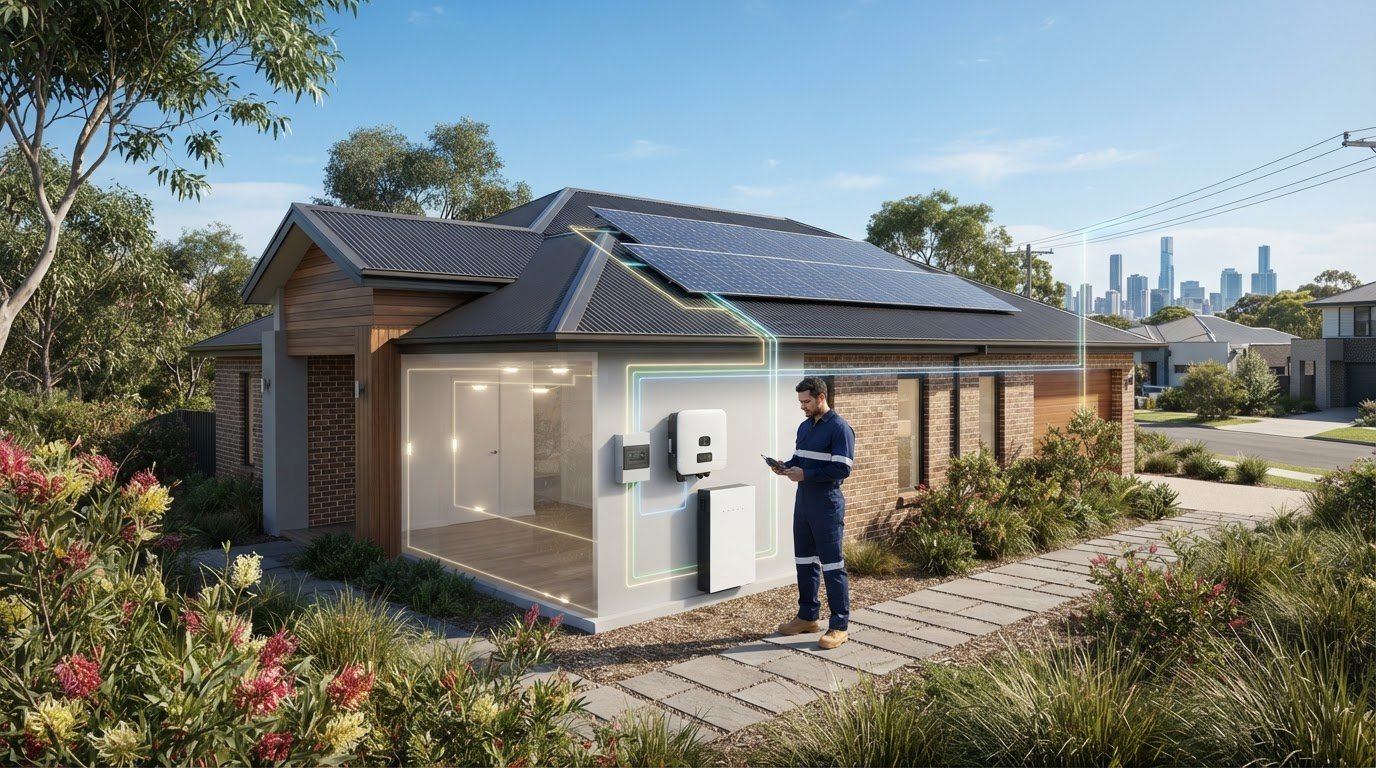
A hybrid inverter can prepare your home for a battery, but it isn’t always a simple swap for your existing solar inverter. Hybrid solar inverter installation is best treated as whole-system design: the right setup depends on your panels and inverter, household energy use, battery plans and grid connection requirements.
Before work begins, check whether your existing equipment is compatible and whether the proposed system will provide backup during a blackout. This guide explains what an installer should assess, including equipment compatibility, electrical and network requirements, backup capability and commissioning. Use these checks to compare system designs and plan around how your household uses energy now and may use it in future.
Key Takeaways
- A hybrid inverter manages solar generation and battery storage, but compatibility depends on the specific system configuration.
- Check how the panels, inverter, battery, switchboard and grid connection work together before deciding what your home needs.
- Compare inverter options against your existing equipment, battery plans, backup needs and upgrade timing.
- Installation typically involves assessment and design, followed by installation, testing and handover. The work depends on whether you’re replacing an inverter, adding solar or preparing for a battery.
- Ask your installer to confirm equipment compatibility, backup capability, required approvals, commissioning and ongoing support in writing.
Hybrid solar inverter installation: What it is and when your home may need one
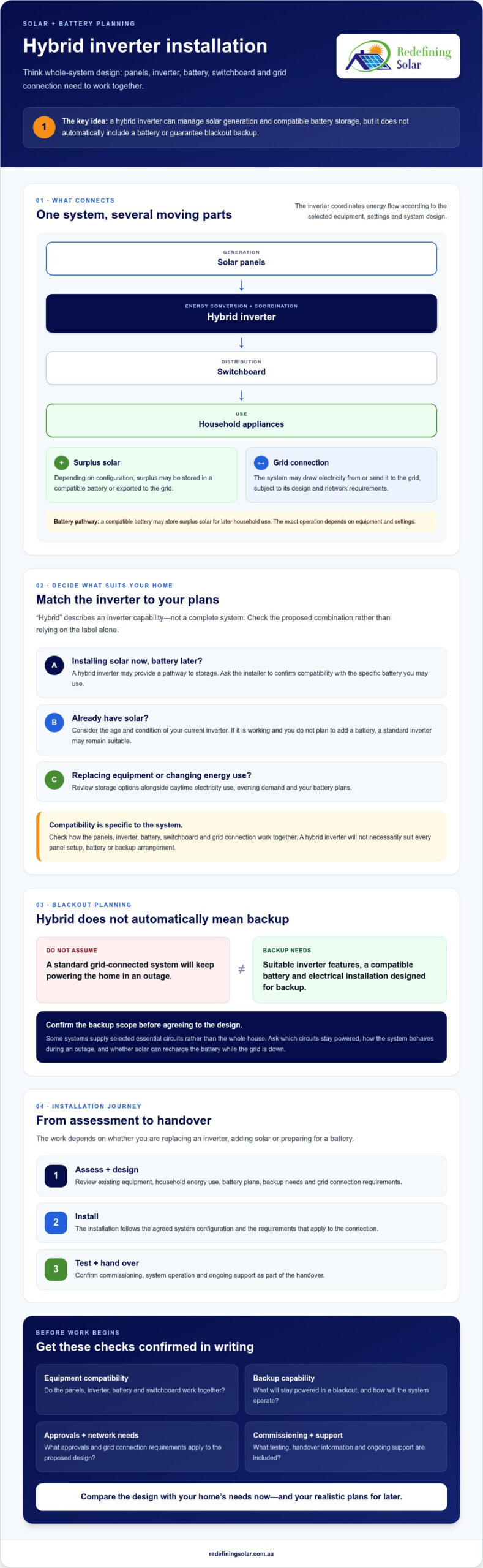
A hybrid inverter converts solar electricity for household use and manages energy storage with a compatible battery, subject to the system design and configuration. It combines functions that may otherwise be handled by separate solar and battery equipment. “Hybrid” describes the inverter’s capability, not a complete system: a battery isn’t automatically included, and backup power isn’t guaranteed.
For a plain-language overview of how inverter technology can coordinate solar generation, storage and the grid, see Intelligent hybrid inverters. The functions available in your home depend on the inverter, battery and other equipment selected.
What does a hybrid solar inverter do?
Solar panels produce electricity that needs to be converted into a form your household can use. A hybrid inverter performs that conversion and can coordinate energy flow to compatible battery storage. Depending on the design, it may also manage electricity drawn from or sent to the grid.
For example, on a sunny day your panels may generate more electricity than your home is using. A configured system could direct some of that surplus to a compatible battery. Later, the battery may supply household electricity. The exact operation depends on the equipment and settings, so this example isn’t a promise of savings or uninterrupted power.
When is hybrid inverter installation worth considering?
It may suit you if a battery is part of your plans. If you’re installing solar now and hope to add storage later, a hybrid inverter could provide a pathway. First, ask the installer to confirm compatibility with the specific battery you may use. The word “hybrid” alone doesn’t confirm that a particular inverter and battery will work together.
If you already have solar, consider the age and condition of your current inverter. A working standard inverter may remain suitable if you don’t plan to add a battery. If it needs replacing, or your household’s energy use has changed, that can be a useful time to review storage options too. Your daytime electricity use, evening demand and battery plans all help shape the decision.
In short, hybrid solar inverter installation is worth exploring when its storage capability fits your current system or a realistic future plan. Ask an installer to assess your existing equipment and intended battery before recommending a configuration. This helps you avoid assuming a hybrid inverter will work with every panel setup, battery or backup arrangement.
How a hybrid inverter connects solar panels, batteries and household power
A hybrid system links your solar panels, inverter, compatible battery, switchboard and grid connection. The inverter sits at the centre of the energy flow, converting electricity from the panels and directing it according to household demand and system settings.
The inverter converts solar electricity and coordinates its flow between household use, compatible battery storage and the grid, according to the system design.
Simple energy-flow diagram
Solar panels → Hybrid inverter → Switchboard → Household appliances
Surplus solar → Compatible battery for storage, or grid export, depending on configuration
Grid connection → Switchboard → Household appliances when required
How solar generation and battery charging work together
During the day, solar generation can supply household appliances first. If the panels produce more electricity than the home is using, the system may direct the surplus to a compatible battery or export it to the grid. If generation falls short, electricity may come from the battery or grid, depending on settings and availability.
Export limits and operating settings depend on the system design and relevant network requirements. The hybrid inverter comparison table can help you review equipment features. An installer still needs to check whether a particular inverter and battery suit your panels, switchboard and grid connection.
Does a hybrid inverter provide backup power during a blackout?
Not by itself. A standard grid-connected solar system generally won’t keep supplying the home during an outage. Backup requires suitable inverter features, a compatible battery and electrical installation designed for that purpose. Some systems supply selected essential circuits rather than the whole house.
Before agreeing to a design, ask which circuits will remain powered, how the system behaves during an outage, and whether solar can recharge the battery while the grid is down. Get the backup scope confirmed for the proposed equipment. Don’t assume that a hybrid label means every appliance will keep running. For more on essential loads, backup circuits and safe changeover, see this guide to a battery backup system for power outages.
Wiring and system settings determine how energy moves, so a site assessment can clarify what’s practical for your home. For a tailored solar system assessment, see residential solar installation guidance.
How to choose a hybrid inverter for your solar and battery plans
The right option depends on what you already have and what you want your system to do. A hybrid inverter may suit a household planning battery storage, while keeping a standard inverter may make sense if storage isn’t on the cards. Neither choice is automatically better. Treat hybrid solar inverter installation as a design decision, not just a hardware swap.
What should an installer check before recommending an inverter?
Ask the installer to assess your existing inverter and solar array, switchboard, installation space and household electricity use. They’ll also need to understand your battery plans, any circuits you’d want backed up, and the export requirements for your grid connection. Panel capacity, phase arrangement and inverter limits can all affect which configurations are suitable.
Compatibility should be checked against current manufacturer information for the specific inverter, panels and battery being considered. If you’re weighing up a battery upgrade, a guide to upgrading a solar system for battery storage in Australia can help you prepare questions for the assessment.
Hybrid inverter versus standard inverter: which setup fits?
A hybrid design is worth discussing if you plan to add compatible battery storage now or want to assess a storage pathway for later. A standard inverter may remain appropriate if you don’t plan to install a battery, or if your priority is a different system upgrade. Use the questions below to focus the discussion with your installer.
| What to compare | Questions to ask |
|---|---|
| Existing solar equipment | Can the proposed inverter work with my current panels and system design? |
| Battery plans | Is the specific battery compatible, according to current manufacturer information? |
| System capacity and phases | Do the panel capacity, inverter limits and phase arrangement suit my property? |
| Backup needs | Can the proposed setup support backup, and which circuits would be included? |
| Grid connection | Are there export requirements or connection checks that affect the design? |
| Timing | Does it make sense to change equipment now, or review the options when I’m ready to add storage? |
Your installer should explain the trade-offs for your home and confirm that the proposed equipment is compatible before work begins. This gives you a clearer basis for comparing a hybrid pathway with keeping or replacing a standard inverter, without relying on broad claims about cost, efficiency or future-proofing.
What happens during hybrid solar inverter installation?
Hybrid solar inverter installation can involve more than replacing one unit. The work depends on your existing solar system, the equipment selected and whether you’re adding solar, preparing for a battery or connecting storage at the same time. The installation scope depends on the existing system and the findings of a site assessment.
Site assessment, system design and approvals
Before work is scheduled, the installer should review your solar array, current inverter, switchboard and cabling, as well as the proposed inverter and battery locations. They’ll use this information, along with your energy and backup needs, to design a configuration for the property.
Ask the installer to check applicable Australian standards, state or territory electrical requirements and your local distribution network service provider’s (DNSP’s) connection rules. Confirm whether an application or approval is needed before the system is installed or connected. Requirements can depend on your location and system details, so don’t assume an existing grid connection automatically covers a changed system.
Installation, testing and system handover
Once the design and any required approvals are confirmed, ask the installer to explain the work sequence and expected scope. A typical process includes:
- 1. Confirm the design: Check the proposed equipment, system layout, battery plans and any agreed backup circuits.
- 2. Prepare the site: Isolate relevant equipment safely and confirm access to the inverter location, switchboard and cabling.
- 3. Install and connect: Fit the inverter and any included compatible equipment, then complete the required electrical connections.
- 4. Configure and test: Set up the system and carry out commissioning checks to confirm the components operate as designed.
- 5. Handover: Review monitoring access, explain normal operation and provide clear instructions for the system owner.
The precise work varies. Replacing an inverter may involve a different scope from adding new panels, connecting a battery or preparing the system for storage later. Site conditions and the confirmed design can also affect the timing and whether additional work is required. Ask for the scope and any outstanding approvals to be explained before installation begins.
At handover, make sure you know how to check system status and who to contact with questions about operation or maintenance. If you’re planning an upgrade, discuss your existing equipment and intended battery setup with an installer before settling on a design. You can discuss a hybrid solar installation with Redefining Solar, subject to an assessment of your system and requirements.
Plan a reliable hybrid inverter installation with an experienced solar installer
A well-planned hybrid solar inverter installation starts with clear answers about your existing system and what you want it to do. Before accepting a design, make sure you understand which equipment can stay, what needs changing and how the proposed setup will work with your battery and backup plans.
Questions to ask before approving the installation
Use this checklist to keep the discussion practical. Ask your installer to put key details in writing so you can review the proposed system and confirm the scope before work begins.
- Which parts of my existing solar system can remain, and what needs replacing or upgrading?
- Is the proposed battery compatible with the inverter and my existing equipment, based on current manufacturer information?
- If I want backup during an outage, which circuits will be included and what equipment is required?
- What grid connection checks or approvals apply to this design, and who will confirm them?
- What commissioning tests will be completed, and how will I access system monitoring?
- What maintenance may be needed, and who should I contact if I have questions about system operation?
Look for written confirmation of equipment compatibility, the agreed backup scope, approval requirements, commissioning checks and ongoing support arrangements. If an answer depends on a site inspection or a specific equipment choice, ask what still needs to be confirmed. Clear expectations help you compare proposals by the design and work involved, not just the inverter itself.
Discuss a hybrid inverter installation for your property
Redefining Solar supplies and installs solar systems, inverters and solar batteries for residential and commercial properties across Australia. The Australian-owned business is directed by a licensed electrician and also provides battery-ready upgrades, maintenance and repairs. System compatibility and design need to be assessed for your property, so discuss your existing equipment, battery intentions and household energy needs before choosing a configuration.
To discuss your plans, discuss your solar installation with Redefining Solar.
Plan your next solar upgrade with confidence
A hybrid inverter can bring solar generation and battery storage together, but the right setup depends on your existing equipment, energy use and backup plans. Before proceeding with hybrid solar inverter installation, ask for clear details about inverter and battery compatibility, grid connection checks, commissioning and handover.
Redefining Solar supplies and installs residential and commercial solar systems, inverters and batteries across Australia. The Australian-owned business is directed by a licensed electrician and also provides maintenance and repair support for solar installations. Your system can be assessed before a configuration is recommended, helping you make an informed choice for your property and future energy needs.
Ready to explore your options? Discuss your solar installation with Redefining Solar.
Frequently Asked Questions
Can a hybrid inverter be installed on an existing solar system?
Yes, hybrid solar inverter installation may be possible on an existing system, but compatibility depends on your current inverter, panels, system design and battery plans. An installer should assess the equipment and check manufacturer information before confirming what can be reused. Replacing an inverter is different from adding a battery, and each may involve different work. Your grid connection requirements may also affect the proposed configuration.
Do you need a battery when installing a hybrid inverter?
No, a battery isn’t necessarily included when a hybrid inverter is installed. The inverter can be part of a system designed to support storage, but its capabilities and your household’s plans should guide the design. If you intend to add a battery later, ask whether the chosen inverter supports that exact model. Check whether adding storage later could require additional equipment, electrical work or system changes.
Can a hybrid inverter run a house during a blackout?
Not every hybrid inverter installation provides backup power during an outage. Backup depends on the inverter model, compatible battery, system configuration, isolation arrangements and the circuits selected for backup. Ask your installer which appliances or circuits are included and how long they may operate under stated assumptions, such as battery charge and household demand. Confirm what happens when stored energy runs out, and don’t assume the whole home will remain powered.
How long does hybrid solar inverter installation take?
There’s no universal installation timeframe. A straightforward inverter replacement may involve a different scope from work that also adds solar panels or a battery. Site access, the condition of your switchboard, additional electrical work, equipment availability and any required approval steps can all affect the schedule. Ask the installer for a project-specific timeline after they’ve assessed the property and confirmed the proposed equipment and work.
Does a hybrid inverter work with every solar battery?
No, you shouldn’t assume every hybrid inverter works with every solar battery. Compatibility needs to be checked against current manufacturer information, electrical specifications and your system design. Ask the installer to document the exact inverter and battery proposed, and confirm that the combination is supported. A battery-ready label or general product description alone doesn’t prove that a particular battery will work with your inverter.
What approvals are needed for hybrid inverter installation in Australia?
Approval and electrical requirements depend on your property, chosen equipment, location and grid connection. Before work proceeds, ask the installer to check current requirements from your distribution network service provider (DNSP), any applicable connection approvals and relevant standards. There isn’t one approval checklist for every system. Confirm which requirements apply to your proposed installation and who is responsible for addressing them.
Is a hybrid inverter better than a standard solar inverter?
Neither option is best for every household. A hybrid inverter may suit you if compatible battery storage is part of your plans, while a standard inverter may be appropriate if you don’t intend to add storage. Compare your existing equipment, future energy needs, backup expectations and the full installation scope with an installer. The right choice depends on how the proposed system fits your property, not on a broad claim that one type is always better.


[…] others may need an inverter or another component changed. For more detail, see the guide on hybrid solar inverter installation for Australian homes, which covers what an installer should assess before work […]